
Tuesday, November 17, 2026



News and Views from the Global South
Environment
Desert’s Wealth is Wasted in Mexico
Jojoba and guayule are just two examples of plants found in Mexico’s deserts that offer significant untapped economic potential.
"The Future of Brazil is the Natural Knowledge Economy"
Brazil has the potential to explore a new model of tropical development, but it also faces all of the global risks posed by climate change, says climate expert Carlos Nobre.Ecobreves – ARGENTINA: Activists Applaud Limit on Fish Exports
The Argentine government’s decision to limit exports of sábalo (Prochilodus lineatus), the main commercial fish species in the Paraná River, has been applauded by the PROTEGER Foundation, a non-governmental conservation organization.Ecobreves – CENTRAL AMERICA: Transborder Plan for the Gulf of Fonseca
Honduras, El Salvador and Nicaragua are preparing to implement a transborder development plan for the Gulf of Fonseca, an inlet of the Pacific Ocean shared by the three countries, with the goals of reducing natural disaster risks and more effectively managing natural resource use.Ecobreves – BRAZIL: Climate Change Threatens Amphibians of the Cerrado
Agriculture-driven deforestation, climate change and poor conservation policies are threatening the survival of amphibians in the Cerrado, a vast savanna region in central Brazil, according to a study conducted by the non-governmental organization Pequi - Research and Conservation in the Cerrado.
U.S.: Battle Escalates Against Genetically Modified Crops
Home to a fast-growing network of farmers' markets, cooperatives and organic farms, but also the breeding ground for mammoth for-profit corporations that now hold patents to over 50 percent of the world's seeds, the United States is weathering a battle between Big Agro and a ripening movement for food justice and security.
Q&A: Environmental Awareness Through Imagery
Through photo and film, French photojournalist Yann Arthus-Bertrand aims to demonstrate the environmental impacts of human activity and to raise public awareness about environmental issues.BRAZIL: Undersea Oil Revives Shipbuilding Industry
So far in Brazil, the "curse of oil" is only apparent in the political sphere, where Congress is divided about how to distribute the country's increasingly large oil earnings. But in the meantime the recent discoveries of offshore reserves in the Atlantic ocean are breathing new life into the shipbuilding industry.
MEXICO: Women Left Out of U.N. Forest Plan
Despite the growing participation of women in forestry projects in Mexico, the national strategy for the United Nations-led REDD+ forest plan in this country lacks a gender focus.
Rising Seas Gnawing at West Africa’s Coastline
Sea levels on the coasts of Côte d'Ivoire and other West African countries have risen again this year, devastating houses and other infrastructure. The search for effective solutions is lagging behind accelerating coastal erosion.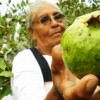
Salvadoran Campesinas Go Organic
The guavas grown by Mariana Rosales are big and bright green, and the best thing about them, she says proudly, is that she does not spend a single cent on fertilisers to produce them – something extremely rare in a country like El Salvador.LATIN AMERICA: Murky Waters
More than 20 percent of the population of Latin America and the Caribbean lacks basic sanitation and 15 percent has no access to drinking water because of poor management, said experts at a meeting that ended Thursday in Brazil.
TRADE: Climate Change Will Impede North-South Trade
Climate change is increasingly playing a role in North-South trade, as carbon emissions are being used as an excuse to protect markets, with poorer countries likely to lose out.BRAZIL: Water Mega-Project for the Thirsty Agreste
The development of one part of Brazil's semiarid Northeast, the Agreste region in the state of Pernambuco, could begin with the construction of canals that will bring in water diverted from the São Francisco River.MEXICO: Food from Trees to Fight Malnutrition
The exceptionally nutritious moringa tree, native to the foothills of the Himalayas and cultivated in several Latin American countries, could help fight malnutrition in this region.JAPAN: New Radiation Limits Demanded for Children
The threat of radioactive contamination faced particularly by children after the Mar. 11 nuclear disaster in Japan has touched the heart of the Japanese public, and become a major political and social issue.ENVIRONMENT: Youth Share Best Practices at Tunza
Participants at the ‘Tunza International Children and Youth Conference’ underway in this Indonesian city shared best practices and ideas with fellow delegates on Wednesday, hoping they would get replicated.
Q&A: Big Polluters Should “Stay Home” from Climate Conference
In order for global climate change policies and efforts to progress, intense local activism and countries most adversely affected by climate change must play a leading role.
Re-Greening Africa in the Footsteps of Wangari Maathai
Africa needs to remain focused and continue following the late Professor Wangari Maathai’s initiatives for environmental sustainability in order to address climate change across the continent, environmentalists say.BOLIVIA: General Strike Protests Crackdown on Native March
Bolivia's main trade union declared a 24-hour general strike Wednesday to protest Sunday's police crackdown on indigenous demonstrators who were protesting the construction of a road through a pristine rainforest preserve.
PERU: Councilwomen Fight Climate Change in Land of Melting Glaciers
Some symbolic acts are powerful reflections of a broader struggle. In March some 300 women planted trees in the Santa River basin in northwest Peru to demonstrate their determination to preserve the environment and help adapt to climate change.« Previous Page — Next Page »


Through our global network of local writers, we are continuing our award-winning coverage of global and local environmental challenges, with a focus on the people for whom the ecosphere matters in a direct way: rural dwellers who have little means to protect themselves against adverse conditions; communities that need to switch to sustainable development in order to survive; poor women and children, who are the most vulnerable in natural disasters. Sponsored by the United Nations Environment Program (UNEP), the United Nations Development Program (UNDP) and The World Bank (WB), IPS also maintains the award-winning Tierramérica, a specialised information service on environment and development.

The Week with IPS

Tracking global progress towards a sustainable world


