
Tuesday, November 17, 2026



News and Views from the Global South
Environment
Ecobreves – CUBA: New Economic Model Includes Seed Conservation
At the sixth congress of the ruling Communist Party of Cuba, held in Havana Apr. 16-19, a proposal was adopted to include measures to guarantee the production, improvement and conservation of seeds within the country’s economic policy.Ecobreves – HONDURAS: IFAD Funding for Food Security Programmes
The government of Honduras will receive 37 million dollars from the International Fund for Agricultural Development (IFAD) for sustainable agriculture and food security projects that will benefit 40,000 families in 64 poor municipalities.Ecobreves – BRAZIL: Agro-ecological Techniques Lower Production Costs
Agro-ecological techniques make it possible to produce organic food at a cost that is 84 percent lower than through traditional agricultural methods, according to a research study conducted by the Luiz de Queiroz Higher Institute of Agriculture at the University of São Paulo in Piracicaba, Brazil.OP-ED: Still No Escape From Killer Chernobyl
The accident could have served as a wake-up call to the whole of humanity. Twenty-five years ago, on Apr. 26 1986, disaster struck at the fourth reactor of the Chernobyl nuclear complex in the Ukrainian state of the former Soviet Union.Arab Spring Stalls as U.S. Defers to Saudi “Counter-revolution”
As the so-called Arab Spring enters its sixth month, it appears to have run into seriously wintry headwinds.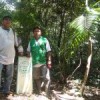
PERU: Guardians of the Dry Forest
Half-shouting over the roar of the old truck we are riding in, Peruvian farmer Pablo Escudero points to a green wall that rises up in the distance and says, "That’s our ‘rain caller’, the place we have fought so hard to create, which will be our legacy to our children."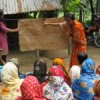
BANGLADESH: W.A.S.H. Keeps Communities Clean
One sunny afternoon, 19-year-old Sufia Aktar presides over a courtyard gathering of housewives discussing the use of safe water, a hygienic environment, and personal cleanliness. It is the last of such gatherings for Sufia, who will soon leave, knowing it was "mission accomplished."ENVIRONMENT: Women Key to Greening the Economy
Earth Day celebrated its 41st year Friday with the slogan ‘A Billion Acts of Green’. The grassroots demonstration is said to have inspired the modern environmental movement, and continues to inform and promote green economic policies worldwide, while attracting over a half billion people every year.MEXICO: Some Progress Made in Eliminating Toxic PCBs
Mexico is carrying out a project to identify, decommission and eliminate polychlorinated biphenyls (PCBs) waste in order to reduce risks of human exposure and environmental damages.
JAPAN: Civil Society Gaining Ground Following Quake
Civil society organisations in Japan have traditionally been on the sidelines in influencing mainstream policy, but the massive Tohoku earthquake and tsunami of Mar. 11 is becoming a catalyst for important change.ENVIRONMENT: Kiss of Life for DR Congo Pygmies
"Most of the houses in our villages are still made with small branches that we have collected, while our timber and our medicinal plants are taken by people who are enriching themselves elsewhere," said Ampiobo Amuri, a traditional pygmy chief.India Resists Ban on Deadly Pesticide
Will India, the world’s biggest manufacturer of the pesticide endosulfan, and also the biggest victim of the toxic pesticide, persist with opposing its ban globally?OP-ED: A Developing Health Crisis Across the Gulf Coast
Days after the BP oil disaster began, on Apr. 20, 2010, BP and the U.S. administration pledged that Gulf Coast communities would be made whole. One year later that promise remains unfulfilled: across the Gulf there is a developing health crisis as a result of the oil spill.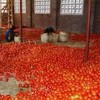
EAST AFRICA: Women Breaking Through Trade Barriers
For 12 years now, the women around Tsangano in Malawi’s southern district of Ntcheu have put together their tomato harvest, selling some 20 tons at the outdoor markets that abound in Lilongwe, the capital. But they have very little to show for their hard work.
Uncertain Flows the Mekong
Countries around the lower Mekong have failed to reach a consensus on a controversial proposal that could see Laos build the first hydropower dam on this part of the vital river.A Fair Wind for Clean Energy in Central America
Soaring international prices for oil and gas are driving the expansion of renewable energies in Central America, a region that has plenty of untapped potential for producing hydroelectricity, wind power and geothermal energy.
Impacts of BP Oil Spill Remain Hidden in Mexican Waters
One year after the BP oil spill in the Gulf of Mexico, the worst accidental offshore oil spill in history, the search for damages in Mexican territory remains inconclusive, while scientists continue gathering and testing samples.MEXICO: Recurring Risks from Radioactive Materials
Mexico needs to take urgent steps to tighten oversight of the storage, handling and disposal of radioactive materials that can threaten the lives and health of its population, experts warn.DEVELOPMENT: Swazi Village Tastes Sweet Success with Sugarcane
The previously impoverished community of Malibeni, previously ravaged by drought, is bustling with farmers who have transformed the area into a bread basket. Lush green fields of sugarcane and vegetables have replaced an expanse of dry shrubs near this community in northeastern Swaziland.MALAYSIA: Radiation Fears Fuel Protest
Fears of radioactive poisoning have fuelled a protest against an Australian mining company building the world’s largest rare earth processing plant outside China.
U.S.: BP Handling of Claims Slammed by Gulf Residents
Attorney Kenneth Feinberg, paid by BP to administer the firm's 20-billion-dollar compensation fund, has become the focal point of anger for Gulf residents who are angry, frustrated and desperate for help following last year's massive oil disaster.« Previous Page — Next Page »


Through our global network of local writers, we are continuing our award-winning coverage of global and local environmental challenges, with a focus on the people for whom the ecosphere matters in a direct way: rural dwellers who have little means to protect themselves against adverse conditions; communities that need to switch to sustainable development in order to survive; poor women and children, who are the most vulnerable in natural disasters. Sponsored by the United Nations Environment Program (UNEP), the United Nations Development Program (UNDP) and The World Bank (WB), IPS also maintains the award-winning Tierramérica, a specialised information service on environment and development.

The Week with IPS

Tracking global progress towards a sustainable world


