
Wednesday, November 18, 2026



News and Views from the Global South
Environment
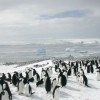
Antarctic Penguin Population Declines with Krill
Two species of Antarctic penguins have declined sharply over the past 30 years as their chief food source has been devastated by a combination of other predators, over-fishing, and rapidly melting sea ice caused by global warming, according to a new study released here Monday by the National Academy of Sciences.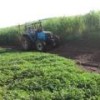
Sugar Cane Fertilises Its Own Soil
Sugar cane growers and technical experts in southern Brazil highlight the environmental benefits of a crop that continues to draw harsh criticism from other quarters.
Endangered Monkey Survives in Tiny Private Paradise
A young forest planted by a woman from the Peruvian Amazon has provided a home for 40 specimens of a highly endangered monkey species with very few places left to live.Ecobreves – OIL: Cuba Promises Environmental Safeguards in the Gulf of Mexico
Cuba has pledged to adopt all necessary environmental safeguards as it prepares to begin drilling five oil wells in the Gulf of Mexico, which it shares with Mexico and the United States.Ecobreves – VENEZUELA: Sigatoka Disease Spreads Through Banana Plantations
Heavy, sustained rainfall outside the normal rainy season has triggered an upsurge in the spread of Mycosphaerella fijiensis, the fungus that causes Black Sigatoka disease, in banana plantations south of Lake Maracaibo in northwestern Venezuela.Ecobreves – HONDURAS: More Than 500 Forest Fires
In the first quarter of 2011, over 500 forest fires were recorded in 16,973 hectares of forest, Trinidad Suazo, director of the Forest Conservation Institute of Honduras, told Tierramérica.Ecobreves – BRAZIL: Super Plastic Developed from Fruit Fibres
Researchers at the State University of São Paulo have created a new plastic ideal for use in automobiles from fruit fibres, using nanotechnology.
EUROPE: The Harmless Invasion of the Pacific Oyster
In the 1970s, French oyster breeders introduced the Pacific oyster (Crassostrea gigas) to the Bay of Biscay to diversify the area’s species and develop the commercial oyster industry.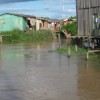
BRAZIL: Belo Monte Dam Faces Endless Hurdles and Controversies
The Xingu river flows around small isles and islands and across rapids and waterfalls in Brazil's Amazon jungle, and has a dramatically reduced flow during dry season. Navigating it presents constant hurdles and risks.CLIMATE CHANGE: Developing Countries Step In Where Richer Nations Fear to Tread
Led by countries like Indonesia, 48 developing nations are rolling out a range of pledges to voluntarily cut their respective emissions of greenhouse gases (GHG) by 2020, the year climate scientists say the earth’s rising temperature should peak by if an environmental catastrophe is to be avoided.CUBA: Balancing Bane and Blessing of Oil
Cuba is sticking to its plans to begin oil exploration this year in its territorial waters in the Gulf of Mexico, and has assured neighbouring countries that "every reasonable" safety and environmental protection measure will be taken, in an area still haunted by the disastrous effects of the crude oil spill in 2010.
ENVIRONMENT: U.N. Tries to Put Its Own House in Order
In the past few years, United Nations headquarters in New York has undergone a transformation. Besides renovating the entire building, the U.N. is trying, as a leading international organisation, to take more responsibility and set an example for environmentally-friendly, sustainable practices by implementing such changes as cutting back on printing, posting more documents online, and creating water-saving measures.
HEALTH-COLOMBIA: Controversy Still Surrounds Malaria Vaccine Pioneer
The announcement of progress towards making synthetic vaccines against 517 infectious diseases, and the award of an international prize for his work have stirred up lively controversy around Colombian pathologist Manuel Elkin Patarroyo, a malaria vaccine pioneer.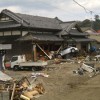
EXCLUSIVE: Report from Fukushima
 My decision to visit Fukushima - the area worst hit by the massive quake, tsunami and nuclear power accident on Mar. 11 - was taken one afternoon last week after a long meeting with scientists.
CLIMATE CHANGE: World Bank Under Fire for Role in New Global Green Fund
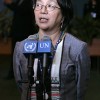
The World Bank is facing mounting opposition from a broad network of green and grassroots activists over its role in a new global Green Climate Fund (GCF) aimed at helping developing countries combat the ravages of climate change.
WORLD HEALTH DAY: The Ten-Year Timeline for Antibiotics Burnout
Though the World Health Organisation (WHO) has focused this year's World Health Day Apr. 7 on prioritising the struggle against the global spread of antimicrobial resistance (AMR), scores of international researchers and scientists fear this decision is coming too late, with 2011 already shadowed by the failure of pharmaceutical antibiotics to curb the proliferation of diseases.
Brazil Beefs Up Nuclear Emergency Plans
The Brazilian government is tightening safety procedures at its two nuclear power stations. Although this South American country is not prone to earthquakes or tsunamis, it is not exempt from natural disasters like landslides and flooding that could jeopardise evacuation plans if a radiation leak occurred.
BRAZIL: Porto Alegre Cyclists Step Up Demands for Bike Lanes
In the weeks since a motorist mowed down dozens of cyclists in the southern Brazilian city of Porto Alegre, the incident has becoming a rallying flag in the fight to create a more bike-friendly city.
ARGENTINA-BOLIVIA: Gas Pipeline to Boost Development, Revenues – But Not for Everyone
"The pipeline will carry gas to Bolivia and seven provinces in Argentina, but we who live in Campo Durán, where the pipeline starts, will not have gas," Julio Palavecino told IPS.LATIN AMERICA: Tracking Down Radioactive Food Imports
Rather belatedly, Latin America is beginning to test products imported from Japan to check that they are not contaminated with radioactivity from the Fukushima nuclear power station that was severely damaged by the Mar. 11 earthquake and tsunami.‘No Safe Levels’ of Radiation in Japan
In a nuclear crisis that is becoming increasingly serious, Japan’s Nuclear Safety Agency confirmed that radioactive iodine-131 in seawater samples taken near the crippled Fukushima Daiichi nuclear power complex that was seriously damaged by the recent tsunami off the coast of Japan is 4,385 times the level permitted by law.« Previous Page — Next Page »


Through our global network of local writers, we are continuing our award-winning coverage of global and local environmental challenges, with a focus on the people for whom the ecosphere matters in a direct way: rural dwellers who have little means to protect themselves against adverse conditions; communities that need to switch to sustainable development in order to survive; poor women and children, who are the most vulnerable in natural disasters. Sponsored by the United Nations Environment Program (UNEP), the United Nations Development Program (UNDP) and The World Bank (WB), IPS also maintains the award-winning Tierramérica, a specialised information service on environment and development.

The Week with IPS

Tracking global progress towards a sustainable world


