
Friday, November 20, 2026



News and Views from the Global South
Environment
BURMA: Pressure Mounts on Energy Giant Chevron to Disclose Revenue
When shareholders of the multinational company Chevron gather for their annual meeting in the U.S. city of Houston in late May, they will come face to face with Naing Htoo, whose community has suffered due to the exploits of the energy giant in military-ruled Burma.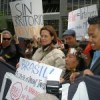
Protesters Call Dam Project a “Disaster” for Brazil’s Native Communities
A modest protest gathered outside the Permanent Mission of Brazil in New York on Wednesday to oppose the controversial Belo Monte dam project in Brazil.UN Sets Out Roadmap for Universal Electricity Access
People's access to electricity, especially modern electricity, must increase even as greenhouse gases are reduced, according to a report issued Wednesday by the U.N. Secretary-General's Advisory Group on Energy and Climate Change.
Q&A: Coal, a Silent Killer
Fatal accidents at coalmines, like the recent tragedies in China and the United States, cause great public alarm. But U.S. physician Alan Lockwood warns that many more deaths are caused by the pollution that comes from the use of coal as an energy source.
AFRICA: Fair Trade Farmers’ Exports Hit by Volcanic Ash
African farmers are assessing the financial impact of the Icelandic volcanic ash clouds that led to a lockdown of Europe’s airspace, forcing fair trade flower growers from Africa to throw away 20 million roses that were meant for the European market.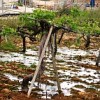
MIDEAST: Settler Sewage Ruins Palestinian Crops, Drinking Water
Residents of this Palestinian village refuse to buy the idea that the flood of raw sewage from the adjacent Israeli settlement of Kfar Etzion, that destroyed vineyards and contaminated their drinking water, was an accident.Mexico on the Alert Over Massive Oil Spill
Mexico is gearing up for the environmental effects of the oil spill caused by last week's sinking of a BP-owned deepwater drilling rig in the Gulf of Mexico, off the coast of the U.S. state of Louisiana.
Q&A: “It’s a Complete Reboot of How We See Things”
The blockbuster, critically acclaimed film 'Avatar' portrays the ruthless plundering of a pristine ecosystem on a distant planet by greedy corporate interests – a scenario that is all too familiar to many indigenous communities here on Earth.Savings Spurned in Zimbabwe Water Purification
Zimbabwe spends an estimated 100 million dollars a year importing aluminium sulphate for water treatment plants. But a local entrepreneur has developed a technique to extract the needed compound from kaolin and flint clays abundantly available within the country.
CLIMATE CHANGE: Forests Not for Absorbing Carbon, Say Activists
The UN-led global initiative to use forest conservation as a way to offset greenhouse gas emissions heated things up at the people's summit against climate change in Bolivia. In the end, the participants reached a consensus - and rejected the plan.ENERGY: Germans Want Nuclear Plants Phased Out
After tens of thousands of people turned out to protest against any extension of life to existing nuclear power plants, it seems clear that Germans continue to be emphatically opposed to nuclear energy.North Africa Finally Sees the Light
Europe's appetite for renewable energy and a shifting tide in domestic energy policies could turn North Africa into major exporter of solar power by the end of the decade.ENERGY: Eskom Loan “Will Help” South Africa’s Poor Neighbours
The 3.75 billion dollar World Bank loan for a new coal-fired power station in South Africa is essential for economic growth in neighbouring low income countries, according to Dr Mohamed Abdelrahman, energy advisor for the New Partnership for Africa's Development (NEPAD), a programme of the African Union.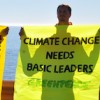
CLIMATE CHANGE: No Deal in Sight, Say Leading Economies of the South
Environment ministers from Brazil, South Africa, India and China are sceptical that a legally-binding agreement on climate change will be reached in Cancun, Mexico in December.Civil Society Calls on World Bank to Reform its Energy Lending
Against the backdrop of the World Bank and International Monetary Fund's spring meetings this weekend, numerous groups have chimed in on the need for and direction of a new World Bank energy strategy.GM Crops Go to US High Court, Environmental Laws on the Line
The U.S. Supreme Court will hear arguments Tuesday in its first-ever case involving genetically modified crops. The decision in this case may have a significant impact on both the future of genetically modified foods and government oversight of that and other environmental issues.RIGHTS-AUSTRALIA: Plan For Nuclear Waste Dump Faces Backlash
Aboriginal landowners in Australia’s far north are battling government plans to construct this country’s long-term nuclear waste storage facility on their land.
Forests Not for Absorbing Carbon, Say Activists
Thousands of activists left the international civil society meet in Bolivia with the goal to fight the use of forests for absorbing carbon emissions, following sharp debate and criticisms of the host government of President Evo Morales.
Murky Waters Flow from Peruvian Andes
Work on a gigantic plan for water diversion and irrigation in a vast area of northern Peru is gaining speed amidst environmental and agricultural worries.
Coal, a Silent Killer
The only way to fight climate-changing carbon emissions is to shut down all of the coalmines and power plants and develop only alternative energy sources, says U.S. expert Alan Lockwood.Ecobreves – HONDURAS: Jesuits Launch Eco-Campaign
"Later is too late" is the campaign launched by the Society of Jesus in Honduras, working with various civil society groups, that seeks to raise awareness about the importance of protecting the environment.« Previous Page — Next Page »


Through our global network of local writers, we are continuing our award-winning coverage of global and local environmental challenges, with a focus on the people for whom the ecosphere matters in a direct way: rural dwellers who have little means to protect themselves against adverse conditions; communities that need to switch to sustainable development in order to survive; poor women and children, who are the most vulnerable in natural disasters. Sponsored by the United Nations Environment Program (UNEP), the United Nations Development Program (UNDP) and The World Bank (WB), IPS also maintains the award-winning Tierramérica, a specialised information service on environment and development.

The Week with IPS

Tracking global progress towards a sustainable world


