Languages
Tuesday, November 10, 2026



News and Views from the Global South
Featured

Can We Make the Planet Earth a Utopia? Yes: Why Not?
The only Planet in the Universe with living beings, including animal and plant life is the Planet Earth. Can we transform it to a Utopia, more or less, a Paradise. Yes, we can. Why not? If all Nations of the Planet have a genuine desire to have eternal peace and harmony, without recourse to a course that will lead to the destruction of the Planet to smithereens.
Papua New Guinea Battles COVID-19 and Health Workers’ Vaccine Scepticism
Papua New Guinea (PNG), like many other Pacific Island countries, successfully held COVID-19 at bay last year, aided by early shutting of national borders. However, by March this year, the pandemic was surging in the most populous Pacific Island nation, and by July, it had reported 17,282 cases of the virus and 175 fatalities.
Reflections on South Sudan’s Ten Years of Independence
The declaration of independence of South Sudan was a great historic moment that gave hope to South Sudanese on July 9, 2011. It brought a sense of satisfaction, indicating achievement of a life-time dream for which millions of our people across generations paid the ultimate price.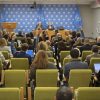
“No Comment — & Don’t Quote me on That”
When a Southeast Asian ambassador hosted a lunch for journalists, including reporters from the New York Times, the Wall Street Journal and the Washington Post, he told us there was an ulterior motive for the sumptuous lunch at his residence.
A Film Challenging Religious Norms
When Turkish- Norwegian writer and filmmaker Nefise Ozkal Lorentzen heard about Seyran Ates’ mixed gender mosque in Berlin, Germany, she immediately decided to make a film on Seyran’s life. It took three years to produce the film, ‘Seyran Ates: Sex Revolution and Islam’ a portrait of a female Imam and her struggles in activating revolution within Islam.
Q&A: UN Food Systems Summit Opportunity for the World to Unite on Healthy, Fair & Sustainable Food Systems
Before the COVID-19 pandemic upended every sphere of life, the world was lagging on a goal to end hunger by 2030. According to the United Nations, more than 820 million people had already been categorised as food insecure, meaning they lacked access to reliable and sufficient amounts of affordable, healthy food.
“The Critical Importance of Ecosystem Restoration”
June 2021 marked the launch of UN Decade on Ecosystem restoration. This effort aims at reversing the damage that us humans have caused and are still causing to Nature. It is clear that we have to reverse course and spare no effort into making this ‘Decade on Ecosystem Restoration’ a success. Preserving Nature and maintaining its services are critical for our survival on this planet and for our livelihoods.
Calls to Halt Construction of Massive Oilfield in One of Africa’s last Wildernesses
Wildlife and environmental campaigners have called for international action as concerns grow over a project to create a massive oilfield in one of Africa’s last wildernesses.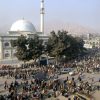
Another Impending Cataclysm in Afghanistan
The Biden administration made a decision to withdraw US troops from Afghanistan based on the Trump-Taliban agreement. Their last combat soldier may have already left. There is nothing to argue about!
Bangladesh’s Indigenous Forest Dwellers Fear Losing Ancestral Land as Officials Grapple with Land Grabs
When the Bangladesh Forest Department felled Basanti Rema’s banana orchard, Rema, a Garo indigenous forest-dweller of Madhupur Forest, felt she was living a nightmare. Rema, from Pegmari village in Madhupur, Tangail district, had cultivated the banana plants on half an acre in the Madhupur Forest. But the Forest Department claimed that the land on which the bananas were cultivated belonged to the department.
Agroecology as the Centrepiece of Sustainable Food Systems
In three weeks, the United Nations will bring together farmers, scientists, policymakers and civil society for the last major event ahead of the September UN Food Systems Summit.
Developing Country Solidarity Needed to Overcome Pandemic
As rich countries have delayed contagion containment, including mass vaccination, in developing countries, much weaker fiscal efforts in the South have worsened the growing world pandemic apartheid.
Threat of Blackouts in Brazil Highlights Climate Crisis
Twenty years after the blackout that prompted nine months of rationing to keep the power grid from collapsing, Brazil may see a repeat of the traumatic situation, this time with a more obvious climate change undertone.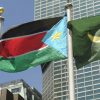
UN Ready for Breakaway Nations but the Pace Remains Slow
When the United Nations renovated its building at a cost of over $2.1 billion, as part of a seven-year refurbishing project back in 2014, the seating in the cavernous General Assembly hall was increased from 193 to 204—primarily in anticipation of at least 11 new member states joining the world body sooner or later.
Flaws in Asia’s Pearl
For well over a century Ceylon, now Sri Lanka, has been known to the world as the ‘Pearl of the Indian Ocean’ for its multifaceted attractions. That is until blurb writers ruined it all with hyperbolic epithets that obscured the country’s magnetic charms, which attracted visitors from around the globe.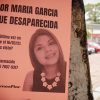
Families Search for Loved Ones Gone Missing in Post-War El Salvador
The pain that María Estela Guevara feels over the disappearance of her niece Wendy Martínez remains as intense as it was four years ago, when she learned that the young woman, then 31, had vanished without a trace in eastern El Salvador.
If “A Nuclear War Must Never Be Fought,” Then …
After more than a decade of rising tensions and growing nuclear competition between the two largest nuclear-weapon states, U.S. President Joe Biden and Russian President Vladimir Putin agreed at their June 16 summit to engage in a robust “strategic stability” dialogue to “lay the groundwork for future arms control and risk reduction measures.”
Dalit and Muslim Indian Women Leading Change in South Sudan
Two Indian women, one Muslim and the other Dalit (former untouchables), separated by culture and geography, have found common ground in leading change in conflict-torn South Sudan.
Stopping Marine Plastic Pollution: A Key IUCN Congress Goal
Documented images of albatross chicks and marine turtles dying slow deaths from eating plastic bags and other waste are being seared into our consciences. And yet our mass pollution of Earth’s seas and oceans, fuelled by single-use plastics and throw-away consumerism, just gets worse.
Water: A Matter of Survival in the World of Pandemics
The COVID-19 pandemic has undeniably amplified the existing vulnerabilities of billions of people worldwide. Marginalized communities in developing countries were excluded from social protection and support.
COVID-19 Pandemic Exacerbates Domestic Workers’ Plight in Bangladesh
Rani Akter, a mother of five, usually works as a domestic helper in Dhaka’s Zikatola area. When the coronavirus pandemic broke out in Bangladesh last March, her employers asked her not to come to their homes for fear of infection. “I lost my work in three houses one after the other, which became a nightmare for me. My rich employers did not allow me in their homes as they thought that I might carry the invisible virus,” Akter told IPS.« Previous Page — Next Page »





The Week with IPS

NEXT STOP - SDGs
Tracking global progress towards a sustainable world
Tracking global progress towards a sustainable world
