Languages
Tuesday, November 10, 2026



News and Views from the Global South
Featured
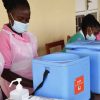
“We Need to Act Now” — as Sub-Saharan Africa Faces Third Wave of Covid-19
Sub-Saharan Africa is in the grips of a third wave of COVID-19 infections that threatens to be even more brutal than the two that came before.
Does a New ‘Gold Standard’ Really Protect Miners?
Many products these days come with the promise that workers and communities all along their supply line are protected from abuse under a particular standard or code of conduct. Since the United Nations adopted the Guiding Principles for Business and Human Rights a decade ago, a plethora of such certification systems have emerged, including for mining and connected industries ranging from cars to jewelry and electronics.
With a Little Help, Local Communities Rack up Record Success with Heritage Rice Grains
Madhuri Roy left the famous Kamakhya temple in Guwahati, Assam. She had sought the goddess’s blessings for the safe delivery of her youngest daughter's baby, which was due in a few weeks. Shanty shops lined the temple outside and Roy’s eyes fell on a stack of black rice packets. All through her daughter’s pregnancy she had craved her childhood favourite black rice pudding. But during the country’s COVID-19 lockdown Roy could not procure it even though Meghalaya, her Himalayan home state, grew it.
Myths, Lobbies Block International Tax Cooperation
Too many have swallowed the myth that lowering corporate income tax (CIT) is necessary to attract foreign direct investment (FDI) for growth. Although contradicted by their own research, this lie has long been promoted by influential international economic institutions.
Acceleration Rights Plan for Gender Equality Mooted at Equality Forum
As the global gathering for gender equality, the Generation Equality Forum, kicks off in Paris on June 30, 2020, IPS conducted an exclusive interview with Katja Iversen.
Why Pacific Island Nations, like the Federated States of Micronesia, need Climate Change Finance for Food Security Now
Robby Nena is one of the many farmers and fishermen on the frontline of climate change in the Federated States of Micronesia (FSM), where coastal flooding and erosion, variable and heavy rainfall, increased temperature, droughts and other extreme weather events are becoming all too common.
Universal Civil Registration and Vital Statistics Are Critical for Truth, Trust and COVID Recovery in Asia and the Pacific
With health systems at a breaking point, hospitals at capacity and desperate family members searching for oxygen for loved ones, the devastating second wave of COVID-19 that has swept across South Asia has felt ¬surreal. Official figures have indicated record-breaking daily coronavirus cases and deaths, not only in South Asia, but across the entire Asia-Pacific region during the latest surge. As devastating as it has been, the truth is we may never know how many people have died during the pandemic.
Towards an Equal Future in Parliaments
In elections last October in Georgia, women’s share of seats in parliament went up by nearly seven percent, following the enforcement of a 25 percent quota for women candidates.
UN’s Double Standard on Human Rights Abusers Protects Big Powers
When the UN’s annual report on Children and Armed Conflict was released last week, it was expected to “name and shame” some of the world’s worst human rights violators – particularly the abusers of children.
“The Creation of a Palestinian State Is Inescapable”
Every Israeli will sooner than later realize that the creation of a Palestinian state is the only way by which Israel can protect its democracy, independence, national security and national Jewish identity. Denying Palestinian statehood defies Israel’s existence as we know it.
A Time for Systemic Solutions in Latin America & the Caribbean
The first wave of COVID-19 never ended in Latin America and the Caribbean (LAC). Since the region became a hotspot for the pandemic in June 2020, successive waves have continued to build upon the first.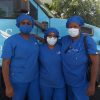
130 Countries Promise to Protect and Invest in Health Care Workers
One hundred and thirty countries have signed a statement recognising the efforts of health care workers, first responders and essential workers during the COVID-19 pandemic – "one of the greatest global challenges in the history of the United Nations".
Water Harvesting Strengthens Food Security in Central America
At the school in El Guarumal, a remote village in eastern El Salvador, the children no longer have to walk several kilometers along winding paths to fetch water from wells; they now "harvest" it from the rain that falls on the roofs of their classrooms.
Maldives’ UN General Assembly Presidency Renews Hope for Small Island Developing States
Earlier this month, Abdulla Shahid, the Maldives’ foreign minister, was elected President of the 76th Session of the United Nations General Assembly (UNGA), which commences in September.
The Importance of Being Listed: Why Politics Threaten the Protection of Children in Armed Conflict
Frontline workers who document and respond to violations against children have faced a particularly challenging last year, from the impact of Covid-19 on operations and child protection to the record levels of displacement worldwide to the ever-worsening threats from militaries and non-state armed groups.
Three Million in Three Years: Jamaica’s Tree-Planting to Tackle Climate Change
By the time he is finished, Dr. Satyanarayana Parvataneni expects he will be responsible for planting over 200,000 tree seedlings in Jamaica. It is an effort driven by a desire to preserve the planet for the next generation, as well as the one of the largest contributions to date to a national effort to plant three million trees in three years.
Sowing Water: A Cuban Farm’s Bid for Sustainability
Cuban farmer José Antonio Casimiro found in the ageold technique of sowing water an opportunity to meet his farm's water needs and mitigate the increasingly visible effects of climate change.
Kuciak Case Retrial An Opportunity to Break Global Cycle of Impunity in Journalist Killings
A ruling last week ordering a retrial in the murders of a Slovak journalist and his fiancée has led to a “unique” opportunity to break a global cycle of impunity in journalist killings, press freedom groups have said.
The Energy Revolution Is Here: How to Be Part of It
The industrial revolution took 100 years. The digital revolution, two decades. The next global revolution, the energy revolution, has already begun. But how fairly and how fast it happens is the biggest challenge of our time.
For People with Disabilities, COVID-19 Lays Bare the Weaknesses in Social Safety Nets
People with disabilities were particularly hard hit by the social and economic impacts of efforts to control COVID-19.
Call for Political Belt-tightening to Prevent Drought Becoming the Next Pandemic
“Drought is on the verge of becoming the next pandemic and there is no vaccine to cure it.”« Previous Page — Next Page »





The Week with IPS

NEXT STOP - SDGs
Tracking global progress towards a sustainable world
Tracking global progress towards a sustainable world
