Languages
Tuesday, November 10, 2026



News and Views from the Global South
Gender

Successful Climate Solutions Require Investment in the Lives of Adolescent Girls
This year commemorates the 10th anniversary of the International Day of the Girl Child. While the last decade has seen greater attention on the positive development needs of girls, we must move beyond documenting the barriers that girls face to investing in and prioritizing girl-centered solutions to the critical development challenges of our world.
Women in Argentine Slum Confront Violence Together
The Padre Carlos Mugica neighborhood looks like another city within the Argentine capital, which most people usually see from up above as they drive past on the freeway but have never visited. It is a shantytown in the heart of Buenos Aires, of enormous vitality and where women are organizing to confront the various forms of violence that affect them.
UN’s High-Level Meeting of World Leaders Falls Short of Gender Empowerment
When the UN’s high-level meeting of world leaders concluded last week, the head count seemed lopsided: 190 speakers, including 76 Heads of State, 50 Heads of Government, 4 Vice-Presidents, 5 Deputy Prime Ministers, 48 Ministers and 7 Heads of Delegations—overwhelmingly male.
Poverty Impacts on Efforts to End Child Marriage, say Parliamentarians
Child marriage continues to be a scourge in many African countries – despite legislation and efforts of many, including parliamentarians, to keep girls in school and create brighter futures for them. This was the view of participants in a recent webinar held under the auspices of the African Parliamentary Forum on Population and Development (FPA) and UNFPA East and Southern Africa Regional Office (ESARO).
Women’s Financial Inclusion, Empowerment in Kenya
A two-year-old child cries hysterically as his mother attends to customers standing in front of her stall to buy vegetables on the outskirts of the Kenyan capital Nairobi. The mother, 25-year-old Esther, who refuses to give her surname for fear her husband will know that she has spoken to strangers about family issues, sells spinach, onion, tomato, garlic, and green pepper at a street corner to supplement her husband’s “meager” construction wage. It has been four years since she started the business, and she says it is beginning to feel like an eternity.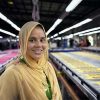
Why Investing in Water, Sanitation and Hygiene Pays Off
As the devastating images of flooding in Pakistan went round the world and the country declared a state of emergency, some 4,000 miles away in Stockholm, delegates had just arrived for World Water Week – an annual focal point for global water issues.
The New Cold War Over Access To Safe Abortion in Kenya
Fatuma is a 24 year old girl from Korogocho, an informal settlement in Nairobi. She died in December 2021, from complications arising from an unsafe abortion. Her friend and a few of her neighbors found her bleeding profusely and unable to move. They rushed her to the hospital. Unfortunately, she died before she could see the doctor.
Transforming Education, Transforming The World
Leaders from across the world are uniting at the UN Secretary-General’s Transforming Education Summit to address a global education crisis that threatens to derail decades of development gains and is depriving millions of girls across the world of their inherent human right to access a quality education.
Equal Pay for Work of Equal Value
International Equal Pay Day, observed officially by the United Nations on 16 September, aims to draw attention to the gender pay gap – the difference between what a woman earns compared to a man for work of equal value – and the systemic inequalities it is rooted in.
Full Gender Equality Almost 300 Years Away at Current Rate of Progress
While women in rich societies are paid around 25% less than men for equal jobs, those living in impoverished countries receive by far much lower salaries, if any at all.
What Does the African Continental Free Trade Agreement Hold for Women?
Agnes Opus sells cereals in Busia, the border town between Kenya and Uganda. This is her lifeline through which she caters for her immediate family’s needs from school fees to housing and medical care and support to her extended family. While she dedicates all her energy and time to this work which she loves, she struggles to meet all her needs. She faces many non-tariff barriers including harassment by officials and unclear and ever-changing information on trade requirements.
Peruvian Trans Women Fight for Their Right to Identity
"Without recognition of your identity by the State and society, there is no exercise of citizenship or rights," said Leyla Huerta, director of Féminas Perú, an organization that has been working since 2015 to empower transgender women in the face of the highly vulnerable situation they find themselves in.
Africa Needs More Action, Fewer Words to Secure Food and Nutrition
For more than five years, Ritta Achevih was harvesting one bag of maize or less from her small plot each season. She could hardly provide enough healthy food for her big family.
We Must Unite to Protect Education From Attack
Schools, students and teachers continue to be targeted and attacked in countries around the world. Over the past two years, we have seen a substantial increase in the number of attacks on education. Innocent children, adolescents and teachers are being killed, raped and abducted. Schools and universities are bombed, burned down and used for military purposes. Girls and boys are too scared to walk to school and face intimidation and other attacks. These are severe breaches of international humanitarian law and ultimately – and absolutely – inhumane.
Zambian Parliamentarians Tackle Population Issues to Improve Quality of Life for Citizens
Parliamentarians play a decisive role in addressing population issues, as was demonstrated when the majority voted against a private member motion to end the teaching of comprehensive sexuality education (CSE) in Zambia in 2020.
UN Report Details Taliban Abuses in Afghanistan
This week, the United Nations special rapporteur on human rights in Afghanistan, Richard Bennett, released his first report. It is a catalog of abuses under Taliban rule since August 2021 and their devastating impact on Afghans.
‘Longings’ Of Ana of Galilee: Voice of Everywoman, Everywhere, And in Every Age!
The American author Sue Monk Kidd's award-winning novel The Book of Longings has a sensational beginning, despite the simplicity of the phraseology: It starts: "I am Ana. I was the wife of Jesus bin Joseph of Nazareth". It would be impossible for anyone not to swallow this bait with enormous curiosity, and follow through with reading what is well and truly a 'page-turner'. The book is crafted to be breezy and exciting, necessary perhaps to better deliver its message. This historical work of fiction was the subject of discussion at a recent seminar organized by the Dhaka -based 'The Reading Circle'. The event was held in a 'hybrid' format, an experiment of the Circle in consonance with the evolving practices of the Covid era. There was a core of participants in Dhaka, and other members joining in from London, Paris, and Singapore. Chaired by Professor Razia Khan, the list of speakers and commentators included Niaz Zaman, Nusrat Huq, Tanveerul Haque, Ameenah Ahmed, Shahruk Rahman, Asfa Husain, Nazmun Nahar, Sarazeen Ahana and myself. The following essay is based on my remarks made on the occasion.
Afghanistan: The Year of Illusions
Afghanistan is where history has taken it! The Trump-Taliban "Agreement for Bringing Peace to Afghanistan," signed on 29 February 2020, is deemed by many as the submission of a superpower to a group that had perpetrated acts of extreme ferocity and terror.
Transforming Girls’ Education, Changing The World
As we approach this year’s Transforming Education Summit, global leaders can and must prioritize expertise and mobilize political will to support efforts to ensure inclusive and quality education for all, especially girls. This is at the heart of Sustainable Development Goal 4 in the 2030 Agenda for Sustainable Development, as well as the commitments made in the Charlevoix Declaration and the G7 Declaration on Girls’ Education.
Building Resilience in the Philippines Through Sustainable Livelihoods and Psychosocial Support
Elvie Gallo no longer hangs around her local grocery store, hoping for the odd job to put food on the table. Her hand-to-mouth life has been replaced by a viable chicken rearing and selling business in Iloilo province in the Philippines.
Shaping Our Digital Future
Asia and the Pacific is the most digitally divided region of the world, and South-East Asia is the most divided subregion. The Covid-19 pandemic detonated a “digital big bang” that spurred people, governments and businesses to become “digital by default;” a sea change that generated vast digital dividends. These benefits that have not been distributed equally, however. New development gaps have emerged as digital transformation reinforces a vicious cycle of socioeconomic inequalities, within and across countries.« Previous Page — Next Page »





Women make up half the world's population, but don't nearly share half of the world's wealth, well-being and opportunity. Two-thirds of the world poor are women, disproportionally exposing women to precarious living conditions, disease and unmitigated natural disasters. The media, meanwhile, remains a male-dominated sector in much of the world, contributing to women's voices lacking a crucial amplifier to put their concerns on political agendas and unleash the development potential of their ingenuity. Rather than then stereotypical victims of local and global forces, women are also organizer, innovators, conservators and community builders. These are some of their stories.

The Week with IPS

NEXT STOP - SDGs
Tracking global progress towards a sustainable world
Tracking global progress towards a sustainable world
