Languages
Tuesday, November 10, 2026



News and Views from the Global South
Gender

In Zimbabwe, Auxillia Mnangagwa is Following in Grace ‘Gucci’ Mugabe’s Path
On Friday, November 24, 2017, Emmerson Mnangagwa was sworn as interim leader during a colourful ceremony at the National Sports Stadium in the capital Harare, after the ouster of President Robert Mugabe in a military coup more than a week before.
To Accelerate Social Change, Approach Philanthropy With a Feminist Lens
Feminist movements are powerful, and donors who want to contribute to solving the biggest challenges facing the world today, should fund them deeply, and without restrictions. Research by Htun and Weldon back this up, showing that globally, feminist movements have been some of the biggest drivers of progressive social change.
Gender Equality & Women’s Rights Wiped out Under the Taliban
In the year that has passed since the Taliban’s takeover in Afghanistan we have seen daily and continuous deterioration in the situation of Afghan women and girls. This has spanned every aspect of their human rights, from living standards to social and political status.
Education Cannot Wait Proud to Participate in Global Citizen Festival 2022: Calling on World Leaders and Donors to Empower Girls and End Extreme Poverty Now
Education Cannot Wait (ECW) - the United Nations global fund for education in emergencies and protracted crises - is proud to support and participate in the 2022 Global Citizen Festival. Participants will call on world leaders at the UN General Assembly - and ahead of the G20 and COP27 in November - to step up and invest $600 million into the future of women and girls, close the annual $10 billion climate financing shortfall, deliver $500 million to help African farmers respond to the global food crisis, and provide relief from crushing debts to End Extreme Poverty Now.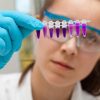
Women Have Always Trailed Men in Research Output: How COVID Made the Situation Worse
The under-representation of women in research is well documented. Emerging evidence suggests that the COVID-19 pandemic has exacerbated this inequality and disrupted the research enterprise globally.
Nonagenarian Opposition Backer Contends for Change in Zimbabwe
Idah Hanyani, popularly known as Gogo Chihera, has backed the opposition since Zimbabwe gained independence in 1980. Born in Wedza, a district in Zimbabwe’s Mashonaland East province, the 91-year-old first supported United African National Council (UANC).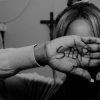
Technology Helps Traffickers Hunt Their Victims, Enslave Them, Sell Their Organs
Human beings have proved to be capable of producing innumerable practical inventions while much too often making the worst use of them. Take the case, per example, of how criminal groups heavily rely on digital platforms to trap and enslave their victims also for extracting and selling their organs.
Biogas Production Awaits Greater Incentives in Cuba
Standing in front of a blue flame on her stove, getting ready to brew coffee, Mayra Rojas says the biodigester built in the backyard of her home in western Cuba has become a key part of her daily life and a pillar of her family's well-being.
To End AIDS, We Need to End Punitive Laws Perpetuating the Pandemic
This week, the global HIV response community is gathering in Montreal to address the crisis of stalling progress that is putting millions of people in danger.
Introducing Hope Over Fate: the Story of Sir Fazle Hasan Abed and BRAC
About seven years ago, I started working on a project with Sir Fazle Hasan Abed, the founder of BRAC. It was originally supposed to be a memoir: the story of Abed, the mild-mannered accountant who would rid the world of poverty, as told by the man himself. I was privileged to be Abed’s speechwriter for the last several years of his life, and I would sit for hours listening to stories from his remarkable life: of his boyhood in British India, his love life in London in the 1960s, his three marriages, and how, in 1972, with a few thousand pounds from the sale of his flat in Camden, he launched a small nonprofit organization to aid refugees, originally called the Bangladesh Rehabilitation Assistance Committee. Many people would go on to call BRAC, which Abed led until his death in 2019, the world’s most effective anti-poverty organization.
Salvadoran Farmers Learn Agricultural Practices to Adapt to Climate Change
With the satisfaction of knowing he was doing something good for himself and the planet, Salvadoran farmer Luis Edgardo Pérez set out to plant a fruit tree on the steepest part of his plot, applying climate change adaptation techniques to retain water.
Climate Change is Putting Women & Girls in Malawi at Greater Risk of Sexual Violence
It is often those least responsible for causing climate change that suffer the most from the impacts. And such is the case with women and girls in Malawi - one of the world’s poorest and lowest carbon-emitting countries but ranked fifth in the Global Climate Index 2021 list of nations worst affected by climate-related extreme weather.
Gender Sensitization, Not ‘Romeo’ Policing Needed, say Activists
Romeo is a bad word in Uttar Pradesh (UP), India's largest province with nearly 25 million people. While the name symbolises love, various shows of affection and love between women and men can be seen as a criminal offence in UP. For their safety, women are advised not to be seen cosying up with their lovers, especially in public places – because the state police department’s anti-Romeo squads could arrest them.
Abortion in Canada—Legal for Decades But Hindered by Stigma
Toronto resident Miranda Knight describes her abortion experience as relatively simple. After finding out she was pregnant on a Wednesday in 2017, she booked an appointment at an available clinic and got one for the following Monday. She had the procedure that day and left the clinic by noon.
Abortion Decision Felt Worldwide
The 24 June decision of United States Supreme Court to overturn the country’s nearly 50-year constitutional right of a woman to an abortion is being felt worldwide.
Webinar: Lessons in Development from the Global South: 50 Years of BRAC

This virtual event was hosted by BRAC, the Permanent Mission of Bangladesh to the UN, and the Permanent Mission of Rwanda to the UN on the sidelines of the 2022 UN High Level Political Forum.

A Future Horror and the Hope of the Present
This is an alert message: if nothing stops the wave of violence in Mexico, by the end of 2024 the country could exceed the figure of 150,000 missing persons.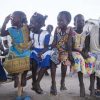
What Future for a World of 8 Billion?
What does a young girl from Juba, in South Sudan, an 8-year-old boy living in the slums of Mumbai, in India, a young mother from the south of Lima, in Peru, and an 83-year-old man enjoying retirement in the suburbs of Stockholm, in Sweden, have in common?
India & China Continue to Lead –as World Population Projected to Reach 8.0 Billion
India and China, two Asian nuclear powers who are also longstanding rivals embroiled in the geo-politics of the Indian Ocean region, have remained two of the world’s most populous nations accounting for over a billion people each. But as the world’s population reaches the 8.0 billion mark, come November, India is projected to surpass China.
A World of 8 Billion, Yes, But (II): The Unseen, Untold Story of the 50%
While women and girls have been so far enjoying some of their due rights in Western high-income countries, the overwhelming majority of teenagers and adult women in the impoverished regions of the current world’s population of 8 billions continue to suffer all kinds of inequalities.
The Camel, the Needle– and the UN’s first Woman Secretary-General
A 2.0 version of an ancient Biblical saying reads: It is easier for a camel to pass through the eye of a needle than for a woman to become the Secretary-General of the United Nations. The male/female ratio for the Secretary-General stands at 9 vs zero. And the Presidency of the General Assembly (PGA), the highest policy-making body at the UN, is not far behind either.« Previous Page — Next Page »





Women make up half the world's population, but don't nearly share half of the world's wealth, well-being and opportunity. Two-thirds of the world poor are women, disproportionally exposing women to precarious living conditions, disease and unmitigated natural disasters. The media, meanwhile, remains a male-dominated sector in much of the world, contributing to women's voices lacking a crucial amplifier to put their concerns on political agendas and unleash the development potential of their ingenuity. Rather than then stereotypical victims of local and global forces, women are also organizer, innovators, conservators and community builders. These are some of their stories.

The Week with IPS

NEXT STOP - SDGs
Tracking global progress towards a sustainable world
Tracking global progress towards a sustainable world
