Languages
Tuesday, November 10, 2026



News and Views from the Global South
Gender

If Women Don’t Lead, We’ll Lose the Battle Against Climate Crisis
We are in the midst of so many crises across the Middle East and North Africa (MENA) region: the most unequal, water scarce, least democratic region in the world, with the widest gender gap, multiple armed conflicts raging across it, and fragile states on the brink.
COVID and Discrimination Aggravated Maternal Mortality in Latin America
Brazil had the dubious distinction of champion of maternal mortality in Latin America during the COVID-19 pandemic, with a 77 percent increase in such deaths between 2019 and 2021.
Gender Sensitivity Key to Achieving Climate Justice
While the climate crisis affects virtually every aspect of life, its impacts are not felt equally. A person’s vulnerability to climate change varies depending on their position in society, such as socioeconomic status, dependence on natural resources, and capacity to respond to natural hazards. Since different genders often experience different social standings, gender has emerged as a key element to consider for effective climate planning and adaptation.
Ukraine Refugee Rape Survivors Struggle to Access Abortions in Conservative Poland
An ultraconservative group in Poland has begun checking with hospitals to find out if Ukrainian refugees are being offered terminations in line with the country’s strict abortion laws amid warnings refugee victims of rape are struggling to access local help and clinical services.
Those Who Dare: Feminist Movements in Sudan, Lebanon & Syria
The year 2019 was not just a time before the world saw the global pandemic, but also a time when the world saw mass political uprisings with women at the forefront. The MENA region in a way led this force, in Sudan women played as drivers of the revolution, protesting decades of corruption, socioeconomic grievances and gendered violence. Nubian queen became the symbol of the revolution in Sudan which finally saw the overthrow of the dictatorship in 2019.
India: Hijab Row the Latest Show of Hindu Nationalism
- In an election season, India’s ruling party has again resorted to the right-wing populist playbook, stirring up divisions for political gain. This time it is the turn of Muslim women, caught in the crossfire of a backlash against both the rights of religious minorities and women’s rights. The controversy over the wearing of the hijab in schools is just the latest chapter in the saga starring Prime Minister Narendra Modi and his Hindu nationalist party in their quest to consolidate power. Their attempts will continue, as will civil society resistance and struggles for rights.

Women Leading Humanitarian Efforts in Ukraine, Now Include them in Leadership, say UN Women and CARE
A joint UN Women and CARE report on the gender disparities in the wake of the Ukrainian crisis calls for donors and humanitarian partners to take greater care to promote the voices of women and marginalized communities in the humanitarian effort.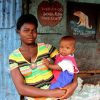
Most Maternal Deaths Are Preventable: How To Improve Outcomes in South Africa
The past 20 years have seen a significant decline in maternal mortality rates from 342 deaths to 211 per 100,000 globally . But every day, more than 800 women around the world die from complications of pregnancy and childbirth, up to 42 days after delivery. Most of these deaths are preventable.
Those Who Dare: Voices of Women in the MENA Region
 When it comes to gender equality and development, the Middle East, North Africa (MENA) and the Arab States region continues to be in a paradoxical situation. While within the region, several laws, policies and programming focused on gender equality are growing, women’s representation in government jobs, corporate roles, and national programming seem to be dismissed. Healthcare, education have seen improvement, most countries have become tech inclusive as well, but access to hospitals and educational institutions –at times due to social programming or gender-related policies continues to prevent women from accessing them and using them.

Breaking Menstruation Taboos and Leaving No Girl Behind
Fourteen-year-old Hadiza smiles as she clutches a purple bag in her hands. Inside the cloth bag is a Menstrual Hygiene Management kit, an essential item that gives her dignity and enables her to continue with school even when menstruating.
Government Ministries Must Collaborate to End Teenage Pregnancy Crisis in Kenya
The Ministry of Health in Kenya recently reported there were 45,754 cases of adolescent pregnancies between January and February this year - that translates to 700 cases a day. Of the total number, at least 2000 of these cases resulted from sexual and gender based violence (SGBV), a figure which is likely lower than the reality.
With Violence on the Rise, Asian Americans Establish Support Groups for Help
Dr Boyung Lee, a widow and the Senior Vice President for Academic Affairs and Dean of the Faculty at Iliff School of Theology, would use a short break in her working day to walk around her neighborhood. The fresh air helped her deal with her grief and work-related stress.
Misogynistic Online Abuse Poses Major Threat to Women Journalists
Women journalists around the world are experiencing an exponential increase in misogynistic online abuse, which poses a grave risk to women's media participation in the digital age.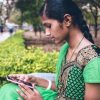
Digital Mentorship: The Key to Women’s Labour Force Participation in India?
Today, approximately 19 million young women are accessing post-secondary or tertiary education in India. Yet, such education has not translated into expected gains in female labour force participation. Only 34 percent of women in India with post-secondary education are active in the labour force, compared to 81 percent of men.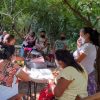
Indigenous Women in Mexico Take United Stance Against Inequality
Every other Tuesday at 5:00 p.m. sharp, a group of 26 Mexican women meet for an hour to discuss the progress of their work and immediate tasks. Anyone who arrives late must pay a fine of about 25 cents on the dollar.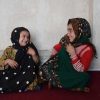
Afghan Moms Receive a Fresh Start in the United States
It was a long, harrowing road for Freshta and Shabaneh, two mothers (their names are pseudonyms) who fled Kabul, Afghanistan, late last summer before eventually settling in the southern New Jersey township of Hamilton.
Women Politicians in Peru Face Severe Harassment, Discrimination
Women entering the political arena in Peru face multiple obstacles due to gender discrimination that hinders their equal participation, which can even reach the extreme of political harassment and bullying, in an attempt to force them out of the public sphere.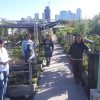
Women in Argentina Cultivate Dignity in Cooperative Vegetable Garden
The space consists of just 300 square meters full of green where there is an agro-ecological vegetable garden and nursery, which are the work and dream of 14 women. Behind it can be seen the imposing silhouettes of the high rises that are a symbol of the most modern and sought-after part of Argentina's capital city.
Black Women, the Most Oppressed and Exploited in Brazil
The Theater of the Oppressed helped her become aware of the triple discrimination suffered by black women in Brazil and the means to confront it, such as the Rio de Janeiro Domestic Workers Union, which she has chaired since 2018.
Addressing Gender-Related Barriers to COVID-19 Vaccinations to Ensure Vaccinations for All
As a global pandemic, COVID-19 and its continued impacts are unprecedented. Yet many of the challenges that emerged in public health responses to COVID-19 not only had precedence, but were predictable.
Unintended Pregnancy Rates Highest in Africa: a Look at the Complex Reasons
The United Nations Population Fund recently released the 2022 State of World Population report. It highlights that almost half of all pregnancies between 2015 and 2019 were unintended. That amounts to roughly 121 million unintended pregnancies each year.« Previous Page — Next Page »





Women make up half the world's population, but don't nearly share half of the world's wealth, well-being and opportunity. Two-thirds of the world poor are women, disproportionally exposing women to precarious living conditions, disease and unmitigated natural disasters. The media, meanwhile, remains a male-dominated sector in much of the world, contributing to women's voices lacking a crucial amplifier to put their concerns on political agendas and unleash the development potential of their ingenuity. Rather than then stereotypical victims of local and global forces, women are also organizer, innovators, conservators and community builders. These are some of their stories.

The Week with IPS

NEXT STOP - SDGs
Tracking global progress towards a sustainable world
Tracking global progress towards a sustainable world
