
Tuesday, October 20, 2026



News and Views from the Global South
Women & Climate Change
UGANDA: Deforestation Robbing Communities of their Income
From a distance, Bugala Island in Lake Victoria is a patchwork of green and brown. The pattern is a result of dense forest retreating in the wake of recently planted palm tree plantations.
Mountain magic turning tragic
 A mountainous country that boasts of eight of the 14 highest peaks in the world, including Mt Everest, Nepal is threatened by both deluge and drought with climate change shrinking its glaciers by 21 percent in 30 years. As rising temperature disturbs the balance of snow, ice and water in the Hindu Kush Himalayan region where it is located, millions of mountain people and 1.3 billion people living downstream in Asia's major river basins face the loss of livelihood, homes and lives due to flash floods and droughts.

Climate Change Killing Womens’ Livelihoods
Talata Nsor, a 54-year-old woman from Bolgatanga community in Northern Ghana, has been weaving the cultural Bolga baskets, which are named after her community, her entire life.
West African farmers see climate changing
 Women in West Africa have over the years relied on fishing and farming as their traditional source of income. But as Sam Olukoya reports from Lagos, changing weather patterns caused by climate change have put their livelihood under threat.
Q&A: Climate Talks Must Ensure That “Words Become Reality”
Involving women in decision-making and resource management is a basic necessity for any effective plan to address the multi- layered and life-threatening consequences of climate change, says the head of UN Women.
PODCAST: Coffee growers feel climate change
Women coffee growers speak to Martha Nyambura about the impact of climate change on their production.
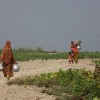
Bangladesh Demands Climate Justice
Mosammet Monwara walks more than three km every alternate day to fetch water for her family of five in a heavy earthen pitcher.
UGANDA: Single Mothers Left Behind in Flooded Swampland
Life in Bwaise – a slum on the outskirts of the capital of Uganda – has never been easy. But increasingly erratic rains over the last three years have brought constant floods to the former swampland. Residents who can afford to are moving out, leaving the poorest – often single mothers and grandmothers – behind.
CLIMATE CHANGE-PERU: Rural Women Share Their Trials and Wisdom
"This year the freeze killed my crops, our small livestock died, and now I can't even sleep because I'm worried sick thinking about how to put food on my family's table, since I'm a widow," said Rosaura Huatay, an indigenous farmer in Peru's northern Andes highlands.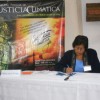
Mexican Women Demand Climate Justice
After two weeks without water, the taps finally started running again in the home of Araceli Salazar and her neighbours in the poor, crowded neighbourhood of Iztapalapa on the east side of the Mexican capital.
Gender must be on COP17 agenda: SADC
The head of SADCs gender unit, Magdeline Mathiba-Madibela, says climate change affects women in Southern Africa and their plight must be discussed at COP 17 in Durban later this month. Zukiswa Zimela interviews Mathiba-Madibela in Gaborone and asked her what is needed to protect women against climate change.
CLIMATE CHANGE: Bangladeshi Women on the Brink
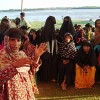
Char Nongolia village is a basket case when it comes to climate change impacts such as increasing salinity, frequent cyclones, tidal surges, erratic rainfall and extended droughts.
ENVIRONMENT: Nepali Women Live With Climate Terror
Suntali Shrestha wrings her hands in tension and despair as she recounts how she has been spending sleepless nights fearing that the flood alarm in her village would go off while she slept and she would be submerged.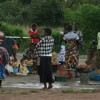
Zambian farmers blame climate change for drought
Zambian farmers say a lack of rain is putting a strain on their crops and they are starting to point their fingers at climate change. Brian Moonga reports from Lusaka.

Q&A: ‘Soil is Key to Global Warming, Food Security’
Luc Gnacadja, in his second three-year term as executive secretary, United Nations Convention to Combat Desertification (UNCCD), is widely seen as delivering on his commitment to manage the world's drylands.
GHANA: The Woes of Women Amid Climate Change
As streams dry out, groundwater levels dwindle, and forests and other vegetation yield to droughts or sever storms, women who live their lives in the rural areas of Ghana have to spend more time and energy finding water and food for their families.
SOUTH KOREA: Drylands Meet Deserts Gender
Delegates to the United Nations Convention to Combat Desertification’s (UNCCD) meeting underway in this South Korean city are convinced that women, though affected most by desertification, hold the key to addressing hunger through land regeneration.
Women in Rural Argentina Speak Out on Climate Change
Rural and indigenous women in northern Argentina, hit hard by the expanding agricultural frontier, deforestation and the spraying of toxic pesticides, spoke out about their problems and set forth proposals for discussion at the next global summit on climate change.
MEXICO: Women Left Out of U.N. Forest Plan
Despite the growing participation of women in forestry projects in Mexico, the national strategy for the United Nations-led REDD+ forest plan in this country lacks a gender focus.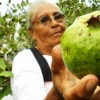
Salvadoran Campesinas Go Organic
The guavas grown by Mariana Rosales are big and bright green, and the best thing about them, she says proudly, is that she does not spend a single cent on fertilisers to produce them – something extremely rare in a country like El Salvador.
PERU: Councilwomen Fight Climate Change in Land of Melting Glaciers
Some symbolic acts are powerful reflections of a broader struggle. In March some 300 women planted trees in the Santa River basin in northwest Peru to demonstrate their determination to preserve the environment and help adapt to climate change.« Previous Page — Next Page »





For rural women in developing countries — the majority of the world’s farmers — global warming means harder work and diminishing returns. Drought, heat, floods, storms and forced migration disrupt harvest cycles and deny women and their families secure livelihoods. By improvising, organising and innovating, women are providing effective responses to the challenges imposed by climate change. They are at the forefront of sustainable farming, water harvesting, forest protection and the development of new skills and sources of income. Yet women from developing countries still play a minor role in the climate change debate. Why aren't their ideas, initiatives and experiences shaping national and international policy? This series of independent articles contributes to this discussion.

The Week with IPS

Tracking global progress towards a sustainable world
