
Tuesday, September 1, 2026



News and Views from the Global South
Women & Climate Change

OP-ED: Wangari Maathai: A ‘Mighty Woman’ Who Spoke Truth to Power
Last night, Wangari Maathai, the first African woman to win the Nobel Peace Prize, died. Most people think of Ms. Maathai as an environmentalist, planting trees. In reality, her environmental activism was part of a holistic approach to empowering women, advocating for democracy, and protecting the earth.
INDIA: ‘Women Make Good Business Sense’
Harish Hande believes that involving women in design, manufacture and sales pays dividends in any business, but especially in those making products that women ultimately use.
CLIMATE CHANGE: Nepali Women Sow a Secure Future
Learning a lesson from crop failures attributed to climate change, Nepal’s women farmers are discarding imported hybrid seeds and husbanding hardier local varieties in cooperative seed banks.
CLIMATE CHANGE: Brazilian Women Rise Above the Waters
Almost a year and a half after floods wreaked havoc in a large part of the state of Rio de Janeiro, a group of women are struggling to rebuild their lives. They lost everything except their will to pick themselves up again and make the best of the aid they receive, to become self-sufficient again.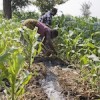
SOUTH AFRICA: While Politicians Deliberate Climate Change, Others Adapt
While many scientists, academics and politicians still theorise about ways to adapt to climate change, a South African civil society organisation has launched a hands-on project that mobilises communities to take easy steps to reduce carbon emissions.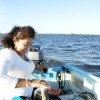
Mexican Fisherwomen Organise Against Climate Change
Every night, Adlemi Marrufo goes out to catch bait crabs used to fish for octopus in this small seaside town and others along Mexico's Yucatan Peninsula, as part of a women's cooperative that is working to adapt to and fight climate change.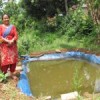
NEPAL: Adapting to Climate Change Can be Simple
Saraswoti Bhetwal’s terraced fields stand out in the sub-Himalayan Lamdihi village as a mosaic of shapes and colours formed by beans, bitter gourd, chilly, tomato, lady’s fingers and other crops.
NEPAL: Improved Wood Stoves Save Health, Environment
When Binita Lamichhane got married she was troubled by her husband's bloodshot eyes. "What happened to your eyes?" the 18-year-old bride asked. "Smoke," came the answer.Economic Development Leaving Millions Behind
The Society for International Development (SID)'s triennial World Congress, which concluded Sunday in Washington, drew over 1,000 attendees this year, 40 percent hailing from the global south, making it arguably one of the most influential and far-reaching forums for development experts and organisations in the world today.
PAKISTAN: After the Flood, Green Homes
Subhan Khatoon’s brand new home is nothing like the one that got washed away, along with all her worldly goods, in the 2010 monsoon floods that submerged a fifth of Pakistan and left 2,000 people dead.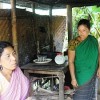
BANGLADESH: Tribal Women Take on Forest Ranger Roles
Jasinta Nokrek loves nothing better than to range through the dense Modhupur forest, the way her Garo tribal ancestors have always done.
Trekking Trails Lead Nepal Women to Empowerment
Dawa Gyalmo Sherpa’s three sons went to look for blue-collar jobs in Malaysia, Jordan and Saudi Arabia, saying Mulkharka, their tiny village in Kathmandu valley, had no livelihood prospects.
Women Keen to Ease Greenhouse Effect on Their Ability to Provide
A successful entrepreneurial programme in the north of Namibia that infuses farming practices with gender-responsive environmentalism may serve as a model for other countries on the African continent.
NEPAL: Women Grow Carbon Money on Trees
When Bina Tamang was told that she could earn money by not felling trees in the tiny forest that serves as the source of fuel and fodder for 65 families in her area, the 27-year-old was incredulous.
INDIA: ‘Seed-Mothers’ Confront Climate Insecurity
In eastern Orissa state’s tribal hinterlands about 200 ‘seed-mothers’ are on mission mode - identifying, collecting and conserving traditional seed varieties and motivating farming families to use them.
ZAMBIA: “Every Year Flooding Makes This Place a Little Hell”
During the rainy season, and many weeks afterwards, home is never the best place to be for Miriam Banda. Until the end of 2008, she enjoyed living at her house in Kanyama, a high-density settlement bordering the central business district in Lusaka, Zambia's capital.
Gender Indicators for Global Climate Funds Still an Afterthought
Of the millions of dollars spent on climate change projects in developing countries, little has been allocated in a way that will benefit women. Yet, in Africa, it is women who will be most affected by climate change.U.N. Political Body Digresses into “Non-Security” Issues
When the U.N. Security Council, the only political body empowered to declare war and peace, decided to include climate change on its agenda back in 2007, the 131-member Group of 77 (G77) launched a vociferous protest.JAPAN: Quake’s Aftermath Weighs Heavily on Women
Since the horrific Mar. 11 earthquake and tsunami that devastated her coastal town of Minato, in Ishinomaki city, Masami Endo’s three-year-old daughter has been crying and clinging to her every night.
CLIMATE CHANGE: In Europe, Pollution Is a Masculine Noun
Many aspects of gender inequality are well known and well documented. But there seems to be little awareness that male behaviour leads to greater emissions of climate-changing gases.CLIMATE CHANGE: Averting the Grimmest Scenarios
The catastrophic floods in Pakistan have added urgency to a high-level United Nations summit this week, with delegates from mostly South Asian nations convening Tuesday to call for increased technology transfer from richer countries and to compare strategies to avert the worst effects of climate change.« Previous Page — Next Page »


For rural women in developing countries — the majority of the world’s farmers — global warming means harder work and diminishing returns. Drought, heat, floods, storms and forced migration disrupt harvest cycles and deny women and their families secure livelihoods. By improvising, organising and innovating, women are providing effective responses to the challenges imposed by climate change. They are at the forefront of sustainable farming, water harvesting, forest protection and the development of new skills and sources of income. Yet women from developing countries still play a minor role in the climate change debate. Why aren't their ideas, initiatives and experiences shaping national and international policy? This series of independent articles contributes to this discussion.

The Week with IPS

Tracking global progress towards a sustainable world
