Languages
Sunday, November 22, 2026



News and Views from the Global South
Global Governance
Water Scarcity Could Drive Conflict or Cooperation
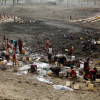
When the General Assembly declared 2013 the International Year of Water Cooperation (IYWC) three years ago, the U.N.'s highest policy-making body was conscious of the perennial conflicts triggered by competition over one of the world's most critical finite resources.BOOKS: ‘Delusion’ Challenges U.S. Claims About Nuclear Iran
A Dangerous Delusion is the work of one of Britain's most brilliant political commentators, Peter Oborne, and an Irish physicist, David Morrison, who has written powerfully about the misleading of British public and parliamentary opinion in the run-up to the 2003 Iraq War.
‘Biggest Guns’ to Control Somalia’s South
Somali clan leaders say that an Aug. 27 agreement between the government and only a few leaders from the country’s three southern Jubba regions, which aims to resolve the ongoing dispute over who controls the area, creates more problems than it solves.Disarmament Deal Takes Two Steps Back
A Kremlin compromise on nuclear disarmament looks as far away as ever as Russian president Vladimir Putin and his U.S. counterpart Barack Obama use their countries’ strained relations to bolster their own domestic political agendas, experts say.
Tourism Deserts Egypt
It is Anna Betanova's second visit to Egypt and very different from the last time. The 26-year-old accountant from St Petersburg, Russia, is in Hurghada, the prominent resort destination on the Red Sea coast, some 400 km southeast of the capital Cairo. "The beaches are almost empty," she told IPS, "and we spend most of the day watching TV."
Native Americans Take Lead in Tar Sands Resistance
Native American tribes in the United States have taken the lead in opposing the expansion of the Athabasca Tar Sands in Alberta, Canada, engaging in civil disobedience to the point of arrest and attempting to physically block shipments of construction equipment from passing through their native lands.
People Begin to Flee Damascus
As the United States prepares to fire Tomahawk cruise missiles on military targets inside Syria, Syrians are preparing for a new phase of the conflict that has already left more than 100,000 people dead.
Despite Opposition, Obama Undeterred from Striking Syria
U.S. President Barack Obama indicated Friday he would soon conduct what he called "very limited" military action against Syria to punish its alleged use of chemical weapons which, according to the White House, killed more than 1,400 people in several Damascus suburbs last week.
U.N. Loses Big if U.S. Attacks Syria Unilaterally
If and when the United States launches a military attack on Syria, one of the biggest political losers would be the United Nations.
Revised U.S. Stance on Marijuana Will Be Felt Beyond Borders
The U.S. Justice Department on Thursday issued surprise guidance directing its attorneys not to sue states that have moved to decriminalise the recreational use of marijuana, so long as those states implement strict regulatory regimes.
OP-ED: Military Force Is a Blunt Instrument, Mr. President
Now that we have heard Secretary of State John Kerry's emotional plea for us to believe the still rather ambiguous intelligence on chemical weapons use in Syria, there are far more substantive answers to be sought from the Obama administration.Public Media Want Piece of Advertising Pie
Today’s new world of digital communications presents public media outlets with a complex challenge: to conquer loyal and active audiences, with programming that is beholden neither to governments, their main funders, nor to market imperatives.
‘Thousands’ Missing in Pakistan
Twenty-year-old Adnan Khan was among eight persons convicted for an attempt on the life of former president Gen. Pervez Musharraf. The conviction appeared uncertain, just as his whereabouts were before the order by a military court.U.S. Drive to Attack Syria Stalls
What seemed inevitable just 48 hours ago – an imminent U.S. missile attack on Syrian targets in response to an alleged chemical attack that reportedly killed hundreds of Syrian citizens – stalled Thursday as the justification for military action faced increasing questioning both here and abroad.UK Publishes Legal Backing for Syria Strike
The British government has published internal legal advice which it said showed it was legally entitled to take military action against Syria, even if the United Nations Security Council blocked such action.
One Way to See the Killing in Syria
Zuhair Hassib did not witness the last and the most ghastly massacre in Syria. Images of last year’s Siege of Homs were enough for the artist to have seen. His paintings have brought those horrors home in a way pictures could never have.
Argentina Seeks to Restructure Debt Held by Vulture Funds
As a sign of Argentina’s willingness to repay its bondholders, President Cristina Fernández introduced a bill for a new swap of the foreign debt held by “holdout” creditors who refused earlier restructurings after the country’s late 2001 default.
U.S., U.N. in Diplomatic Cross-Talk Over Syria
When the administration of President George W. Bush launched a military attack on Iraq in March 2003, it was nearly 18 months before Kofi Annan, then-U.N. secretary-general, described the invasion as "illegal" and in "violation of the U.N. charter" because the United States did not have Security Council authorisation.
U.S. Executives’ Pay on “Inexorable Upward Climb”
Three years after the passage of landmark legislation aimed at strengthening regulation of major U.S. companies, one of the most criticised disparities characterising today's corporate culture – the outsized compensation offered to top executives – continues to grow.
Cuban Doctors Bring Eyesight, Healthcare to Haiti
It's Saturday, and the entrance hall of a police station in front of the busy market in Salomon in the Haitian capital has become an improvised health post. In a few minutes there is a long queue of people waiting to be seen by the Cuban medical brigade.
Israeli Lobby Looks to 2008 Law to Justify Request for More U.S. Aid
Israel and its domestic U.S. lobby are already in the early stages of the next 10-year aid package, which would not go into effect until 2017 and will be the first since Congress passed the Naval Vessel Transfer Act of 2008, which requires in part that U.S. military aid to Israel ensure that Israel maintains its "Qualitative Military Edge" (QME) over any combination of states and non-state actors.« Previous Page — Next Page »


The Week with IPS

NEXT STOP - SDGs
Tracking global progress towards a sustainable world
Tracking global progress towards a sustainable world
