Languages
Sunday, November 22, 2026



News and Views from the Global South
Global Governance

Are Developing Countries Waving or Drowning?
More than five years since the outbreak of the global financial crisis, the world economy has shown few signs of stabilising and moving towards strong and sustained growth.
Survivors of WWII Massacre in Italy Persist in Quest for Justice
Enrico Pieri was ten when German SS soldiers attacked his home village of Sant'Anna di Stazzema, Italy on Aug. 12, 1944 in a massacre that left 560 people, mostly women and children, dead.
The Future of the Pacific Ocean Hangs in the Balance
The immense scale of the Pacific Ocean, at 165 million square kilometres, inspires awe and fascination, but for those who inhabit the 22 Pacific island countries and territories, it is the very source of life. Without it, livelihoods and economies would collapse, hunger and ill-health would become endemic and human survival would be threatened.
As Erdogan Remains Firm, No End in Sight for Turkey’s Protests
Now approaching its third week, the "Occupy Taksim" movement, a peaceful sit-in to save Istanbul's Gezi Park from redevelopment, has taken on a festival-like atmosphere, with protesters organising to stand guard around the clock, provide uninterrupted food and water supplies, and carry out a self-initiated cleaning of the grounds.
Q&A: Turkish Opposition Leader Expects Unrest to Continue
As protests in Turkey stretch into their second week, the precise terms and conditions that could bring the social unrest to an end are unclear, though many speculate about what would end the deadlock between the government and protesters.
Mexican Climate Fund Short of Cash, Slow Off the Mark
The Climate Change Fund set up in November in Mexico faces enormous challenges such as the enforcement of anti-corruption standards, which make it unlikely that concrete actions will begin this year, according to civil society organisations.
U.S. Syria Hawks Can’t Get No Traction
With Syrian government forces and their allies scoring a major victory over Western- and Gulf Arab-backed rebel forces this week, neo-conservatives and other anti-Damascus hawks are trying hard to turn up the pressure on President Barack Obama to sharply escalate U.S. support for the opposition.
International Community Urged to Declare “War on Food Waste”
A quarter of all food calories grown for human consumption is being lost or wasted, either purposefully or otherwise, according to new estimates.
Battle Against Hunger Lost Without Gender Empowerment
When the United Nations launched its Millennium Development Goals (MDGs) back in 2001, two of its primary objectives were to halve extreme poverty and hunger by 2015 and promote gender empowerment worldwide.
Tackle Malnutrition Now
Between 2010 and 2012, 868 million people worldwide were deemed hungry by a conservative definition. This figure represents only a small fraction of the world’s population whose health and lives are blighted by malnutrition.
Malnutrition Still Killing Three Million Children Under Five
Kevin’s Carter’s disturbing picture of the 1993 famine in Sudan won him a Pulitzer Prize.
Rice Replaces Donilon as Obama’s Top Foreign Policy Adviser
In a reshuffle of top foreign policy posts in his second term, U.S. President Barack Obama Wednesday announced that his controversial and blunt-spoken U.N. ambassador, Susan Rice, will replace Tom Donilon as his national security adviser.
Overcoming “Strategic Suspicion” – Goal of Obama-Xi Summit
This week’s relatively informal and unscripted summit between the presidents of the United States and China on a private estate in southern California is being welcomed by most analysts here as a virtually unprecedented opportunity for each side to gain a better understanding of the strategic aims of the other.Shift in Latin America’s Approach to Drugs – from Security to Health Issue
The drug problem should be tackled not as a security issue but as a public health question, with policies for "prevention, treatment and rehabilitation," delegations from the 34 countries participating in the 43rd General Assembly of the Organisation of American States agreed.“Syria Peace Meeting Will Not Happen in June”: UN Envoy
A conference on ending the fighting in Syria will not happen in June, as planned, because both sides in the conflict are unprepared to attend, the U.N.'s international envoy Lakhdar Brahimi said.
In Besieged Refugee Camp, Syrian Medics Struggle to Provide
It was nine in the morning when the shell landed in front of nine-year-old Hella al-Abtah's house in the Yarmouk Palestinian refugee camp in Damascus. Hella survived the initial blast but was critically wounded in the head, and her father rushed her to the Palestine Hospital, blood pouring from the laceration.
Quantitative Easing: Impact on Emerging and Developing Economies
The global economy is awash with successive waves of liquidity generated over the past few years by the four most advanced economies, viz., the United States, the European Union, (EU), Japan and the United Kingdom, known as the G4. This liquidity has taken the form of “quantitative easing” (QE).
46 Years on, Arab-Israeli War Still Leaving Its Mark
Majda el-Batsch was eight years old in June 1967 when she heard about the war that year. "I didn't know what war meant," she recalled. More than four decades later, the Palestinian reporter is still grappling with the meaning of what is known as the Six-Day War.
U.N. GA Cold Shoulders International Day Against Homophobia
The 193-member U.N. General Assembly (UNGA), in its supreme wisdom, has declared over 100 commemorative "days" dedicated to peacekeepers, refugees, children, migrants, girl children, rural women and indigenous people, among others.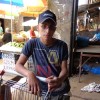
Palestinian Child Labourers Face Grim Future
Hazem Maher, 16, from Hebron in the southern West Bank, works a backbreaking 12-hour day in the fruit and vegetable market in the city of El Bireh, next to Ramallah. He earns just over 15 dollars a day as a porter.
Africa Leading the New Patterns of Growth
The old theories governing the way that countries produce and trade are being replaced. The pattern of trade is being transformed by increasingly sophisticated technology and innovations in transportation; and the topography of actors is shifting to reflect new poles of growth.« Previous Page — Next Page »


The Week with IPS

NEXT STOP - SDGs
Tracking global progress towards a sustainable world
Tracking global progress towards a sustainable world
