Languages
Thursday, November 26, 2026



News and Views from the Global South
Global Governance
Twenty Years After Madrid, Israel-Palestinian Peace Prospects Bleak
Veteran U.S. diplomats and scholars who have worked for decades on resolving the Israeli-Palestinian conflict have grown increasingly pessimistic about the continued viability of the U.S.- sponsored "peace process" and the two-state solution that was presumed to be its goal.
Q&A: Cooperatives: “Meeting Human Need, Not Just Human Greed”
Different countries may celebrate Oct. 31 in a variety of ways, but this year, the 193 member states of the United Nations (U.N.) launched the International Year of Cooperatives 2012 to raise awareness about the impact of cooperatives on the development of communities where they operate.
U.S. House Committee Okays Sweeping Sanctions on Iran
Amid growing tensions in the Middle East, including speculation about a possible Israeli attack on Iran, a key U.S. Congressional committee Wednesday approved two bills that would impose sweeping new economic and diplomatic sanctions against Tehran.
Q&A: Female Empowerment, In-Depth: More Than Just a Resolution
The first United Nations (U.N.) Security Council resolution to specifically address women's contributions to conflict prevention and sustainable peace was passed just 11 years ago, on Oct. 31, 2000.
ISAF Data Show Night Raids Killed over 1,500 Afghan Civilians
U.S. Special Operations Forces (SOF) killed well over 1,500 civilians in night raids in less than 10 months in 2010 and early 2011, analysis of official statistics on the raids released by the U.S.-NATO command reveals.
U.S. Carbon Emissions Down Seven Percent In Four Years
Between 2007 and 2011, carbon emissions from coal use in the United States dropped 10 percent. During the same period, emissions from oil use dropped 11 percent.Syria Agrees to Arab League Plan
The Syrian government has accepted several measures suggested by the Arab League aimed at halting the violence in the country, including the removal of tanks and armoured vehicles from the streets.
Q&A: “Food Is Not a Business, But a Human Right”
Rural women and small-scale producers play a key role in providing food security and food sovereignty, but many large multinational corporations threaten that progress by undermining populations' independence when it comes to food.
Climate Change Could Unravel Development Progress
The United Nations unveiled its 22nd annual Human Development Report on Wednesday, with grave warnings that unless countries take action against climate change and implement sustainable solutions, progress in human development will be in serious jeopardy.
As U.S. Exits Iraq, “Endgame” in Afghanistan Remains Elusive
Washington's failure to gain Iraqi approval for a significant U.S. military presence in that country beyond December could make it harder for Afghanistan to agree to a similar deployment beyond 2014.
IBSA: In Conflict with the EU
When the G20 leaders meet for their fifth summit in Cannes, France, on Thursday, they will be confronted with several worsening global economic and trade issues. Among them is how to strengthen the international trading system and how to overcome the developmental deficit that continues to create an uneven playing field for poor countries.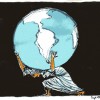
OP-ED: Better Aid Means Better Development
Oxfam and major aid donors of the OECD’s Development Assistance Committee (the DAC) are often on opposite sides of the fence. Today though, we are on the same side —making sure that effective aid lifts people out of poverty.
EUROPE: ‘Agenda for Change’ Leaves Middle-Income Countries Out in the Cold
Last week the European Commission unveiled its ‘Agenda for Change’, a new policy framework outlining priorities for the European Union’s development aid and detailing the Commission’s renewed focus on economic growth as a means of poverty reduction, particularly in the world’s poorest countries.
U.S. Halts UNESCO Funding After Palestinian Vote
The administration of President Barack Obama announced Monday that it would immediately cut U.S. funding for the United Nations Educational, Scientific and Cultural Organisation, just hours after UNESCO's governing board voted overwhelmingly to grant Palestine full membership.
Long Overlooked, Cooperatives Get Their Due at United Nations
Hailed as economically viable and socially responsible, cooperatives have over one billion members worldwide and can be found in sectors ranging from agriculture to finance to health.
WEST AFRICA: Niger River under Pressure from Dams
Several major new dams are being constructed on the Niger River. It's a positive sign of growing investment in agriculture and energy, but it also has some observers worried.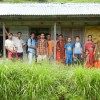
Q&A: Cooperatives a “Compelling Model of Economic Enterprise”
With 800 million members in over 100 countries, the cooperative sector is a globally important group of collective organisations. On Oct. 31, the United Nations (U.N.) will begin a year of recognising their importance by launching the International Year of Cooperatives (IYC) in New York.MEXICO: Wixaritari Indians Fight Mining in Sacred Desert Site
Some 200 Wixáritari or Huichol men, women and children travelled 20 hours from western Mexico to the capital to defend their sacred ceremonial sites from silver mining.MIDEAST: UNESCO Becomes a New Battleground
Palestine’s bid to become a member of the United Nations Educational, Scientific and Cultural Organisation (UNESCO) has created a tense atmosphere here, as the United States threatens to cut financing if the application is approved.WEST AFRICA: Solar Panels Light Up Remote Villages
Frequent power cuts have led people in rural areas of Burkina Faso, Mali and Senegal to turn to solar energy for electricity.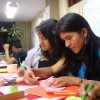
In Latin America, Closing the Gender Gap Brings Fresh Challenges
Over the past four decades in Latin America and the Caribbean, women have made remarkable strides in education, health, labour, and beyond, with girls now outperforming boys in school, the rate of working women more than doubling in many countries, and female participation rising in politics.« Previous Page — Next Page »


The Week with IPS

NEXT STOP - SDGs
Tracking global progress towards a sustainable world
