Languages
Tuesday, October 13, 2026



News and Views from the Global South
Global Governance

Ukraine Challenges Legitimacy of Russia’s UN Membership
The overwhelming condemnation of the invasion of Ukraine—which triggered a veto from Russia and an abstention from China last week – has raised a challenging question about the legitimacy of UN memberships of both countries which are permanent members of the Security Council.
International Women’s Day, 2022
To be Just, the Energy Transition Must Include & Empower Women
Access to clean energy improves women’s lives in a myriad of ways. It supports access to education and quality healthcare, opens new economic opportunities, and reduces unpaid domestic labour and gender-based violence. Yet too often, the sector as a whole – from industry to policymaking – still fails to include women as energy users, decision-makers and agents of change of the energy transition.

International Women’s Day, 2022
Gender Blind Spots in the Water Sector
UN Women estimates 150 million women and girls are emerging from poverty by 2030, thanks largely to comprehensive education, labor, and social protection strategies and reforms implemented by governments around the world.

Miles’ Law and the War in Ukraine
Where you stand depends on where you sit
This aphorism which dates back to the late 1940s points out that one’s position on issues (where you stand) is shaped by your relationship with the events taking place (where you sit).

The Historic UNGA Resolution on Aggression against Ukraine Deserves Follow-up Action – on the Part of the UN Secretary-General
The majority of the world wants peace. This is clear by now. Just consider the many large-scale anti-war demonstrations taking place around the world; and the outpour of solidarity and support for the people in the Ukraine and the more than one million Ukrainians who fled from their country.
UN’s Political Hypocrisy– as Multi-Million Dollar Purchases Continue from a Blacklisted Russia
The world’s financial institutions, primarily in the US and Europe, have cut off links and economically ostracized Russia for its invasion of Ukraine and violation of the UN charter.
International Women’s Day, 2022
Sexual Violence Laws are Failing Adolescents
At Equality Now, we have been on a years-long journey to track and analyze sexual violence laws and their implementation around the world. This work was born after working with survivors of sexual violence for over two decades and observing that women and girls reported similar barriers to justice regardless of where they were from.

International Women’s Day, 2022
Women Demanding Justice & Peace in the Streets of Myanmar
This will be the second International Women’s Day since the brutal coup erupted in Myanmar – and women remain fiercely in the lead in demanding justice and peace in the streets and behind closed doors.

International Women’s Day, 2022
Collective Solutions to Improve Sexual and Reproductive Health Rights in Climate Action
The devastating effects of climate change continue to disproportionately affect women and girls in the poorest regions, who have contributed the least to global warming.

Will Russia Follow USSR Expelled from League of Nations for Invading Finland in a Bygone Era?
The Russian Federation, condemned worldwide for invading a founding member of the United Nations-- and violating the UN charter-- came under heavy fire during a rare Emergency Special Session of the 193-member General Assembly, the highest policy-making body in the Organization.
Not Exactly Sun Tzu: Russian Military Blunderings & the Global Democratic Deficit
Russian President and former intelligence officer Vladimir Vladimirovich Putin has been at the helm of power since 1999, promoting jingoistic nationalism to keep his hold on power and creating a democratic deficit on the home front.
Firm, Unified Response Needed to Russia’s Aggression
It is now clear diplomacy matters little to Vladimir Putin. Despite the efforts of a string of presidents and prime ministers to prevent conflict, on 24 February, Putin started the war he’d been itching for.
World’s Custodian of Peace Remains Glaringly Irrelevant
As a new political twist to an old saying goes: the dogs bark but the military caravan moves on. Despite ominous warnings from an overwhelming majority of member states both in the General Assembly and the Security Council— against a military attack on Ukraine —Russian President Vladimir Putin stood defiant when he ordered a full-scale invasion of a sovereign territory.
Decapitating Terrorist Organisations Won’t End Terror
Killing terrorist organisations’ leaders is no effective way of fighting terrorism — as it’s political and economic crises on which terrorism feeds.
Bob Dylan and the Ukraine Crisis
Fifty-nine years ago, Bob Dylan recorded “With God on Our Side.” You probably haven’t heard it on the radio for a very long time, if ever, but right now you could listen to it as his most evergreen of topical songs:
If Security Council Fails, Violation of UN Charter Should Go Before International Court of Justice
The widening political crisis in Ukraine, which has taken a turn for the worse with the declaration of two new independent states—the Donetsk People’s Republic and the Luhansk People’s Republic -- is likely to prove once again the ineffectiveness of the 15-member UN Security Council (UNSC).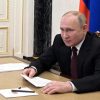
Ukraine: What’s Really Behind Putin’s Deployment of ‘Peacekeeping’ Troops? Experts Explain
Vladimir Putin’s recognition of the independence of the two breakaway republics of Donetsk and Luhansk followed a surreal live broadcast of a security council meeting in the Kremlin. Sitting facing the 13-member council, Putin cajoled and argued as, one by one, his most senior officials – including Dmitry Medvedev, a former president and prime minister, and the country’s foreign minister, Sergei Lavrov – took to the lectern to provide their boss with “reasons” for the formal recognition of the two republics in the country’s east as independent states.
Israel’s Glorious and Gloomy Reality
No people have ever risen from the ashes of near-extinction to form a country and achieve the height of development in every walk of life like Israel. These magnificent accomplishments are now tragically marred with domestically charged struggles which ominously undermine its very existence.
War Clouds in Europe: Alert and Alarm in Asia
What happens in Europe cannot be expected to remain in Europe, particularly in this interconnected world. As war clouds gather in that continent with Russo-Western relations deteriorating by the day over Ukraine, ripples, indeed waves, are expected in consequence on the waters of faraway Asia. There, despite the onslaught of the Covid pandemic, nations appeared till recently to be devoting themselves to economy-boosting efforts, regionally expanding trade (ASEAN), or domestically sharing prosperity (China). Now suddenly, as Russia and the West try to tap the reservoir of till-now vocal support from their respective camp-followers in that region, these countries feel trapped between Scylla and Charybdis. Slowly but surely, given the imperatives of geo-politics, they may be constrained to take sides, albeit in the case of some, most reluctantly.
Ukraine Crisis: The Stakes are High
If the Ukraine crisis erupts into war – even intensified limited war in Eastern Ukraine with overt Russian intervention – the consequences will be severe and far-reaching.
Is Big Power Rivalry Threatening to Sink the Indian Ocean Zone of Peace?
A former Indian ambassador once told an American audience that one of the biggest misconceptions about the Indian Ocean is that it belongs to India. “Not so, but we wish we did”, he said, amidst laughter.« Previous Page — Next Page »





The Week with IPS

NEXT STOP - SDGs
Tracking global progress towards a sustainable world
Tracking global progress towards a sustainable world
