Languages
Sunday, October 25, 2026



News and Views from the Global South
Peace

Military Boot Pushes Down on Democracy
Egypt’s military chief, General Abdel Fatah El-Sissi, who in July announced on state television that the army had ousted Egypt’s first democratically elected president, has tried to wrap a veneer of democracy around actions that most others have condemned as a coup.Extremist Violence Returns to Hit Mogadishu
As the Somali government announced it would set up a coastguard to combat piracy in this Horn of African nation, insecurity is emerging as the biggest challenge that the government faces – and it is only getting worse.
Balkans Feed the Syria Battle
This holy month of Ramadan comes with a difference for some families in the Balkans. It is the first without their young sons, husbands or brothers who died far away from home fighting in Syria.U.S. and Pakistan Try to Mend Frayed Ties
U.S. Secretary of State John Kerry, on an official trip to Pakistan, announced Thursday that high-level policy discussions will begin anew between Washington and Islamabad.
OP-ED: Bahrain Declares War on the Opposition
The special session of the Bahraini National Assembly held on Sunday Jul. 28 was a spectacle of venom, a display of vulgarity, and an unabashed nod to increased dictatorship.
Kirkuk Plays Dice With Violence
Two teams struggle to find an olive under one of the 11 cups displayed on a tray. The traditional game sin-u-serf (tray and cup in Kurdish) is only played during the Muslim fasting month. In one of Iraq’s most violent cities, it is nothing less than a challenge to death.
Voting to Save Zimbabwe’s Economy
At a recent campaign rally in Zimbabwe’s Midlands Province, Prime Minister Morgan Tsvangirai pledged to establish rural-based companies to create employment. It was a promise that appealed to 34-year-old sociologist Agnes Ngwenya who graduated from the University of Zimbabwe 10 years ago, but has not yet found work.Mideast Peace Talks Get New Lease on Life
Six months of United States diplomatic efforts have finally restarted talks between Israelis and Palestinians, yet pessimism about their potential for success persists.
Bands Play Across Political Discord
Two heavy metal bands, the Israeli-Arab Khalas (‘enough,’ in Arabic) and the Orphaned Land, a Jewish band, performed simultaneously this week under the roof of Club Hangar 13 in the refurbished port of Tel Aviv. The bands are slated to play together this fall in a series of 18 gigs across Europe.
Malian Politicians Warn of Election Fraud
An increasing number of Mali’s political groups have warned of widespread fraud ahead of the presidential election on Sunday Jul. 28.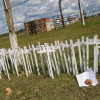
Report Says 220,000 Have Died in Colombia Conflict
Almost a quarter of a million Colombians have been killed in the country's internal conflict since 1958, most of them civilians, a government-funded report has said.
U.S. Courts Uphold Conflict Minerals Disclosure
A U.S. federal judge has upheld a key regulatory provision aimed at ensuring that the profits from products mined in central Africa are not used to benefit armed groups, particularly in the Democratic Republic of Congo (DRC).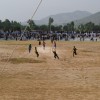
Where Sports Replace Terror
Pakistanis are no strangers to sports-related violence; in fact, many have come to expect scuffles and conflict, especially following a major cricket match. In the country’s northern Federally Administered Tribal Areas (FATA), however, cricket has become a tool to promote peace.Egypt Army Chief Calls for Nationwide Rallies
Egypt's army chief Abdel Fattah al-Sisi has called for nationwide rallies to give the military a mandate to confront what he termed violence and terrorism following the removal of President Mohamed Morsi.
New Bid for Mideast Talks after Five-Year Hiatus
There is a real opportunity for peacemaking between Israel and the Palestinians, even though the obstacles are more formidable than in the past. That was the assessment of former U.S. president Jimmy Carter, speaking Monday at a public event which posed the question “Can the Two-State Solution Be Saved?”
Making Peace with Our Futures
Future studies, like peace-development-environment studies, is an interdisciplinary, international effort to get a grip on key issues, divided into ‘preferred futures’ – utopias – whose?; ‘predicted futures’ – forecasting – who does it, for whom?; and ‘future practice’ – scenarios bending the predicted toward the preferred – by and for whom?Challenges and Opportunities Await Iran’s Rouhani
The transition team of Iran’s President-elect Hassan Rouhani was busy last week lowering expectations for a quick economic recovery, saying that things are far worse than they had thought.
Afghan Mission Not Quite Ending
NATO member countries like Canada will continue to be asked to shoulder the burden of a military mission stuck in Afghanistan because of the continued vulnerability of the Kabul-based government.OP-ED: Egyptian Muslim Brotherhood: Exclusion Breeds Radicalism
The Egyptian military’s removal of the democratically-elected President Mohamed Morsi and the Muslim Brotherhood from power upended the MB’s 20-year old political participation programme. If the new regime aims to achieve genuine reconciliation and political consensus, the MB and its supporters must be included in the restructuring of Egyptian politics.
When Israelis Boycott a Settlement
As the European Union delegitimises the settlement enterprise further by officially announcing that, effective Jul. 30, its 28 member states are required to differentiate between pre-1967 Israel and Israeli-occupied territories, Israelis supportive of a two-state solution vigorously lead their own boycott campaign against Ariel, a settlement town of 20,000.
Santos Says Colombia Doesn’t Need U.N. Human Rights Office
The Colombian army killed Marta Díaz’s son Douglas in 2006, dressed him in combat fatigues and reported him as a FARC guerrilla killed in a shootout. Díaz searched for him everywhere, in prisons, hospitals and morgues, until she finally managed to track down his remains in 2008.« Previous Page — Next Page »





The Week with IPS

NEXT STOP - SDGs
Tracking global progress towards a sustainable world
Tracking global progress towards a sustainable world
