Languages
Wednesday, November 11, 2026



News and Views from the Global South
Headlines
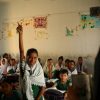
Hundreds of Millions of Children Sentenced to Ignorance
More than two-thirds of 10-year-olds are unable to read and understand a simple text. This shocking finding should be enough to be alarmed about the horrifying fate of an entire generation. But there is much more.
How Development Banks Put Communities at Risk – PODCAST
 A 2021 World Bank-financed project in Uganda was supposed to help communities to sustainably manage local areas and to cope with the impacts of Covid-19. But at one site, the Toro Semliki Wildlife Reserve, the funding emboldened the Uganda Wildlife Authority. A government body, and the project’s implementing agency, the UWA has long prevented indigenous communities from reclaiming their land near the wildlife reserve.

Sand Poachers Fueling Environmental Harm in Zimbabwe
In Chitungwiza, right next to the highway, 36-year-old Nesbit Gavanga and his five colleagues use shovels as they load trucks with sand. The six apparently are in the business of sand-poaching and openly explain that every other day they engage in running battles with environmental officials who seek to curtail land degradation here. The group’s informal sand quarry lies 25 kilometers southeast of the Zimbabwean capital Harare.
COVID-19 Forced Ugandan Teachers to Go Digital, Teaching Them Important Lessons
Before the outbreak of COVID-19, an education officer in the district neighbouring Uganda’s capital Kampala decreed that teachers could not take computers, mobile phones, or tablets into classrooms.
Afghanistan: The Year of Illusions
Afghanistan is where history has taken it! The Trump-Taliban "Agreement for Bringing Peace to Afghanistan," signed on 29 February 2020, is deemed by many as the submission of a superpower to a group that had perpetrated acts of extreme ferocity and terror.
Bukele’s Failed Bitcoin Experiment in El Salvador
A year after Salvadoran President Nayib Bukele decided to make El Salvador the first country where bitcoin is legal tender, the experiment has so far failed, as few of the original plan's objectives have been achieved.
Afghanistan: A Treasure Worth More than a Trillion Dollars
Both mainstream media, international bodies and human rights defenders continue to rightly denounce the Taliban's inhuman abuses against the Afghan people’s basic rights, in particular those of women and girls.
Make Art, Not War: Ukrainian Artists Tell the Ukraine Story Through their Art
“I must say that I had a premonition of a war with Russia in 2014 when Russian troops had started to occupy Crimea,” said Mykola Zhuravel, a contemporary painter and sculptor, in an interview with IPS. Zhuravel, with his partner, Daria Tishchenko-Zhuravel, have used art to communicate and express the horrors of the war since 2014.
Pakistan’s Climate Catastrophe: Lessons for the World
Monsoon flooding has occurred often in Pakistan but never to the catastrophic extent presently happening. A distinguishing feature of this disaster is that no one blames the flooding’s unprecedented intensity and destructiveness on anything but climate heating. The clear link between the warming atmosphere and the frequency and duration of extreme weather events of this scale should not be lost on the rest of the world.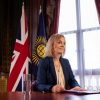
Eight International Development Priorities for the new UK Prime Minister
The UK’s new Prime Minister (and former Foreign Secretary), Liz Truss, enters Downing Street with a full and urgent in-tray, dominated by the highest inflation rate for 40 years and concerns across the country about the cost-of-living crisis.
1980s’ Redux? New context, Old Threats
As rich countries raise interest rates in double-edged efforts to address inflation, developing countries are struggling to cope with slowdowns, inflation, higher interest rates and other costs, plus growing debt distress.
The Right Policies Can Protect the Workers of Asia and the Pacific
Most of the 2.1 billion strong workforce in Asia and the Pacific are denied access to decent jobs, health care and social protection but there is an array polices and tools that governments can use to remedy these deficiencies and ensure that the rights and aspirations of these workers and their families are upheld and that they remain the engine of economic growth for the region.
Malawian Farmers Reap More from Sunflower, Chillies
Having harvested and graded their sunflower crop instead of taking it to market, every member of Zikometso Productive and Innovation Centre (IPC) brings their produce to the factory for cooking oil production. The IPC falls under the National Smallholder Farmers Association of Malawi (Nasfarm).
The Dying Children Divide
The chances of a child dying before reaching age five years have dropped substantially worldwide during the recent past. However, a significant divide remains among countries as well as within regions in the chances of children dying.
A Plea for the Creation of a UN Youth Assembly
There are many ways the UN can have a sizeable role in promoting the engagement and participation of youth and helping them becoming a central pillar of a new way of doing policy-making.
Biomethane, the Energy that Cleans Garbage in Brazil
The increasing productivity with which humankind generates waste has gained at least one sustainable counterpart: the extraction of biogas from landfills, a growing activity in Brazil.
Special Economic Zones: A Nod Towards Capitalism in Venezuela
Venezuela is preparing to replicate the experience of Special Economic Zones (SEZs), a mechanism with which more than 60 countries have tried to draw investment and accelerate economic growth, while under its avowedly socialist government a "silent neoliberalism" is gaining ground.
Transforming Girls’ Education, Changing The World
As we approach this year’s Transforming Education Summit, global leaders can and must prioritize expertise and mobilize political will to support efforts to ensure inclusive and quality education for all, especially girls. This is at the heart of Sustainable Development Goal 4 in the 2030 Agenda for Sustainable Development, as well as the commitments made in the Charlevoix Declaration and the G7 Declaration on Girls’ Education.
To Be Black (and Crash the Goal) in Nagorno-Karabakh
"This year the weather in Nagorno-Karabakh is warmer than in my home country, Senegal," jokes Sow Ababacar, a 22-year-old footballer from the local stadium in Stepanakert, the capital of this Caucasus enclave. Although he once dreamed of playing for the Senegalese national team, the midfielder is currently training with the disputed territory´s national squad.
From Worm Composting to Biofuels, the Caribbean Seeks Solutions to Seaweed Influx
In June 2022, swathes of matted, putrid seaweed took over the shores of beaches across the Caribbean. It was the worst seaweed influx reported since 2011, when ocean currents began depositing tons of the brown seaweed, known as Sargassum, across the region, leaving authorities grappling with the severe ecological and economic fallout.
Air Pollution Kills Millions Every Year: Action Needed
Tarik, age 42, lives in a village adjacent to a decades-old coal power plant in Bosnia and Herzegovina. On the day we visited, Bosnian cities were some of the most polluted places on Earth. Describing the devastating health toll the air pollution took each year on the village’s older residents he voiced his fear for his aging parents, who had lived there for over 40 years: “The older people in this village are desperate. They put up with this air for months. They don’t get out, they don’t socialize, they can’t get groceries or medication. It’s a terrible existence.”« Previous Page — Next Page »





