Languages
Tuesday, October 20, 2026



News and Views from the Global South
Biodiversity

Restoring Our Degraded Planet
On the 1st of March 2019, we saw one of the rare moments in history when the entire world comes together and agrees on a joint way forward. The United Nations General Assembly recognized the urgent need to tackle the compounded crisis of climate change and biodiversity loss, and passed a resolution to proclaim 2021-2030 as the UN Decade on Ecosystem Restoration. With the aim to restore at least 350 million hectares of degraded landscapes by 2030 – an area the size of India – the UN Decade is a loud and clear call to action for all of us. And it is a great opportunity for the UN-REDD Programme and its partner countries to build on 10 years worth of relevant experience with safeguards, impactful policies and measures, and attracting private and public investments.
Ecuador in Frontline to Address Climate Change
As the UN commemorates World Environment Day, UNDP would like to take this opportunity to commend Ecuador’s efforts to address climate change and its commitment to raising its climate ambition.
These Aliens Are Here to Stay (And They Are Dangerous)
No, no, no. Nothing to do with what US and Europe’s far-right fanatics now use to vociferate, saying once and again that “migrants come here to destroy our democracy, our civilisation, and our life-style”.
Long Life to Their Majesties, the Bees!
Amazingly organised social communities, bees ensure food chain. ‘Bee’ grateful to them… at least on their World Day!
Loss of Biodiversity Puts Current and Future Generations at Risk
An alarming report about the massive loss of biodiversity around the world warns that future generations will be at risk if urgent action isn’t taken to protect the more than one million species of plants and animals threatened with extinction.
Land Conservation: A Risky Business
In light of land degradation and climate change, the protection of the environment is crucial—but the protection of the very people working tirelessly and with much risk to preserve nature should be just as important.
Using Climate-Smart Solutions to Promote Peace in South Sudan
Almost a month to go ahead of the traditional rainy season in Gbudue State, 430 kilometres west of South Sudan’s capital, Juba, smallholder farmers are already tilling their land as they prepare to plant purer, drought-tolerant seeds.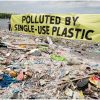
The Rising Trend of Zero Waste Lifestyles
Not too long ago, the term “zero waste” was just one of those boring policy directives or catchphrases thrown around by governments. But in the last few years, ‘going zero waste’ has taken on a new direction as a lifestyle trend of the insta-famous, who are helping to make zero waste a movement that anyone can get involved in.
Island Women Take the Lead in Peatland Restoration
Eluminada Roca has lived all her life next to the Leyte Sab-a Basin peatlands. The grandmother from of San Isidro village in Philippines’ Leyte island grew up looking at the green hills that feed water to the peatland, she harvested tikog—a peatland grass to weave mats—and ate the delicious fish that was once in abundant in the waters. But today, the land is losing its water, the grass is disappearing and the fish stock has drastically decreased.
Healthy Oceans, Healthy Societies
Over recent years, there have been shocking reports of marine endangerment and plastic pollution. The threats are clear, and now urgent action is needed more than ever.
Mining Grabs Up Land, Deals Blow to Agriculture in Central America
Like an octopus, metals mining has been spreading its tentacles throughout Central America and dealing a blow to the region's agriculture and natural ecosystems, according to affected villagers, activists and a new report on the problem.
Q&A: Suriname’s President Champions Preserving the World’s Forests
At the Bonn Climate Conference in 2017, Suriname announced its aspirations to maintain its forest coverage at 93 percent of the land area. For Suriname and other High Forest Cover and Low Deforestation (HFLD) nations, maintaining forest coverage is their contribution to saving the planet from the effects of climate change, something they did not cause.
‘Today, We Declare Our Love to Our Forests and Ecosystems’
High Forest Cover and Low Deforestation (HFLD) nations ended a major conference in Suriname on Thursday, with the Krutu of Paramaribo Joint Declaration on HFLD Climate Finance Mobilisation.
Q&A: What of the Carbon Neutral Countries?
As High Forest Cover and Low Deforestation (HFLD) nations meet in Suriname at a major conference, it is obvious that the decision made by these countries to preserve their forests has been a difficult but good one.
Q&A: We Are Helping the World Mitigate Climate Change, Now it’s Time to Help Us
The Caribbean nation of Suriname may be one of the most forested countries in the world, with some 93 percent of the country’s surface area being covered in forests, but it is also the most threatened as it struggles with the impacts of climate change.
Our Forests Provide the World With Oxygen But We Need More Climate Change Finance – HFLD Countries
Suriname, the most forested country in the world, is this week hosting a major international conference on climate financing for High Forest Cover and Low Deforestation (HFLD) countries.
Q&A: The Nature of Value vs the Value of Nature
Humans have long had a varied and complicated relationship with nature—from its aesthetic value to its economic value to its protective value. What if you could measure and analyse these values? One group is trying to do just that.
Billions of Dollars Available for Reducing and Reversing Land Degradation
The United Nations Convention to Combat Desertification (UNCCD) has debunked the notion that there is no funding available for countries to prevent, reduce or reverse land degradation.
The Silent, Invisible Crisis Destabilising Communities Could be a Subject of Hope
New data show that globally two billion hectares of land—roughly twice the size of China—have been degraded. And of this amount, 500 million hectares are abandoned agricultural lands.
Desertification, Land Degradation and Climate Change Go Hand in Hand
The link between desertification, land degradation and climate change is among several issues occupying the attention of the 197 Parties to the United Nations Convention to Combat Desertification (UNCCD) for the next three days.
Q&A: 17 Percent of the Problem, but 30 Percent of the Solution
From expansive evergreen forests to lush tropical forests, the Earth’s forests are disappearing on a massive scale. While deforestation poses a significant problem to the environment and climate, trees also offer a solution.« Previous Page — Next Page »





The world's diverse flora and fauna are facing urgent threats due to pollution, climate change, commercialization of nature and other forms of harmful human intervention. The widespread loss of biodiversity is worrying not simply because of the disappearance of exotic species which deserve saving, but because tampering with nature's equilibrium means that the loss of one form of life is a threat to another. IPS taps into its own diverse network of correspondents around the world to report on continuing and emerging dangers to nature's riches - and the struggle to protect them.

The Week with IPS

NEXT STOP - SDGs
Tracking global progress towards a sustainable world
Tracking global progress towards a sustainable world
