Languages
Friday, June 5, 2026



News and Views from the Global South
Biodiversity
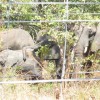
Malawi Leads Africa’s Largest Elephant Translocation
One of the world's largest and most significant elephant translocations kicked off earlier this month within Liwonde National Park in southern Malawi.
Biodiversity, GMOs, Gene Drives and the Militarised Mind
A recent report from the National Academy of Science of The United States, titled Gene Drives on the Horizon : Advancing Science, Navigating Uncertainty, and Aligning Research with Public Values”, warns:
The Future of Food in Cities: Urban Agriculture
Habitat III, the UN’s conference on cities this coming October will explore urban agriculture as a solution to food security, but here in New York City, it has shown potential for much more.
Record High Seafood Consumption Not Sustainable, Warns UN
The UN's Food and Agricultural Organisation (FAO) warned Thursday that global fish stocks cannot keep up with record consumption, with the average person now consuming 20 kilograms of fish a year.
Can Better Technology Lure Asia’s Youth Back to Farming?
Farming and agriculture may not seem cool to young people, but if they can learn the thrill of nurturing plants to produce food, and are provided with their favorite apps and communications software on agriculture, food insecurity will not be an issue, food and agriculture experts said during the Asian Development Bank (ADB)’s Food Security Forum from June 22 to 24 at the ADB headquarters here.
African Fisheries Plundered by Foreign Fleets
In 2011, Dyhia Belhabib was a volunteer in the Fisheries Centre at the University of British Columbia in Vancouver when she was asked to participate in the Sea Around Us’s project to determine how much fish had been taken out of the world’s oceans since 1950 in order to better avoid depleting the remaining populations of fish.
The Environment: Latin America’s Battleground for Human Rights
2015 was the deadliest year on record for the killings of environmental activists around the world, according to a new Global Witness report.
India’s Dwindling Tiger Population Face Water Shortages

At the beginning of the 19th century there were 40, 000 tigers in the world. Today, around 4,000 tigers are left in the wild globally, 2,226 of which are in India.

‘What Can We Do for You?’ Aid Projects Pour Into Myanmar
International aid agencies, big and small, are beating a path to Myanmar, relishing the prospect of launching projects in a nation of 51 million people tentatively emerging from more than five decades of military rule.
Polynesian Voyagers Bring Messages of Hope to UN on World Oceans Day
Polynesian voyagers who have sailed the world by canoe using ancient navigation skills will bring pledges they collected along the way to the UN on Wednesday as part of World Oceans Day celebrations.
Coral Reef Tourism in Danger as Reefs Struggle to Adapt to Warming
A recent UN Educational, Scientific and Cultural Organization (UNESCO) report on world heritage sites in danger from climate change received widespread media attention after the Australian government requested the removal of a chapter on the Great Barrier Reef.
World Oceans Day – A Death Sea Called Mediterranean
While the United Nations identifies 17 major regional seas in its planning, the Mediterranean is perhaps the most dramatic case as it has gone from being the so-called cradle of civilization to be a cemetery for thousands of asylum-seekers and migrants. And it is most probably also the most polluted water basin the whole world. See this report.
Mega Dams Remain Controversial Source of Energy
Although mega dams can have devastating impacts on ecosystems and indigenous communities, many of the world’s poorest countries still see them as a way to fill gaping holes in their energy supplies.Wildlife Trafficking Needs to Be a Policy Priority in Asia Pacific Before It Is Too Late
This year’s World Environment Day on June 5 puts the spotlight on the illegal trade in wildlife. The problem has particular significance in Asia, which is the destination for most of the ivory taken from 20,000 to 25,000 elephants and the horns of more than 1,200 rhinos killed in Africa every year. Demand in the region is driven by fast growing middle and upper classes with an appetite for exotic pets, décor, food and fashion.
Closing the Gaps in Fight Against Wildlife Trafficking in Latin America
Although it violates the international conventions that regulate the wildlife trade, it is possible to go online and find websites to buy, for example, axolotl salamanders (Ambystoma mexicanum) or spiny softshell turtles (Trionyx spiniferus).
New International Accord to Tackle Illegal Fishing
A new international accord to tackle illegal and under-reported fishing will come into force on June 5.
Natural Capital Investment Key to Africa’s Development
Plugging Africa’s funding gaps to accelerate social and economic development requires a fresh approach to using its natural capital, environment experts said on Monday.
Prickly Pears Drive Local Development in Northern Argentina
Family farmers in the northern Argentine province of Chaco are gaining a new appreciation of the common prickly pear cactus, which is now driving a new kind of local development.
Why Mainstreaming Biodiversity Is the Call for the Day
We have become familiar with the term biodiversity today due to the Convention of Biological Diversity [CBD] that was accepted by the UN Council on December 29, 1993, after which many nations, including Bangladesh, started becoming its signatories. As biodiversity is the foundation of life and is essential for the services provided by ecosystems, this year's theme of the International Biodiversity Day is “Mainstreaming Biodiversity; Sustaining People and their Livelihoods.”
Bangladesh’s Urban Slums Swell with Climate Migrants
Abdul Aziz, 35, arrived in the capital Dhaka in 2006 after losing all his belongings to the mighty Meghna River. Once, he and his family had lived happily in the village of Dokkhin Rajapur in Bhola, a coastal district of Bangladesh. Aziz had a beautiful house and large amount of arable land.
Species Loss, the Migration Hiding in Plain Sight
Two months ago, I was in Agadez, a city in the middle of the famous Ténéré Desert of Niger. Agadez has become a major transit point on a hazardous journey for the hundreds and thousands of desperate people from all over West Africa trying to make it to the Mediterranean coast every year.« Previous Page — Next Page »


The world's diverse flora and fauna are facing urgent threats due to pollution, climate change, commercialization of nature and other forms of harmful human intervention. The widespread loss of biodiversity is worrying not simply because of the disappearance of exotic species which deserve saving, but because tampering with nature's equilibrium means that the loss of one form of life is a threat to another. IPS taps into its own diverse network of correspondents around the world to report on continuing and emerging dangers to nature's riches - and the struggle to protect them.

The Week with IPS

NEXT STOP - SDGs
Tracking global progress towards a sustainable world
Tracking global progress towards a sustainable world
