Languages
Saturday, November 28, 2026



News and Views from the Global South
Civil Society

In Haiti, Aid Dollars Corroded Social Fabric
A World Bank-funded community development project in Haiti appears to have inadvertantly harmed or even dissolved some of the grassroots organisations it was designed to strengthen.
World Bank “Success” Came at High Cost in Haiti
A 61-million-dollar, eight-year community development project funded by the World Bank and executed by the Haitian government and two international development agencies has raised questions of waste and corruption, and even carried out what could be called “social and political re-engineering".
Morphine Kills Pain but its Price Kills Patients
It took Gily Ncube’s daughters two weeks to sell enough chickens to raise the 18 dollars needed to buy the morphine tablets their mother takes every four hours.
People Pay for Research Against Migrants
Publicly funded research is paying towards security systems that the EU is inviting major multinationals to put together to keep unwanted migrants out.
Treaty “Insufficient” to Reduce Global Mercury Levels
Even as government negotiators from around the world prepare to gather next week for a final round of talks on a new international treaty limiting the use of mercury, scientists and activists are warning that the draft treaty is both too weak and too limited in scope to have a major impact.
Slum Dwellers Say “No” to Blood Money
With less than two months before Kenyans head to the polls for what is shaping up to be the most competitive and polarised general election in the country’s history, many fear that this East African country of over 40 million has not seen the last of electoral violence.
More Aging U.S. Coal Plants Hit the Chopping Block
Georgia Power, a subsidiary of Southern Company, one of the largest utilities in the U.S. south, plans to retire 15 coal and oil-fired energy generating units at four different plants, in the latest sign that a national campaign against coal is gaining traction.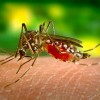
Brazil Measures Rain Against Dengue
Mosquitoes that transmit dengue fever need clean, still water and warm night temperatures to reproduce and thrive. That is common knowledge, but now scientists in Brazil have managed to measure the relation between increased rainfall and temperatures and the risk of dengue epidemics in this city.
Education Fights Militants and Military
Eight-year-old Muhammad Akram was forced to quit school when he was in the second grade, when the Taliban destroyed the small, government-run school that he and his brother had been attending.
Government “Continuity” Winning Over in Venezuela
While Hugo Chávez is being treated for serious illness in Havana, the premise of government "continuity" is winning out in his home country, along with plans to postpone his swearing-in ceremony for a new term as president of Venezuela, due to take place on Thursday Jan. 10.
Chilean Archaeologists and Environmentalists Fight Dakar Rally
Archaeologists, environmentalists and the National Monuments Council are battling the Dakar Rally, an annual off-road race, in northern Chile, an area with a rich archaeological and natural heritage that has already lost dozens of sites key to understanding Chilean and South American prehistory.
Unemployed Youth Turn to Drugs
The air is heavy with the smell of marijuana as Gibrilla (23) expertly rolls a large joint at the Members of Blood (M.O.B) gang base in a poor neighbourhood of Sierra Leone’s capital, Freetown.U.S. to Take Closer Look at Flood of Corporate Political Spending
Civil society actors and the some corporate groups here are reacting with excitement to indications that the U.S. Securities and Exchange Commission (SEC), which regulates the country’s stock exchanges, is likely to take up discussion over new rules that would mandate the public disclosure of all political spending by U.S.-listed public corporations.
U.S. Immigration System’s Cost, Reach “Unprecedented”
The United States government is spending more on immigration enforcement each year than it is on all other federal law-enforcement agencies combined, according to the first comprehensive look at how the country’s sprawling immigration complex has grown over the past decade.Showdown Looms Between Erdoğan and Gülen Movement
A tactical alliance in Turkey between Prime Minister Recep Tayyip Erdoğan and a movement headed by theologian Fetullah Gülen is unraveling. And the break-up is threatening to turn acrimonious.
New Push for U.S. to Ratify Major Women’s Treaty
The United States continues to be in the dubious company of six countries that have either refused or are reluctant to ratify the landmark U.N. Convention on the Elimination of All Forms of Discrimination Against Women (CEDAW).
Abandoning Nuclear Weapons – Lessons from South Africa
Not many nice things can be said about the apartheid regime in South Africa. It was racist, violent in the brutal oppression of many of its own citizens, and was despised around the world.
Executions Elicit Fears of Authoritarianism
Taiwanese activists and human rights advocates ushered in the New Year with a push to prevent a return to authoritarianism and defend procedural justice for death row prisoners in the wake of six executions just before Christmas.
Historic Mapuche Land Conflict Flares Up
A string of attacks in the southern Chilean region of Araucanía, where native Mapuche people are struggling for their land rights, puts the spotlight squarely on what analysts call the "supine ignorance" displayed by authorities about the country's history.
Pacific Island Wakes Up to Threat of Oil Spills
Coral reefs and marine ecosystems in the Milne Bay Province of the Pacific Island nation of Papua New Guinea are at serious risk of long-term environmental damage. The reason: an oil spill from a ship that ran aground on a reef on Kwaiawata Island on Christmas Eve, and authorities’ long delay in mobilising an appropriate response to the accident.
Villagers Wail Against Nuclear Power
Mahalakshmi, a housewife married to a farmer, is afraid for her family’s future. The fifty-two-year-old woman is also frustrated that Indian authorities have "betrayed" poor villagers.« Previous Page — Next Page »


 Representatives of Civil Society, Sierra Leone. Credit: UN Photo/Eskinder Debebe
Civil society faces mounting threats worldwide, even as it remains essential for democratic accountability, especially in countries struggling with economic instability and social inequality. However, at the same time, nations with weak democratic governance structures also systemically suppress the power of civil society. Human rights activists across the Global South frequently challenge issues such as political persecution and gender oppression, but in return face state-sanctioned punishment for their advocacy. Imprisonment and exile are common mechanisms of punishment that seek to erode the strength of civil society. The 2026 World Press Freedom Index has reached its lowest level in 25 years, with more than half of the world’s countries now falling into the "difficult" or “very serious” category for press freedom. IPS seeks to highlight the work of civil society across the Global South as well as the challenges that they face.
Updated by Yilan Batista and Shuli Wong August 2026

The Week with IPS

NEXT STOP - SDGs
Tracking global progress towards a sustainable world
