Languages
Sunday, November 22, 2026



News and Views from the Global South
Civil Society
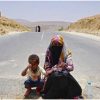
Coronavirus Worsens Yemen’s Long Tale of Woe
In every room in Yemen’s Al-Saba’een hospital, patients in critical condition waited on chairs, and still others laid on the bare ground. I saw women and girls sharing beds in pairs, and children laying close together being treated.
TRENDS E-Symposium to Address Post-Corona Globalization Challenges
TRENDS Research & Advisory is organizing its first-ever E-Symposium to discuss the global impacts of the COVID-19 crisis and offer insights on the steps needed to mitigate its negative effects worldwide. This will be the first online symposium of its kind to be organized since the outbreak of the coronavirus in the Gulf and Middle East region.
COVID-19 in the Time of Insecurity
Humankind has outlived multiple pandemics in the course of world history. The kingdoms and states of Central and Western Europe abolished the institution of serfdom once it had become clear that medieval rule in the aftermath of devastating pestilence would founder without ending the dependency and servitude that characterized the Dark Ages. The vulnerability of entire nations to the risk of total collapse in the absence of widespread access to the most basic healthcare in the Spanish Flu spurred governments to build the public health systems that have made the progress and development of the last hundred years possible. If the past is prologue, then continuity and survival command that we change.
Why Empowering National Human Rights Institutions Helps on the Quest for Healthy Earth?
We are living in a critical time. As we face existential environmental challenges from climate crises to the mass extinction of species, it is difficult sometimes to see solutions and new ideas. This is why we all need to celebrate and give visibility to creative and courageous efforts of people and organizations striving towards a healthy planet for all.
Never Give up on Women’s Rights – Edna Ismail
For Dr Edna Adan Ismail maternal health and midwifery is deeply personal. In an interview with Women Deliver Young Leader Musu Bakoto Sawo, Ismail recalls her mother’s devasting experiences which impacted on her own life’s choices.
Young People Bring Solar Energy to Schools in the Argentine Capital
"The idea came to a group of schoolmates and me in 2014, but we never thought it could become a reality," says Sebastián Ieraci, 23, as he points to a multitude of photovoltaic solar panels shining on the roof of the Antonio Devoto High School in the Argentine capital.
Could the Coronavirus Pandemic have been Avoided if the World Listened to Indigenous Leaders?
Mina Setra remembers the story clearly. As a Dayak Pompakng indigenous person from Indonesia, when visitors from the city who came into her community; brought bottled water with them because they were worried about the water not being suitable for drinking.
A Woman Peacebuilder’s Reflections on Beijing+25 & the Generation Equality Forum
Where are the women and youth peacebuilders in the Beijing+25 and the Generation Equality Forum processes? Their absence raises serious questions about the effectivity and coherence of the work of the UN on gender equality since armed conflict is both a cause and a consequence of gender inequality.
The 2020 NPT Review Conference: From the Sublime to the Ridiculous
This year marks the 50th anniversary of the nuclear Non-Proliferation Treaty (NPT) and coincidentally the tenth quinquennial (five yearly) review conference is scheduled to be held at the United Nations in New York from 27 April to 22 May.Seeds&Chips – The Global Food Innovation Summit 2020 postponed
In light of the ongoing public health emergency and in observance of the decree signed by the Italian Prime Minister, Giuseppe Conte, on Monday, March 9th - enacting forced quarantine for the whole Italian country, while banning all public events until April, 3 – we have taken the tough decision to postpone the Sixth Edition of Seeds&Chips – The Global Food Innovation Summit which would have been taking place on May 18-20, 2020 at MiCo, Milano Congressi.
UN Reaches 90:90 Gender Parity in Senior Leadership Transforming Organizational Culture
The United Nations claims it has reached one of its primary goals relating to women’s rights in the world body: gender parity at senior levels of management and in the highest echelons of the Organization.
Feminists Rewrite Their Realities Across the Global Map
In November 2019, thousands of Chileans took to the streets to perform an anti-rape, anti-femicide choreography organized by a small feminist collective called Las Tesis. The group created the choreographed chant in response to an upswing in violence against women and human rights violations in Chile, where 42 cases of sexual abuse are reportedto the police each day, with only around 25% resulting in judicial rulings.
There Can Be No Green Peace Without Gender Equality
Gender inequality - like the climate emergency - is not inevitable, but is kept in place by the poor choices too many cis men make on a daily basis. And it is not just womxn who are hurt and trapped by this patriarchal problem, but girls and non-binary people too, as well as many boys and men.
Coronavirus Threatens to Wreck Nuclear Review Conference
First, it was the ill-fated annual sessions of the UN Commission on the Status of Women (CSW), scheduled for March 9-20, which was undermined by the spreading coronavirus COVID-19.
It is Time for Action! Uniting for Africa’s Transformation
Twenty-five years ago, thousands of representatives adopted the Beijing Declaration, one of the most progressive universal agreement to advance women’s rights.
What’s Needed for Real Changes for Women in Lebanese Politics?
Women were at the forefront of Lebanon’s 2019 ‘October Revolution’. Beyond the iconic images of their participation, it seems that by women linking equity in politics to the broader issues of mismanagement of corruption paid off - although activists say there is a long road ahead.
UN Chief Should Lead by Example on Human Rights
United Nations Secretary-General Antonio Guterres has long needed to overhaul his approach to human rights. Hopefully his call to action announced in Geneva yesterday is the start of something new.
Preserving World’s Biodiversity: Negotiations Convene at FAO Headquarters
“The world out there is watching and waiting for results,” Elizabeth Maruma Mrema warns while talking to IPS regarding the preservation of biodiversity of our planet.
Fiscal Policies For Women’s Economic Empowerment
Making sure that opportunities to enter the workforce are fair and rewarding for women benefits everyone. Yet, the average female workforce participation rate across countries is still 20 percentage points lower than the male rate, largely because gender gaps in wages and access to opportunities, such as education, stubbornly persist.
How Nigeria’s Police used Telecom Surveillance to Lure & Arrest Journalists
As reporters for Nigeria’s Premium Times newspaper, Samuel Ogundipe and Azeezat Adedigba told CPJ they spoke often over the phone. They had no idea that their regular conversations about work and their personal lives were creating a record of their friendship.
Coming Down the Davos Mountain with a Gender Lens
In a recent report by World Economic Forum (WEF) shows women suffer a “triple whammy” in the workplace. Without drastic action, gender parity will take more than a lifetime to achieve. This is the challenge that Katja Iversen, President and CEO of Women Deliver is staring down.« Previous Page — Next Page »


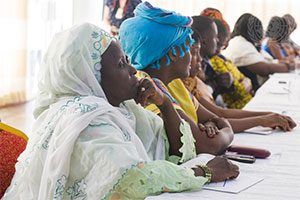 Representatives of Civil Society, Sierra Leone. Credit: UN Photo/Eskinder Debebe
Civil society faces mounting threats worldwide, even as it remains essential for democratic accountability, especially in countries struggling with economic instability and social inequality. However, at the same time, nations with weak democratic governance structures also systemically suppress the power of civil society. Human rights activists across the Global South frequently challenge issues such as political persecution and gender oppression, but in return face state-sanctioned punishment for their advocacy. Imprisonment and exile are common mechanisms of punishment that seek to erode the strength of civil society. The 2026 World Press Freedom Index has reached its lowest level in 25 years, with more than half of the world’s countries now falling into the "difficult" or “very serious” category for press freedom. IPS seeks to highlight the work of civil society across the Global South as well as the challenges that they face.
Updated by Yilan Batista and Shuli Wong August 2026

The Week with IPS

NEXT STOP - SDGs
Tracking global progress towards a sustainable world
Tracking global progress towards a sustainable world
