Languages
Friday, October 9, 2026



News and Views from the Global South
Conferences

Caribbean Looks to Aquaculture Food Security to Combat Climate Change
Jimmi Jones and wife Sandra Lee’s fish farm in Belize City is unique. His fish tanks supply water and nutrients for his vegetable garden needs and the plants filter the water that is recycled back to the tanks.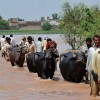
Climate Negotiators Discussing Warming and Migration Links
Stirred by the exodus of hundreds of thousands of refugees from Syria, where global warming exacerbated a drought that fueled warfare, links between climate change and human displacement have finally been thrust into news reports and political debates.
Permeable Dams Prevent Land Loss and Save Mangroves in Suriname
Suriname’s coastline is eroding so quickly scientists predict the country’s maze of mangroves could disappear in just 30 years unless there is urgent action on climate change.
Solar Power Fuels Hope on Neglected Lagos island
For the first time in his 30 years on Sagbo Kodji Island, near Lagos, Friday Onos has electricity at home, thanks to a solar power project that could transform the lives of the island’s 80,000 inhabitants.
Draft in Hand, Ministers in Paris Enter Last Week of Climate Talks
Whatever effort there was made during the past four years to create a global legal architecture to combat climate change, its legacy will be defined in the forthcoming days.Climate Talks in Final Phase With No Resolution on Funding
As the Paris climate talks move to its conclusion Friday, civil society groups are expressing serious concerns about the continued deadlock on a proposed package for funding amounting to about 100 billion dollars a year by 2020.Africa Hangs its Agricultural Transformation Agenda on COP 21’s Outcome
A famous saying goes: To whom much is given, much is expected. This is the message that the African Development Bank (AfDB) is carrying and delivering for, and on behalf of Africa at the global conference on climate change, COP21, which opened Monday, 30th November.
Solar Kiosks Help Light up Rural Kenya
This market centre in the arid Lake Magadi region, Kajiado of Southern Kenya is with no grid electricity. The area is inhabited by the pastoralist Maasai community. With climate change affecting their pastoral way of life, the community is increasingly adopting a more sedentary life but without amenities.
Making the Case for Caribbean Fishers at Paris Climate Conference
Horace Walters has made the 6,903km journey from his native St. Lucia to Paris to deliver a simple, yet urgent message to the international community.
Antigua: Surrounded by Sea but Catchments are Empty
Antiguan Veronica Yearwood no longer panics when she hears that the rainfall forecast for the tiny Caribbean island is again lower than average rainfall.
Nicaragua: “Only Way to 1.5 – 2 Degrees is out of Top 10 Emitters”
On the first day of the 2015 Climate Conference, Nicaragua became the first country openly refusing to comply with the United Nations mandate to submit a climate pledge.
Aspects of Dualism in the Gulf
The crash in oil prices is not the only challenge confronting the Gulf States in West Asia. Economic disorder and lack of opportunity are contributing to instability in the region, stated Bahrain’s minister for industry, commerce and tourism, Zayed Al Zayani, while kicking off the recent IISS Bahrain Bay Forum. He emphasized the need for “unprecedented” economic reform across the Gulf in the wake of the lower oil revenues. These policies include the generation of millions of jobs for the youth in these economies that continue to depend heavily on expatriate labour from India, Pakistan, Bangladesh and Philippines.
Saving the Arctic Requires Action on Climate Change and Air Pollution
Arctic temperatures have increased twice as much as the global average in the past 100 years. Recent photos show that thousands of walruses normally resting on sea ice between dives to find food have been forced to crowd ashore because of extreme sea ice melt in Alaska. Such photos have once again reminded us that it is high time we take serious action on climate change if we want to save the Arctic.
Opinion: NGOs Still Leading the Global Debate on Climate
Civil society organizations, known as NGOs, have for decades used their non-government status to prod officials, politicians and business on climate issues. Veteran campaigners Greenpeace, Friends of the Earth, Oxfam, Kenya’s tree planters, India’s Chipko tree-hugging protectors and indigenous movements worldwide first raised the issues of protecting the Earth and its atmosphere.
India Holds Up Farmers’ Plight from Extreme Weather for COP21 Delegates
“If you look at the submitted Intended Nationally Determined Contributions (INDCs, the national commitments to cut greenhouse gas emissions by 2030) by over 150 countries, most have announced mitigation-centric targets, whereas climate change is also about adaptation. India is among the few that has given a comprehensive INDC,” Ashok Lavasa, a key official of India’s Ministry of Environment, Forest and Climate Change and part of its COP21 team at Paris, told IPS.
Women Farmers Strive to Combat Climate Change in the Caribbean
In the Caribbean, some women find themselves on the frontline with the battle to mitigate climate change. Meet Dr. Krystal Cox. She is one of three girls who all studied medicine and got medical degrees.
Farmers Urge Solutions at Climate Change Talks
Recognizing that agriculture plays a significant role in global warming, farmer associations say they want to offer solutions, and they’re urging governments to include them in negotiations during the United Nations Climate Change Conference taking place Nov. 30 to Dec. 11 in Paris.
Climate Showdown Starts in Paris
Paris has finally arrived. During the next two weeks, a massive conference centre in the outskirts of the French capital will play host to the ultimate United Nations conference and the single most important climate change event in decades.
Paris Climate Summit Opens With Dire Warning
When the climate summit opened in Paris on Monday, the mood was overwhelmingly pessimistic -- largely about the current state of the global environment.
Traditional Seeds Keep Hunger Away in Drought-Prone Zimbabwe
It was all smiles as Bertha Chibhememe of Sangwe communal area in Chiredzi, south eastern Zimbabwe, showed off her traditional seed varieties at a seed fair. A 45-year-old smallholder in Zimbabwe’s lowveld region, Chibhememe told how her “nzara yapera” maize variety is thriving in a changing climate.
Addressing Climate Change Through Sustainable Development
Climate change impacts are already upon us. Sea levels are rising, glaciers and ice are melting. People in poor countries are struggling to cope and adapt. Even developed countries are facing adverse consequences, taxing their own adaptive capacities to increased flooding, drought and fires. We cannot afford to wait.« Previous Page — Next Page »





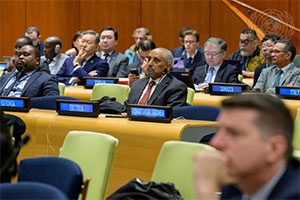 General Assembly Meets to Hear Briefing on UN80 Initiative. Credit: UN Photo/Manuel Elías
Global development conferences are continuing to produce critical frameworks for South-South cooperation and multilateral reform. In January of 2024, the 3rd Global South Nexus (GSN) International Conference was held in Odisha, India, with its theme being “Creating Responsible Professionals for Advancing SDGs: Inputs from Global North and South.” The 2025 UN SDG Report provided a midpoint assessment of the 2030 Agenda, with only 35% of targets on track and 18% having reversed. The 2025 UN Climate Change Conference (COP30) in Belém, Brazil, agreed to mobilize $1.3 trillion annually for climate action by 2035, operationalize the loss and damage fund, triple adaptation finance, and launched the Belém Mission to 1.5°C. In 2025, the Partnership for Economic Policy (PEP) convened its annual Policy Conference in Nairobi, Kenya, addressing the issue of “Financing and Inclusivity in Green Energy Transition in the Global South.” As the Global South advocates increasingly for a South-South framework alongside North-South cooperation, international conferences on sustainability aim to bridge economic and social divides between developed and developing countries in achieving the UN SDGs. Furthermore, to mark the UN’s 80th anniversary, the UN80 Initiative was launched to reshape how the UN system works so that every mandate, dollar, and decision creates greater impact for the global system.

The Week with IPS

NEXT STOP - SDGs
Tracking global progress towards a sustainable world
Tracking global progress towards a sustainable world
