Languages
Wednesday, November 11, 2026



News and Views from the Global South
Democracy

Kurdish Civil Society Against Use of Arms to Gain Autonomy
A rupture inside the movement for the creation of an independent state of Kurdistan has given new impetus to the voices of those condemning the use of weapons as the way to autonomy.
U.S. Ally Yemen in Danger of Splitting into Two – Again
When North and South Yemen merged into a single country under the banner Yemen Arab Republic back in May 1990, a British newspaper remarked with a tinge of sarcasm: "Two poor countries have now become one poor country."
Cuba and U.S. Skirt Obstacles to Normalisation of Ties
The biggest discrepancies in the first meeting to normalise relations between Cuba and the United States, after more than half a century, were over the issue of human rights. But what stood out in the talks was a keen interest in forging ahead, in a process led by two women.
OPINION: Looking Two Steps Ahead into Saudi Arabia’s Future
Much has been written about King Abdullah’s legacy and what Saudi Arabia accomplished or failed to accomplish during his reign in terms of reform and human rights. Very little has been written about the role that Muhammad bin Nayef, the newly appointed deputy to the crown prince, could play in the new Saudi Arabia under King Salman.
Not Without Our Daughters: Lambada Women Fight Infanticide and Child Trafficking
At 11 years of age, Banawat Gangotri already has four years of work experience as a farm labourer. The child, a member of the nomadic Lambada community from the village of Bugga Thanda in India’s southern Telangana state, plucked cotton and chillies from nine a.m. until 5 p.m. for about a dollar daily.
OPINION: Greece Gives EU the Chance to Rediscover Its Social Responsibility
The European Union should not be afraid of the leftist opposition party Syriza winning the Greek election, but see it as a chance to rediscover its founding principle - the social dimension that created it and without which it cannot survive.
Forced Disappearances Are Humanitarian Crisis in Mexico
The Mexican government will face close scrutiny from the United Nations Committee on Enforced Disappearances – a phenomenon that made international headlines after 43 students from a rural teachers college were killed in September in Iguala, in a case that has not yet been fully clarified.
Prosecutor’s Death a Test for Argentine Democracy
The death of a special prosecutor investigating one of the biggest unresolved mysteries in the history of Argentina, the bombing of a Jewish community centre over 20 years ago, has put to the test an immature democracy that is caught up in a web of conspiracy theories and promiscuity between the secret services and those in power.
Fighting Extremism with Schools, Not Guns
As a wave of outrage, crossing Pakistan’s national borders, continues a month after the Dec. 16 attack on a school in the northern Khyber Pakhtunkhwa province, some citizens are turning away from collective expressions of anger, and beginning the hard work of building grassroots alternatives to terrorism and militancy.
OPINION-CUBA/US: Catching a Glimpse of the Possible Future
All Cubans, on either side of the Florida Straits, but in places like Spain, France or Greenland – where there must be a couple of Cubans - as well felt it was a historic moment that included each and every one of us, when U.S. President Barack Obama announced on Dec. 17 the normalisation of relations after half a century of hostility.
From Bullets to Ballots: The Face of Sri Lanka’s Former War Zone
In four months’ time, Sri Lanka will mark the sixth anniversary of the end of its bloody civil conflict. Ever since government armed forces declared victory over the Liberation Tigers of Tamil Eelam (LTTE) on May 19, 2009, the country has savored peace after a generation of war.
OPINION: After the Terrorist Attacks in Paris
What happened in Paris on Jan. 7 – known all over the world – is totally unacceptable and inexcusable.
Cuban Diplomacy Looks Towards Both Brussels and Washington
Cuba has decided to move ahead in its talks with the European Union towards an agreement on cooperation parallel to the negotiations aimed at normalising relations with the United States after more than half a century of hostility.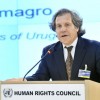
OPINION: A New Era of Hemispheric Cooperation Is Possible
Two decades after the first Summit of the Americas, a lot has changed in the continent and it has been for the good. Today, a renewed hemispheric dialogue without exclusions is possible.
OPINION: Cuba and the United States – A New Era?
On Dec. 17, by freeing the five Cuban anti-terrorists who spent over 16 years in U.S. prisons, President Barack Obama repaired a longstanding injustice while changing the course of history.
Battle Heats Up Over Legalisation of Sex Work in India
Thirty-six-year-old Chameli Devi, a sex worker operating out of New Delhi's G.B. Road - Asia's largest red-light district, housing an estimated 12,000 of India’s three million sex workers – is an unhappy woman these days.
U.N. Helpless as Saudi Flogging Flouts Torture Convention
Flogging a dead horse, as the old idiom goes, is far removed from flogging a live Saudi blogger.Press Looks at Future After “Charlie”
In the wake of last week’s attack on French satirical weekly Charlie Hebdo that left 12 people dead, a heated battle of opinion is being waged in France and several other countries on the issue of freedom of expression and the rights of both media and the public.
Papal Visit Rekindles Hopes in Former War Zone
Jessi Jogeswaran, a 20-year-old woman from Sri Lanka’s northern Jaffna district, waited over six hours with 18 friends in the sweltering heat just to get a glimpse of Pope Francis on Jan. 14.
Electioneering Undermines Fight Against Crime in El Salvador
The upcoming municipal and legislative elections in March and the hiring of former New York mayor Rudolph Giuliani as a kind of anti-crime tzar are not the best equation for bringing down El Salvador’s high murder rate, analysts say.
OPINION: Islamic Reformation, the Antidote to Terrorism
The horrific terrorist attack on the French satirical publication Charlie Hebdo has once again raised the question about violence and Islam. Why is it, some ask, that so much terrorism has been committed in the name of Islam, and why do violent jihadists seek justification of their actions in their religion?« Previous Page — Next Page »





The Week with IPS

NEXT STOP - SDGs
Tracking global progress towards a sustainable world
Tracking global progress towards a sustainable world
