Languages
Thursday, November 19, 2026



News and Views from the Global South
Development & Aid

Mayors Explore how COVID-19 Pandemic will Redefine Urban Cities
The coronavirus pandemic has the potential to bring about positive changes for cities, and give leaders the opportunity to make long-term, transformative changes as a result, according to renowned architect Norman Foster, who was speaking at the first ever Forum of Mayors 2020.
With Armed Groups on the Rise, Youth Engagement is More Important than Ever
As governments worldwide struggle to contain COVID-19, recent reports suggesting armed groups like Islamic State are resurging offer a sobering account of the many challenges that the global community now faces.
Community Hydropower Dam Lights Up Salvadoran Villages
 The people of Potrerillos, a village located in northeastern El Salvador, worked hard to achieve something that many doubted they could do: harness the waters of the Carolina River to install a community mini hydroelectric plant, which supplies them with cheap energy.

Poverty, Official Complicity Hampers Human Trafficking Fight in Malawi
In August, police intercepted the trafficking of 31 people to Mozambique. The victims, all Malawians, included 17 children and 6 women. Their two traffickers, also Malawians, had coerced them from their rural village in Lilongwe district with a promise of jobs in estates in neighbouring Mozambique. But they were saved in large part thanks to their own community.
Forging Resilient Regional Supply Chains and Connectivity
Participation in global and regional supply chains has been one of the most reliable economic growth strategies, especially for developing countries in Asia and the Pacific. Smooth and efficient connectivity in both trade and transport has been indispensable to the region’s pursuit of the 2030 Agenda for Sustainable Development.
Stop Blaming Industrial Policy
Industrial policy – or the promotion of particular investments, technologies, industries, regions and enterprises – has been practiced by a variety of governments to try to accelerate economic growth and transformation.
Will COVID-19 Change the Global Balance of Power?
Lockdowns, social distancing, face-masks and other restrictions on personal and social behaviour have helped slow the progress of the COVID-19 virus. Enough to allow health systems to start catching their breath, for doctors to work out treatment protocols, and for work to start on a vaccine. There is now a need to take stock of the many other impacts the pandemic is likely to have, particularly at the economic and political level.
Empowering Women in Organic Value Chains
As COVID-19 shapes and re-shapes the “new normal” in the Pacific, organic food and products will be a key to community adaptation and resiliency in the region’s economies and livelihoods, with the opportunity to advance a more inclusive gender and people centred approach.
On the Occasion of World Teachers’ Day, ECW, GPE, UNESCO & UNICEF Call for the Resumption of Salary Payments for Teachers for the Coming School Year in Yemen
This World Teachers’ Day, celebrated under the theme, “Teachers: Leading in crisis, reimagining the future”, the Global Partnership for Education, Education Cannot Wait, UNESCO and UNICEF are calling for the resumption of salary payments for around half of the Yemeni teachers and school-based staff (estimated 160,000) who have not received regular salary payments since 2016. With suspended salary payments and schools regularly coming under attack, many teachers have been forced to find alternative sources of income to provide for their families.
Empowering India’s Poor so They Don’t Return to Bonded Labour – Part 2
One day, while the rest of his family were out at work, Kamlesh Pravasi from Jigarsandih village in Azamgarh district of Uttar Pradesh was “abducted when I returned home one day from school, by a contractor’s goons,” he told IPS. The then 12-year-old Pravasi, who was in the sixth grade, was forced to work in bonded labour in a brick kiln because his father could not repay a Rs 5,000 ($68) loan he had taken out from the contractor in order to pay for medical treatment for Pravasi’s sick brother.
Teachers Shoulder the Burden: Improving Support in Crisis Contexts
Teachers are at the heart of children and young peoples’ educational experiences. Teachers play multiple roles in their students’ lives by supporting their learning, providing them with inclusive and safe environments to grow and develop, and helping them become more confident as they make their way in the world. As we commemorate World Teachers’ Day on Monday, 5 October and its theme--Teachers: Leading in Crisis, Reimagining the Future--we must recognize the inspiring and transformative role that teachers working in armed conflicts, forced displacement, climate change induced disasters and protracted crises play in their students’ lives.
Energy Transition and Post-Covid Recovery, a Challenge for Latin America
The way forward for energy transition and its link to an economic recovery after the depression caused by the covid-19 pandemic is focusing attention in Latin America and Europe, according to the 2nd Madrid Energy Conference (MEC), which concluded this Friday 2.
Sustainability of Zimbabwe’s Natural Food Sources take a Knock Amid Growing Economic Crisis
Sarudzai Moyo, a former teacher, has begun a new career as a fishmonger. Once a week she makes the 450km journey from Bulawayo to Binga, on the shores of Lake Kariba, where she buys between 100 and 150 kilograms of fish for resale as the demand for cheaper dietary options increase in Zimbabwe.
A Feminist Perspective from Middle East & North Africa on the COVID-19 Pandemic
Since before the COVID-19 pandemic, feminists across the Middle East and North Africa (MENA) have been increasingly shedding light on the global shifts that will shape the Future of Work. From their perspective, those shifts would mainly be driven by the Fourth Industrial Revolution, the impact of climate change and the looming global care crisis.
Covid-19 Deaths: 1 Million and Surging
Covid-19 deaths worldwide have surpassed 1 million. With new cases of coronavirus infections rapidly mounting again, the numbers of Covid-19 deaths are feared to surge in the coming months.
We Need Nature and Biodiversity if We Want a Sustainable Future
“Investing in nature is investing in a sustainable future,” was one of the key messages from yesterday’s first-ever United Nations Summit on Biodiversity where world leaders and experts agreed on the urgency to act swiftly to preserve biodiversity globally.
The Triple Humanitarian Crisis and Why Kenya Deserves An A + in its Response
The United Nations Deputy Secretary General, Ms Amina Mohammed recently commended “Kenya’s exemplary role in its response to COVID-19 and in advancing Agenda 2030”.
Water Security in Jordan is Crucial to Maintaining Stability in the Country
Jordan is one of the driest countries in the world, raking the fifth most water-stressed nation in an analysis by the World Resources Institute.
To Achieve Gender Equality Within, the UN Must Do More to Tackle Sexual Harassment
In September 2017, Secretary-General António Guterres launched the “System-wide strategy on gender parity”, which set the goal of reaching gender parity within the United Nations by 2028 and outlined a strategy on how to achieve this, including the introduction of special measures, senior appointments, targets and accountability, amongst other things.
India: Are the Farm Ordinances Against Farmers’ Interests?
Farm policy in India is in its own conundrum. If you ask, “what are the major challenges for increasing farmer income?”, any farmer in India would tell us that it is the low remunerative prices for their produces and he or she will add that most of the market margins goes to the middlemen.
Hundreds of sustainable and profitable agribusiness opportunities available in Nigeria – IITA DDG
CGIAR-IITA Deputy Director General, Partnerships for Delivery, Kenton Dashiell, has encouraged Nigerians to take up sustainable and profitable opportunities in the country’s agriculture sector. He made this appeal during his keynote address at the National Conference on Agricultural Innovations for Food Security in the Post COVID-19 Era.« Previous Page — Next Page »


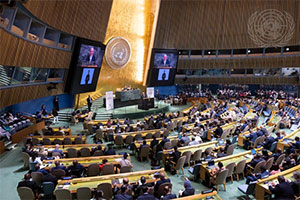 2026 High-level Political Forum on Sustainable Development. Credit: UN Photo/Eskinder Debebe
In 2015, the United Nations and its Member States adopted the Sustainable Development Goals (SDGs) in an effort to make the world a more sustainable and peaceful place for future generations. Progress on the 17 SDGs has been uneven, and inequality persists across the globe. 10 years after adoption, the 2025 UN SDGs Report revealed that only 35% of the SDG targets are on track, with more than half moving too slowly, and 18% moving backwards from the 2015 baseline. Poverty remains one of the world’s most pressing issues, with hunger, violence, and inequality impeding the opportunities for all people to achieve success. In September 2024, the United Nations Summit of the Future introduced a new goal: to eradicate global poverty by 2030, ensure universal rights to basic services, and increase the overall standard of living in terms of industrialization, economic well-being, citizen health, and literacy. Furthermore, recent shifts in United States foreign aid policy – notably, major budget cuts to USAID and the termination of thousands of development programmes– have severely threatened vital lifelines of financial aid to impoverished communities around the world. Additionally, the United States’ withdrawal from the Paris Climate Agreement has undercut international efforts at sustainable development. With the upcoming 2030 deadline, the UN Secretary-General has called for urgent multilateralism across six priority areas: food systems, energy, digital connectivity, education, jobs and social protection, and climate and biodiversity. IPS sheds light on marginalized communities that struggle on a daily basis to survive and have their stories heard and respected.
Updated by Yilan Batista and Shuli Wong August 2026

The Week with IPS

NEXT STOP - SDGs
Tracking global progress towards a sustainable world
Tracking global progress towards a sustainable world
