Languages
Sunday, November 22, 2026



News and Views from the Global South
Economy & Trade

Water Graves: Nightmare for Mexican Fishermen
All of Erizo's nightmares are the same. Since his return from the ocean - almost unrecognizable - every bad dream is identical. A wave punches his little boat and throws him into the deep sea where everything is so dark that he can't even see his own hands.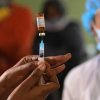
Road to Hell Paved with Good Intentions
Access to COVID-19 vaccines for many developing countries and most of their people will have to wait as the powerful and better off secure earlier access regardless of need or urgency. More profits, by manufacturing scarcity, will surely cause even more loss of both lives and livelihoods.
Caught in Tangled Web of Vaccine Nationalism
“Oh what a tangled web we weave When first we practice to deceive”. Walter Scott’s lines, already over two centuries old, nicely sum up how pursuit of national advantage and private gain have undermined the public interest and the common good.
A Grey Cloud Over Lebanon: Mental Health Burdens
Humankind is no stranger to the destabilizing events of 2020. The state of the global economy and the outbreak of the COVID-19 pandemic hit the headlines. In this ever escalating global crisis, Lebanon, has been facing what can only be described as unimaginable hardships. For the past year the country has seen challenges which have resulted in an utter state of hopelessness and rapid deterioration in mental health of many of its citizens.
Internationally COVID-19 Extracted a Heavy Toll on Older People
Internationally COVID-19 extracted a heavy toll on older people – raising concerns in the Asia Pacific region where more than half of the world’s ageing population live.
Elections in Africa go on Amid COVID-19
Central African Republic and in Niger held their presidential and parliamentary elections on 27 December 2020 to round up a challenging year where despite fears of disruption from the COVID-19 pandemic, most countries in Africa managed to stick to their scheduled elections.
“Saving Journalism: A Vision for the Post-Covid World”
In the midst of the COVID-19 pandemic, journalists everywhere are feeling the consequences; job cuts, layoffs and closures have swept the world.
An American Horror story
Occasionally some of us might suffer from a feeling of maximal overload, overwhelmed by COVID-19 and the reign of Donald Trump. It can maybe be conceived as far too euro-centric to be concerned about the disastrous situation in the U.S., with media stuffed to the brim by news about Donald Trump while the global environmental crisis is steadily getting worse and war, injustices and famine continue to agonize people in places like Darfur, Yemen, Afghanistan, and Syria.
COVID-19’s Social & Economic Fallout Hits Women Harder
With over 90 million confirmed cases and 1.9 million deaths globally, and a second wave sweeping into 2021, the COVID-19 pandemic continues to hold the world hostage.
Global Economic Recovery Remains Precarious in post-COVID-19 Years
The United Nations has warned that the devastating socio-economic impact of the COVID-19 pandemic will be felt for years to come unless smart investments in economic, societal and climate resilience ensure a robust and sustainable recovery of the global economy.
International Partnership Helps Mongolia Counter Climate Change
Climate warming is believed to have taken place at some of the fastest rates in the world in Mongolia, raising the country's average temperatures by 2.24°C between 1940 and 2015, with the last decade being the warmest of the past 76 years.
Poor Lives Matter, but Less
Current development fads fetishize data, ostensibly for ‘evidence-based policy-making’: if not measured, it will not matter. So, forget about getting financial resources for your work, programmes and projects, no matter how beneficial, significant or desperately needed.
Feminist Movements Continue to Battle Culture of Impunity in Egypt
Ten years ago on this day, January 25, one of the biggest revolutions in the world took place in Egypt’s Tahrir Square, as protestors poured into the streets chanting slogans of “Bread, Freedom and Social Justice”, demanding one of the region's longest-serving and autocratic President Hosni Mubarak to step down. Three weeks later, on February 11th, Mubarak stepped down as president, leaving the Egyptian military in control of the country.
Closing the Gap between Developed and Developing Countries: Two Steps Forward, One Step Back
Developing countries as a group have been growing faster than developed countries for several decades. As a result the ratio between average incomes between the two sets of countries – albeit still very large - has been shrinking. This is good news. The other piece of good news is that over this period the number of people living in extreme poverty has also been dropping – from 1.9 billion in 1990 to about 650 million in recent years. China has recently declared an end to extreme poverty.
“Their Hope for a Brighter Future Inspires Us All”
Looking back upon 2020, we all bear the scars of a devastating year; none so much as girls and boys around the world. The COVID-19 pandemic disrupted education for over 1.6 billion children and youth globally and continues to do so. It has also deepened socio-economic inequities and heightened insecurities around the world, further impacting the lives of girls and boys everywhere. Ongoing, protracted conflicts, forced displacement and the worsening climate crisis were no less forgiving.
President Biden Refuses to Make our Climate Crisis Worse
I wasn’t going to stop for the school bus stuck in the mud outside of Fort McMurray, Alberta in the heart of the Canada’s tar sands industry but my kids insisted. It had been raining most of the week and the grassy field was soaked and slick. We stopped and got out and looked at the 12,000 kilogram bus uselessly spinning its wheels, digging deeper into the mud. Someone got the driver to stop, essentially saying you’re making a bad problem worse.
“Teach Us How to Become Carpenters” – South Sudanese Want to Shape Their Future
Located in Jonglei state, one of the most underdeveloped regions of South Sudan, Likuangole is a town badly hit by floods and often battered by conflict. Despite the lack of secondary schools and industry, its residents aspire to transform their lives. But real investment is needed to spur development.
Personal Testimonies, Pledges Mark the Start of the ‘Fair Share to End Child Labour’ Campaign
Selimatha Salifu of Ghana is a former child labourer who has vowed to do her part to bring attention to the plight of the world’s over 150 million child labourers. Raised in a fishing community, she recalls her days buying fish to sell, working from daybreak till nightfall to contribute to her family. She credits the General Agriculture Workers Union for rescuing her and ensuring she enrolled in school.
Trump Is Gone, Trumpism Lives On
Impeachment or no impeachment, Trump is out of the White House. Trump goes with an approval rating of 34%, far behind his predecessor Barack Obama’s 60%. A majority, 54%, said Trump ought to be removed from office before January 20, according to a new CNN poll, for his role in the January 6 events, when Trump incited his supporters to storm the US Capitol.
Change Financing Priorities to Address COVID-19, Conference Hears
Innovative financing to resolve COVID-19 crisis was needed, a joint African and Asian parliamentarians’ webinar heard this week. The webinar, facilitated by Asian Population and Development Association (APDA), was aimed at enhancing support for the implementation of International Conference on Population and Development (ICPD)commitments in the face of the pandemic.
A BASIC TRUTH: Facing an Existential Threat, Humanity Must Work Together
COVID-19 is like a rainstorm, a thunderous and powerful rainstorm all over the world. If we didn’t know before, we certainly know now just where the holes are in our roofs, or where there are no roofs. We see ever more clearly who is getting drenched and who is dying, and who remains dry.« Previous Page — Next Page »


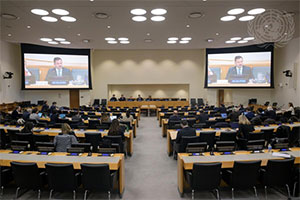 UN Commission on International Trade Law Holds Colloquium on Harmonizing Law in Age of Digital Trade and Finance. Credit: UN Photo/Manuel Elías
Trade has historically been a geopolitical tool that can both be used to propel development as well as entrench inequalities. In various nations in East Asia and Latin America, increased trade, as often seen in export booms, has allowed them to achieve influential standings within the global economy. On the other hand, many low-income countries in Sub-Saharan Africa, Asia, and Latin America struggle to maintain a robust trade performance, and oftentimes are subjugated to exploitative trade dynamics through intense extraction of their natural resources. In recent decades, international trade has reached a new era as emerging economies across the world are rising in economic preeminence. Stable international trade is crucial to world peace as global interconnectedness facilitates reliable diplomacy. Nevertheless, significant challenges are on the rise. Notably, a major wave of United States tariff escalations in January 2025 lifted US import taxes to their highest level since the 1930s, changing market dynamics and forcing renegotiations with global trading partners.These articles are aimed at informing readers about the complexities of trade and its varying effects on development, with a special focus on the consequences of the global economic crisis, the potential of fair trade and the gender implications of trade policies.
Updated by Yilan Batista and Shuli Wong August 2026

The Week with IPS

NEXT STOP - SDGs
Tracking global progress towards a sustainable world
Tracking global progress towards a sustainable world
