Languages
Sunday, November 22, 2026



News and Views from the Global South
Economy & Trade

Electricity Demand During Lockdown: Evidence from Argentina
Electricity demand normally depends on such variables as retail electricity rates, daytime temperature, time and day of the week, economic activity and consumer type (i.e. residential, commercial, industrial, etc.).
Understanding the Hunger Surge Caused by the COVID-19 Recession to Mitigate It Before It Is Too Late
Many uncertainties haunt the world’s campaign to counter the COVID-19 pandemic, but one thing is now sure: Global economic activity will suffer greatly, with large-scale consequences for the incomes and welfare of all, but especially for the most vulnerable food import-dependent countries.Staring at a Human Security Catastrophe
The defining images of South Asia’s battle against Covid-19 are hundreds of thousands of migrants, many with children on their shoulders, trudging from New Delhi, Kathmandu or Dhaka to their far-flung villages. They are daily wage earners engaged in construction, small enterprises, plying rickshaws or street selling in the informal sector. With lockdowns and economic activity shut down to combat the virus, these migrants lost their low-paying jobs and were forced to flee to their rural homes. Those who remained in these cities face food insecurity, rising joblessness and risk falling deeper into poverty.
All-of-Government, Whole-of-Society Involvement Needed to Fight Virus
The Covid-19 pandemic is now widely considered more threatening than any other recent viral epidemic. Most believe that many more have been infected or even died than officially confirmed.
Citizen Action is Central to the Global Response to COVID-19
The coronavirus (COVID-19) pandemic has created an unprecedented human and economic crisis. Governments are taking strong actions, enforcing quarantines to reduce contagion, testing populations, building emergency intensive care units. Governments have also launched large fiscal stimulus plans to protect jobs and the economy, as well as temporary social protection programs such as income/food support, subsidies to utilities and care services.
Coronavirus, New Threat for Mexican Migrant Workers in the U.S.
As the high season for agricultural labour in the United States approaches, tens of thousands of migrant workers from Mexico are getting ready to head to the fields in their northern neighbour to carry out the work that ensures that food makes it to people's tables.
Reimagining a Post COVID World: Key Principles for the Future
In her book, ‘A World Made New: Eleanor Roosevelt and the Universal Declaration of Human Rights,’ Mary Ann Glendon tells the beautiful story of how out of the ashes of the Second World War emerged the world’s pre-eminent rights framework. The Declaration recognises the inherent dignity of every human being and was born out of the shared horror felt by the international community with war crimes and genocide on an unprecedented scale. It acknowledged that fundamental change was needed to make the world fit for future generations.
Covid-19: Brazil’s Bolsonaro trumps Trump
Brazil’s President Jair Bolsonaro appointed medical entrepreneur Nelson Teich his new health minister on 17 April. The businessman quickly echoed his boss’ desire to resume business as usual regardless of its potentially lethal consequences.
Haunting Forest Spirits – is Mother Nature Striking Back?
Epidemic diseases are not random events that afflict societies capriciously and without warning, on the contrary, every society produces its own specific vulnerabilities. To study them is to understand the importance of a society's structure, its standard of living, and its political priorities. […] Epidemics are a mirror, they show who we really are: Our ethics, beliefs, and socio-economic relationships. Frank Snowden 1
BCG Vaccine Fighting Coronavirus in South Asia
Numerous studies in many parts of the world have linked the BCG (Bacillus Calmette-Guerin) vaccination, widely used in the developing world with fewer Coronavirus cases. This is good news for countries that have universal BCG vaccination in tropical Asia and Africa.
Multilateralism Through Public-Private Partnerships Are Key to Flattening the COVID-19 Curve
The UN Secretary-General Antonio Guterres has said that now is “a defining moment for modern society. History will judge the efficacy of the response not by the actions of any single set of government actors taken in isolation, but by the degree to which the response is coordinated globally across all sectors for the benefit of our human family.”
COVID-19: Maintaining Food Security in Asia Pacific
COVID-19 has disrupted supply chains that are essential to assure food security in the Asia Pacific region, yet countries overall seem to have managed, so far, to keep supermarkets stocked with food and feed those who can afford it. The Asia Pacific region is home to over 60% of humanity and also contains sub-regions with among the highest frequencies of severe weather events and some of the most challenging environments for agriculture. As a region it is characterized by diverse food systems and a multiplex of supply chains. Under normal circumstances, food security is already threatened by a multitude of factors.
Time to Raise the Ambition for Climate Action
In recent days we have seen the understandable decision reached to postpone the UN climate change conference – COP26 – which was due to take place this November. As the world reels from the widespread impacts of the coronavirus crisis, it is the right call.
Bioenergy, the Ugly Duckling of Mexico’s Energy Transition
Rosa Manzano carefully arranges pieces of wood in a big mud igloo that, seven days after it is full, will produce charcoal of high caloric content.
COVID-19 and Hope for a Compassionate Future
The Coronavirus, COVID-19, makes its deadly round across the world. People fall sick and die, communities and entire nations end up in its deadly grip and try to cope with it. Everything is changing, and changing fast and we all have to deal with it together, even if many of us are being physically apart. Humans are social beings. Our mental and physical capacities are created around that fact and crave for support and compassion.
Kerala Covid-19 Response Model for Emulation
Within weeks, the Covid-19 epidemic was classified by the World Health Organization (WHO) as an epidemic of international significance, triggering a pre-agreed WHO response. By the end of the first week of April, more than 1.3 million people had been confirmed as infected, with over 65,000 deaths across the world.
Alive Amidst the Mayhem of COVID-19 – A Sex Worker’s Story
For a Bangladeshi woman, who has worked as a sex worker since childhood, her future post-COVID-19 looks hopeless. Shilpy, who works at Daulatdia, the largest brothel in the country, told IPS how she now also fears for the future of her two daughters.
Asia-Pacific Response to COVID-19 and Climate Emergency Must Build a Resilient and Sustainable Future
The unprecedented public health emergency triggered by the COVID -19 pandemic and its multi-faceted impact on people’s lives around the world is taking a heavy toll on Asia and the Pacific. Countries in our region are striving to mitigate the massive socioeconomic impact of the pandemic, which is also expected to affect the region’s economic health. In its annual Economic and Social Survey of Asia and the Pacific 2020 launched today, the United Nations Economic and Social Commission for Asia and the Pacific (ESCAP)expectsgrowth in Asia-Pacific developing economies to slow down significantly this year.
Green Counter-Revolution in Africa?
In 2006, the Bill and Melinda Gates Foundation and the Rockefeller Foundation jointly launched the Alliance for a Green Revolution in Africa (AGRA). The African Green Revolution Forum claims AGRA is the “world’s most important and impactful forum for African agriculture”.
The Economic Impact of COVID-19 on Developing Countries – Part 2
What is likely to be the impact of the COVID-19 pandemic on developing economies? In the first of this two part article we looked at possible short term disruptions and discussed actions by the private sector and Governments.
Reimagining Farming Post-Covid Pandemic
Together with medical services and transportation, farming and food production have been correctly identified as ‘essential services’ by all countries under lockdown. The Covid-19 pandemic has not yet made a dent in the food supply and so far, there are no reports of shortage of essential food and agricultural goods. All cities and towns are actively coordinating with government agencies, farms, businesses and transport companies to maintain the supply chain and ensure full availability of food for the population,« Previous Page — Next Page »


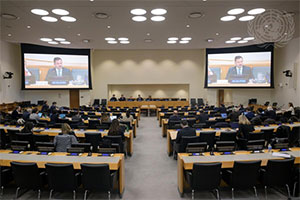 UN Commission on International Trade Law Holds Colloquium on Harmonizing Law in Age of Digital Trade and Finance. Credit: UN Photo/Manuel Elías
Trade has historically been a geopolitical tool that can both be used to propel development as well as entrench inequalities. In various nations in East Asia and Latin America, increased trade, as often seen in export booms, has allowed them to achieve influential standings within the global economy. On the other hand, many low-income countries in Sub-Saharan Africa, Asia, and Latin America struggle to maintain a robust trade performance, and oftentimes are subjugated to exploitative trade dynamics through intense extraction of their natural resources. In recent decades, international trade has reached a new era as emerging economies across the world are rising in economic preeminence. Stable international trade is crucial to world peace as global interconnectedness facilitates reliable diplomacy. Nevertheless, significant challenges are on the rise. Notably, a major wave of United States tariff escalations in January 2025 lifted US import taxes to their highest level since the 1930s, changing market dynamics and forcing renegotiations with global trading partners.These articles are aimed at informing readers about the complexities of trade and its varying effects on development, with a special focus on the consequences of the global economic crisis, the potential of fair trade and the gender implications of trade policies.
Updated by Yilan Batista and Shuli Wong August 2026

The Week with IPS

NEXT STOP - SDGs
Tracking global progress towards a sustainable world
Tracking global progress towards a sustainable world
