Languages
Thursday, November 26, 2026



News and Views from the Global South
Economy & Trade

Children Now More Than Half of the 65 Million Displaced
Around 20 people are newly displaced every minute of the day, according to a new report. In its annual Global Trends report, the UN’s refugee agency UNHCR has recorded unprecedented and concerning levels of displacement around the world.
The World Society Needs to Express Greater Solidarity for Refugees Worldwide
The world is heading into troubled waters as we are witnessing an unprecedented movement of people – refugees, migrants and internally displaced persons (IDPs) alike – fleeing from misery, poverty and conflicts. The refugee crisis that has swept across Europe and the Middle East is becoming the 21st century’s most protracted crisis with no immediate solution in sight. The world has not witnessed a more complex movement of people since the end of the Second World War; thousands of human beings undertake perilous and treacherous journeys in hope for a better and a safer future. Many of them perish during these hazardous journeys.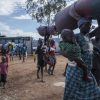
New Inhumane Record: One Person Displaced Every Three Second
Nearly 66 million people were forcibly displaced from their homes last year, the United Nation refugee agency has reported.
UN Work Stoppage in Geneva Halts Human Rights Meeting
As UN staffers in Geneva threaten a strike, protesting a proposed salary cut of over 7.5 percent, a token two-hour “work stoppage” last week forced the Human Rights Council to suspend its meeting.
Achieving Universal Health Coverage (UHC) in Kenya through Innovative Financing
Every year, one million Kenyans are driven below the poverty line by healthcare-related expenditures. Poverty predisposes them to disease and slows all aspects of growth in the economy.
Africa: Drought and Jobless, Hopeless Youth, Fertile Grounds for Extremism
Ignoring the plight of jobless young people in sub-Saharan Africa is a recipe for political instability and global insecurity, warned a high-level symposium of Africa’s interior, environment and foreign affairs ministers in Ouagadougou, Burkina Faso.
Safeguarding Precious Crop Genes in Trust for Humanity
A genetic resource centre run by the Nigeria-based International Institute for Tropical Agriculture (IITA) has banked thousands of crop varieties for disaster relief and research, holds the world’s largest and most diverse collection of cowpeas, and contains some of Africa’s rarest insect species.
Africa Could Help Feed the World – If Its Fertile Land Doesn’t Vanish
The 23rd World Day to Combat Desertification was celebrated in Burkina Faso’s capital of Ouagadougou on June 15 with a call to create two million jobs and restore 10 million hectares of degraded land.
IFAD’s President Houngbo Calls for Investment in Climate-Smart Agriculture for Poverty-Free Future
Implementing climate-smart agriculture is critical to reduce hunger and poverty, according to International Fund for Agricultural Development’s (IFAD) new president Gilbert Houngbo.
Women, Still Major Victims of Sharp Disparities at Workplaces
Reducing gender disparities at workplaces by 25 per cent by 2025 could inject nearly 5.8 trillion dollars into the global economy and boost tax revenues, according to a United Nations report, ahead of the UN Labour Organization’s Summit on "A better future for women at work" on June 15.
Migrant Workers Pour Trillions into World Economy
A new report by the International Fund for Agricultural Development (IFAD) says the flow of money from migrants—commonly located in developed countries—to their families in lower income countries has doubled over the last decade.
Global Coalition Calls for Withdrawal of SDGs Progress Report
A report on the Sustainable Development Goals (SDGs) fails to capture the the true picture of water challenges and the UN must withdraw it, said a global civil society coalition.
East Asian Miracle Myth Making
Even before the term ‘Washington Consensus’ (WC) was popularized, it was already coming under great criticism despite the ‘counter-revolutions’ against ‘development economics’ and Keynesian economics associated with Thatcherism and Reaganomics. At the World Bank, the Japanese Executive Director argued that the WC menu of policy advice and conditionalities had resulted in the 1980s’ ‘lost decade’ in Latin America and Africa. In contrast, the East Asian region had seen rapid growth and industrialization.
Digitization Can Improve Financial Inclusion for Smallholder Farmers
Mathew Khaemba, a smallholder farmer in western Kenya, remembers a time when his children were failing in school because they were too hungry to concentrate on their lessons.Genetic Engineering Lobbyist’s Trumpian Methods
To her credit, Dr Mahaletchumy has pioneered and promoted science journalism in Malaysia. This is indeed commendable in the face of the recent resurgence of obscurantism of various types, both traditional and modern.
Child Labor in the Arab Region Does Not Belong to the 21st Century
Today marks the 2017 World Day against Child Labor to reaffirm the goal to eliminate all forms of child labor. This year’s annual theme highlights a subject that is often neglected, namely the importance of addressing child labor in conflict areas and in disaster settings.
More Plastic than Fish or How Politicians Help Ocean Destruction
World’s oceans are dangerously exposed to at least three major threats: climate change; the sharp degradation of marine biodiversity, and politicians. These simply encourage the destruction of oceans by subsidising over-fishing and turning a blind eye on illegal captures. See what happens.
What Future for 700 Million Arab and Asian Youth?
With a combined population of around 400 million inhabitants, 22 Arab countries are home to nearly 300 million youth. Meantime, there are 400 million youth living in Asia and the Pacific. In both regions, these 700 million young people aged 15–24 years account for up to 60 per cent of world’s youth population. What future for them?.
How Peter Thiel Got His New Zealand Citizenship
In January, the revelation that Peter Thiel, the libertarian Silicon Valley venture capitalist and Trump adviser, secretly got a New Zealand citizenship six years ago caused an uproar, mostly because he was the first to get one without pledging to live there.
Solar Tents Improve Nutrition in Highlands Villages in Bolivia
In this remote highlands valley community in central Bolivia, a group of Quechua indigenous women have learned how to combat the intense frosts and the shortage of water in solar tents, and to use what they grow to prepare nutritious new meals for their families.
Post-Soviet Russian economic collapse
Wide-ranging economic reforms following the demise of the Soviet Union at the end of December 1991 mainly resulted in economic collapse in most successor states. By the mid-1990s, output had fallen by about half compared to 1989.« Previous Page — Next Page »


 UN Commission on International Trade Law Holds Colloquium on Harmonizing Law in Age of Digital Trade and Finance. Credit: UN Photo/Manuel Elías
Trade has historically been a geopolitical tool that can both be used to propel development as well as entrench inequalities. In various nations in East Asia and Latin America, increased trade, as often seen in export booms, has allowed them to achieve influential standings within the global economy. On the other hand, many low-income countries in Sub-Saharan Africa, Asia, and Latin America struggle to maintain a robust trade performance, and oftentimes are subjugated to exploitative trade dynamics through intense extraction of their natural resources. In recent decades, international trade has reached a new era as emerging economies across the world are rising in economic preeminence. Stable international trade is crucial to world peace as global interconnectedness facilitates reliable diplomacy. Nevertheless, significant challenges are on the rise. Notably, a major wave of United States tariff escalations in January 2025 lifted US import taxes to their highest level since the 1930s, changing market dynamics and forcing renegotiations with global trading partners.These articles are aimed at informing readers about the complexities of trade and its varying effects on development, with a special focus on the consequences of the global economic crisis, the potential of fair trade and the gender implications of trade policies.
Updated by Yilan Batista and Shuli Wong August 2026

The Week with IPS

NEXT STOP - SDGs
Tracking global progress towards a sustainable world
