Languages
Friday, October 2, 2026



News and Views from the Global South
Economy & Trade
UNAIDS Framework Pushes for the Protection and Integration of HIV Care
As the global HIV response shifts toward sustainable, nationally led, and rights-based care, a new UNAIDS framework published this week argues that integration must start with a country's readiness.
Remembering Fidel Castro, a Hero of the World’s Oppressed People
The 13th of August marked the 100th birthday of Cuba’s revolutionary leader Fidel Alejandro Castro Ruz - in short Fidel Castro. Amidst an intensified US siege and the threat of invasion, Cubans commemorated their dear leader’s centenary birth anniversary with events that included an International Book Fair, art exhibitions, concerts and gatherings of delegates from left-wing organisations across the continent.
Indigenous Peoples Call for Meaningful Influence in Climate Discussions — Nia Tero
Indigenous communities have long advocated for the environment through the lens of their traditional knowledge systems and cultures. But much more work needs to be done to translate their presence into influence.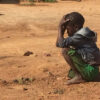
Western-Led Green Revolution Failing Africa
As AGRA turns 20, a new report exposes its worsening failure to double productivity and incomes and halve undernourishment in participating African nations as promised.
Why Dhaka Floods Every Monsoon
Dhaka’s recent and recurrent flooding is often treated as a natural disaster, but rain is only the trigger. The deeper causes are political, planning and ecological failure: wetland loss, canal encroachment, unplanned growth, weak enforcement, fragmented institutions and short-term engineering fixes. Dhaka is not drowning because it rains; it is drowning because it has been built as if water had nowhere to go.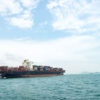
Rising Trade Values Mask the True Cost of Global Supply Chain Disruptions
Global goods trade reached approximately USD 13.7 trillion in the first half of 2026, up 12.5 percent from the same period in 2025, while services grew 10.5 percent, together adding USD 2 trillion to global trade. While these figures point to continued expansion, much of the increase reflects rising prices rather than stronger trade volumes.
UN Special Rapporteur Urges the Protection of Children’s Rights Amid Deepening Conflict and Digital Threats
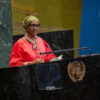
On July 7, the United Nations (UN) Secretary-General Antonio Guterres presented a report from the Special Rapporteur on the sale, sexual exploitation, and sexual abuse of children, Ai Kihara-Hunt, to the General Assembly, underscoring her goals and priorities for the implementation of protection measures for children worldwide.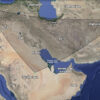
Saudi Arabia, Türkiye and Pakistan Forge Mutual Defence Pact, as Iran Pursues New Shipping Framework
In Makkah, the Kingdom of Saudi Arabia, the Republic Türkiye, and the Islamic Republic of Pakistan agreed to the framework for a joint defence agreement where an attack on any of the three states shall be regarded as an attack against them all.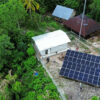
Asia’s Energy Progress Is Great, But Must Pick Up Pace
In much of the Asia-Pacific region, energy is a success story. Electricity access has greatly increased and the use of clean cooking fuels is now widespread. The region has kept pace with the rest of the world in adopting renewable energy. Many countries have made energy efficiency gains; the Republic of Korea is one of those in the lead worldwide. Progress has continued even in the face of recent energy crises sparked by the war in Ukraine and conflict over the Strait of Hormuz.
Where Some See Waste, Others See Opportunity: Young Sierra Leoneans Fight Against Electronic Waste, Plastic Pollution
Growing up, Peter George, a young innovator in Bo District in Southern Region, Sierra Leone, watched people dump electronic waste near the farmland where his grandmother cultivated crops.
INDIA: ‘The Cockroach Janta Party Brings Together Everyone Who Has Been Neglected for Years’
CIVICUS discusses India’s Cockroach Janta Party movement with Harshit Singh, a young activist, poet and storyteller who took part in protests in Delhi.
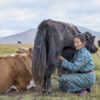
The Year of Pastoralists Must Be More Than Symbolic
This is supposed to be the year the world finally sees and recognizes pastoralists. The United Nations has designated 2026 as the International Year of Rangelands and Pastoralists, bringing long-overdue attention to communities who have sustained some of the world’s most fragile and important landscapes for generations.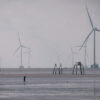
Green transition: Pay the Least, Benefit the Most
Inaction and maintaining the status quo of fossil fuel dependence carry significant costs. The recent closure of the Strait of Hormuz, for instance, caused enormous losses to the global economy, with many Asia-Pacific countries bearing disproportionately larger adverse impacts. Had these economies had a more diversified energy mix, they would have benefited from such resilience under current circumstances.
After Restoring Stability, Argentina Needs to Turn Hard-Won Gains into Lasting Prosperity
My first meeting in Buenos Aires began with an unexpected gift. Economy Minister Luis Caputo presented me with an Argentine national team jersey bearing my name and the number 10—Lionel Messi's iconic number.
Trade Liberalisation Never Lifted All Boats
President Trump has blamed trade liberalisation advocated by globalists for US deindustrialisation. Instead, his own weaponisation of economic policies, instruments and institutions purport to ‘make America great again’ (MAGA).
U.S.-Iran War Escalates Amid Growing Fears of Regional Instability and Rises In Arbitrary Executions
Over the past several weeks, the humanitarian landscape in the Middle East has deteriorated significantly, exacerbated by escalating security concerns and serious human rights violations. In late July, the United Nations (UN) highlighted a sharp uptick in hostilities between the United States and Iran, alongside growing concerns over wider regional instability.
“Kingston’s Disappointment Should Not Extinguish Our Hope for the Deep Ocean”
Earlier this year, I called publicly for a precautionary pause on deep-sea mining, arguing that it is not a rejection of progress, but a commitment to sound science.
Saudi Arabia Forms Multinational Red Sea Defence Alliance as U.S.-Iran War Threatens Global Shipping
As the United States and Iran continue to escalate with military strikes across both fronts, the conflict took a new turn with Saudi Arabia becoming militarily involved on July 29, following coordinated airstrikes with U.S. Central Command according to the Saudi Ministry of Defence.
Who picks up the tab for AI’s unbridled genius?
For the last few years, Artificial intelligence has been making increasingly intrusive demands for our attention. It burst onto the scene like a child prodigy, enthralling us with feats of brilliance. With consummate ease, it removed drudgery from our tasks and began helping us achieve our personal and workplace objectives.
East Asia and Pacific Faces a USD 900 Billion Maritime Investment Challenge
East Asia and the Pacific's (EAP) maritime system has powered the region's rise as the world's largest trading and manufacturing center, but the infrastructure supporting that system has become increasingly vulnerable.
ARMENIA: ‘Anti-LGBTQI+ Discourse Is Increasingly Tied to Anti-democratic Narratives’
CIVICUS discusses disinformation campaigns targeting the LGBTQI+ community in Armenia with Hripsime Kizogyan, Executive Director of Pink Armenia, a community-based organisation that defends the human rights of LGBTQI+ people and advocates for policy change.
« Previous Page — Next Page »


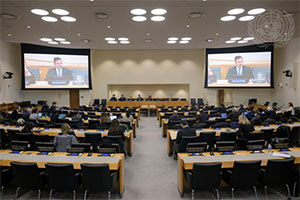 UN Commission on International Trade Law Holds Colloquium on Harmonizing Law in Age of Digital Trade and Finance. Credit: UN Photo/Manuel Elías
Trade has historically been a geopolitical tool that can both be used to propel development as well as entrench inequalities. In various nations in East Asia and Latin America, increased trade, as often seen in export booms, has allowed them to achieve influential standings within the global economy. On the other hand, many low-income countries in Sub-Saharan Africa, Asia, and Latin America struggle to maintain a robust trade performance, and oftentimes are subjugated to exploitative trade dynamics through intense extraction of their natural resources. In recent decades, international trade has reached a new era as emerging economies across the world are rising in economic preeminence. Stable international trade is crucial to world peace as global interconnectedness facilitates reliable diplomacy. Nevertheless, significant challenges are on the rise. Notably, a major wave of United States tariff escalations in January 2025 lifted US import taxes to their highest level since the 1930s, changing market dynamics and forcing renegotiations with global trading partners.These articles are aimed at informing readers about the complexities of trade and its varying effects on development, with a special focus on the consequences of the global economic crisis, the potential of fair trade and the gender implications of trade policies.
Updated by Yilan Batista and Shuli Wong August 2026

The Week with IPS

NEXT STOP - SDGs
Tracking global progress towards a sustainable world
Tracking global progress towards a sustainable world
