Languages
Wednesday, October 14, 2026



News and Views from the Global South
Energy

Oil Business Burns Enough Gas to Power the Whole Sub-Sahara or Two Thirds of Europe
While the attention of mostly Western media and politicians is quasi exclusively hoarded up by the proxy war in Ukraine and its consequences on the energy sector, the world’s big oil business continues to burn Planet Earth with its underreported though highly polluting, wasteful practice of gas flaring.
Opacity Surrounds Fossil Fuels in Mexico
In the northern Mexican state of Coahuila the current situation of coal, used mainly to generate electricity, is opaque.
The Sun Illuminates the Nights of Rural Families in El Salvador
After working on the family farm, Carlos Salama comes home and plugs his cell phone into a socket via a solar-powered electrical system, a rarity in this rural village in southern El Salvador.
From Rags to Riches: Power and progress in Abu Dhabi
I recently visited Abu Dhabi and my impressions became intermingled with worries about the war in Ukraine. I also happened to read Livy’s The Early History of Rome, written around the beginning of CE, coming across these lines:
Kenyan Community Project Saving Forests, Saving Livelihoods
Despite an abundance of fisheries reserves along Kwale County’s lush coastline located on the south coast of Kenya, fishers can no longer cast a net just past the coral reef and expect an abundant crab or prawn harvest.
Mexico Embraces Gas, Scorns Renewable Energy
At home, Isabel Bracamontes uses gas only for cooking. "We try to prepare food that doesn't need cooking, like salads," she says in the southeastern Mexican city of Mérida.
Oil Crisis Offers Opportunities to the South and for the Green Energy Transition
The oil and gas supply crisis unleashed by the Russian invasion of Ukraine represents new business opportunities for the oil-producing countries of the developing South, both traditional and emerging, and also for accelerating the global transition to green forms of energy.
Africa Commits to Green Recovery from COVID-19 Amid Daunting Challenges
Climate change activist Mithika Mwenda, the Executive Director of the Pan African Climate Justice Alliance (PACJA), is not reluctant to engage African governments to do what’s necessary to commit to post-COVID-19 green growth strategies.
How a Massive Climate Project Can Help Win Peace for Ukraine – And Help African Job + Food Crises
How would the late Archbishop Desmond Tutu have reacted to the Russian Invasion of Ukraine? Differently than you might think. The invasion of Ukraine is a mass human tragedy. It is killing Ukrainians, exposing families to violent atrocities, and has driven a refugee crisis of over 4 million people and counting. The war in Ukraine has also reawakened our fear of global war - even nuclear war - and the importance we place on global peace.
Palm Oil for Biodiesel in the Amazon: Sustainable Fuel or Deforestation Risk?
Oil palm, known as dendezeiro in Brazil, can produce up to ten times more vegetable oil per hectare than other crops, but it is regularly condemned as harmful to the biodiversity of tropical forests in Asia, Africa and Latin America. Now, its cultivation looks set to advance in the Brazilian Amazon.
Turning Agro-industrial Waste into Energy in Argentina
Three giant concrete cylinders with inflated membrane roofs are a strange sight in the industrial park of Zárate, a world of factories 90 kilometers from Buenos Aires that heavy trucks drive in and out of all day long. They are the heart of a plant that is about to start producing energy from agro-industrial waste, for the first time in Argentina.
Desalination Plants, Solution and Environmental Challenge for Chile
The Pacific Ocean could quench the thirst caused by 10 years of drought in Chile, but the operation of desalination plants of various sizes has a long way to go to become sustainable and to serve society as a whole rather than just corporations.
Stagflation Threat: Be Pragmatic, Not Dogmatic
“If your only tool is a hammer, every problem looks like a nail”. Still haunted by the clever preaching of monetarist guru Milton Friedman’s ghost, all too many monetary authorities address every inflationary threat or sign they see by raising interest rates.
Ukraine Incursion, World Stagflation
Finger pointing in the blame game over Russia’s Ukraine incursion obscures the damage it is doing on many fronts. Meanwhile, billions struggle to cope with worsening living standards, exacerbated by the pandemic and more. Losing sight in the fog of war US Secretary of State Anthony Blinken insists, “the Russian people will suffer the consequences of their leaders’ choices”. Western leaders and media seem to believe their unprecedented “crushing sanctions” will have a “chilling effect” on Russia.
The War in Ukraine and the Spectre of Genocide
Georg Hegel once stated: ”What experience and history teach is this — that nations and governments have never learned anything from history, or acted upon any lessons they might have drawn from it.” Nevertheless, self-taught historian Vladimir Putin has learned to interpret history in his own manner. During COVID he went down in Kremlin’s archives and after studying old maps and treaties he wrote a lengthy essay On the Historical Unity of Russians and Ukrainians, while declaring that ”the formation of an ethnically pure Ukrainian state is an aggression directed against Russia.”
International Women’s Day, 2022
Women Lighting the Way in Off-Grid Zimbabwe
Electricity transmission lines run through Chiedza Murindo’s home in Murombedzi, a small town in Zvimba district in Mashonaland West province, but her house has no electricity. That is the harsh reality for much of Zimbabwe’s rural population, where only 13% of households live without power compared to 83% of urban households. 
International Women’s Day, 2022
War, Autocrats and Fossil Fuels – Women on the Front Line
For decades women’s demands for political and economic inclusion have placed them centre-stage in mass struggles against dictatorships across the world. Russia’s invasion of Ukraine and its indiscriminate attacks on civilians now put women’s movements firmly on the front line of war, autocrats and fossil fuels.

Cuba Steps Up Pace on Renewable Energy Expansion
Cuba has readjusted its plans to achieve at least 37 percent of electricity from clean energy by 2030, a promising but risky challenge for a nation that is a heavy consumer of fossil fuels and has persistent financial problems.
Renewable Energy vs Coal: Where Does India Stand?
Coal—considered to be one of the most polluting fossil fuels and, therefore, one of the biggest contributors to climate change—took centre stage at COP 26. A last-minute intervention by India during the negotiations resulted in a crucial amendment to the coal pledge in the Glasgow Climate Pact.
Inflation Paranoia Threatens Recovery
Inflation hawks are winning the day. The latest ‘beggar thyself’ race to raise interest rates has begun. This ostensibly responds to the spectre of runaway inflation, supposedly retarding economic growth and progress, and thus threatening central bank ‘credibility’.
When Will Countries Ever Learn how Well to do Fuel Subsidy Reforms?
Consider the situation. Faced with growing fiscal stress, the government of an energy exporting country decides to cut generous subsidies, doubling the fuel price overnight.« Previous Page — Next Page »





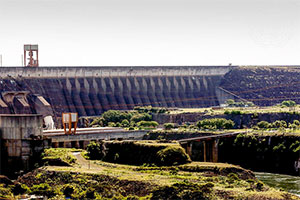 UN Power Plant, Paraguay. Credit: UN Photo/Evan Schneider
Energy has posed a great challenge for economies around the world. As global energy consumption skyrockets throughout the years, so does the need for sustainable solutions. The Sustainable Development Goals are essential in providing people with access to safe, affordable, and sustainable energy sources that minimize harm on the planet. Progress towards these goals opens the door for an advancement in modernization for communities on a global level and allows for a potential mitigation of tensions between nations.
The UN’s Summit of the Future in 2024 offered new initiatives that are being taken to achieve these goals, including a decreased reliance on fossil fuels, a switch to renewable energy sources, and improved climate financing.
IPS is well positioned to provide relevant, insightful, and compelling analysis of recent updates and measures being taken around the world to achieve a cleaner future.

The Week with IPS

NEXT STOP - SDGs
Tracking global progress towards a sustainable world
Tracking global progress towards a sustainable world
