
Sunday, November 22, 2026



News and Views from the Global South
Environment
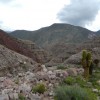
Discovering the Ancient Green Past of Argentina’s Arid Puna Plateau
The arid high Andean Puna plateau in northwest Argentina was much greener thousands of years ago. Climate changes forced the local inhabitants to develop adaptation strategies that could offer lessons for today, researchers say.
Droughts Bring Climate Change Home to Nepali Farmers
Farmers in this fertile central district of south Nepal are convinced that an intense drought between May and early July that destroyed their maize crops is the result of climate change.Ecobreves – BRAZIL: Joint Assessment of Amazon Hydropower Dams Demanded
There is an urgent need for an in-depth analysis of the impacts of the construction of 30 hydroelectric dams in the Amazon region given the scale of public and private investment involved, maintains the Amazon Investment Observatory of Brazil.Ecobreves – VENEZUELA: Used Notebooks Recycled
The government of the northern Venezuelan state of Miranda has launched campaign through which schoolchildren are encouraged to donate their used notebooks in order for them to be recycled.
Brazilian Fisherfolk Fight for Survival
Fisherfolk cannot be forced into becoming fish farmers, maintains the leader of a campaign to establish protected areas for artisanal fishing in Brazil. “I am a fisherwoman, I don’t know how to do anything else and I don’t want to,” she declared.Ecobreves – CHILE: FAO Promotes Bioenergy
The Latin America regional office of the Food and Agriculture Organization of the United Nations (FAO) has recommended that Chile incorporate bioenergy into its energy mix.Ecobreves – HONDURAS: Approval of Mining Operations to be Decided Through Plebiscites
The use of plebiscites has been included in the bill for a new mining law that is expected to be passed by the end of the year in Honduras.
Awareness of Climate Change Risks Low in Dominican Republic
One of the major difficulties to overcome in climate change adaptation policies in the Dominican Republic is society’s low awareness of the risks, even though this Caribbean island nation is seriously exposed to the impacts of the phenomenon.OP-ED: U.S. Adrift on Law of the Sea
A little overshadowed by the Olympics, the Yeosu 2012 Expo is, in its own way, doing more than the London Games to promote global harmony - and without stirring up the waters the way the British did when they posted the ROK flag for the DPRK women’s soccer team.
Climate-Battered South Asia Looks to Rio+20 Formula
Far-flung South Asian communities, from the high Himalayan slopes to the Indian Ocean coasts, united in the face of extreme and uncertain weather, continue to hold on to the hope that the Rio+20 focus on disaster risk reduction (DRR) will positively influence national policies.
Mexican Communities Fight Mini-Dams
Small-scale hydroelectric dams with a capacity of under 30 MW are seen by the authorities in Mexico as an important alternative for generating energy. But local communities reject them on the argument that they would cause social, economic and environmental damages.
Q&A: U.N. Spotlights Pirates in the Malacca Strait at Expo 2012
At the Yeosu World Expo 2012, the U.N. commemorated the thirtieth anniversary of the U.N. Convention of the Law of the Sea (UNCLOS), highlighting efforts to quell the global scourge of piracy.
Salvadoran Civil Society Groups Opposed to Carbon Credit Plan
Civil society organisations are asking the World Bank to reject the Salvadoran government's proposal to join a programme for reducing greenhouse gas emissions linked to deforestation, on the argument that it will actually harm the environment.
Treaty That Saved the Ozone May Worsen Climate Change
The Montreal Protocol, a climate treaty that gathers all U.N. member countries behind the goal of protecting the ozone layer, may not be the "most successful international agreement" anymore, as former U.N. secretary general Kofi Annan used to put it.
Small-scale Fisherfolk in Rio de Janeiro – a Vanishing Species
"My sons will be anything, but never fishermen,” said 32-year-old Maicon Alexandre, the youngest of the leaders of Ahomar, a union of small-scale fisherpeople on the outskirts of Rio de Janeiro.South Korea Showcases Role as Donor at Expo 2012
When South Korea took the initiative to integrate a development cooperation programme into this year’s World Expo, it stepped up its efforts to gain credibility as a donor on the international stage.
Human Right to Water and Sanitation Remains a Political Mirage
When the 193-member General Assembly, the U.N.'s highest policy-making body, declared water and sanitation a basic human right back in July 2010, the adoption of that divisive resolution was hailed by many as a "historic" achievement.Mainstream Rhetoric on Nuclear Power Far From Reality
The catastrophe following the meltdown of the Fukushima Daiichi nuclear power reactor in March 2011 has turned the old debate on nuclear power into a war of words between international agencies and independent experts with diametrically opposed views.
India Drowning in Waste, Experts Warn
Almitra Patel, a civil engineer by qualification, says she was first alerted to India’s huge problem of inadequate waste disposal when she noticed that the frogs in the marshlands near her farmhouse, on the city’s outskirts, had stopped croaking.
Trash Collectors Become Zimbabwe’s Unlikely Climate Change Ambassadors
Tomson Chikowero was ashamed of his job. He did not want anyone finding out what he did to earn a living, so he used to wake up early every morning and leave his home in Hatfield, a residential suburb in Zimbabwe’s capital city Harare, under the cover of darkness.
Q&A: South Korea Steps Up as Marine Conservation Champion
When South Korea picked an oceans theme for the 2012 Yeosu World Expo, it became host to the largest marine-themed event in history, with the potential to make a concrete contribution to sustainable development and simultaneously buoy the Korean global image.« Previous Page — Next Page »


Through our global network of local writers, we are continuing our award-winning coverage of global and local environmental challenges, with a focus on the people for whom the ecosphere matters in a direct way: rural dwellers who have little means to protect themselves against adverse conditions; communities that need to switch to sustainable development in order to survive; poor women and children, who are the most vulnerable in natural disasters. Sponsored by the United Nations Environment Program (UNEP), the United Nations Development Program (UNDP) and The World Bank (WB), IPS also maintains the award-winning Tierramérica, a specialised information service on environment and development.

The Week with IPS

Tracking global progress towards a sustainable world


