
Sunday, November 22, 2026



News and Views from the Global South
Environment
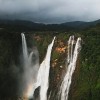
UNESCO Protection Crucial – and Controversial
It took six years for a dedicated team of scientists from the Wildlife Institute of India, wildlife officials from six Indian states and officials from the federal ministry to secure international protection for one of India’s most precious biological reserves.
Peru Working to Reform Environmental Impact Assessment System
A random review by the Peruvian government of 205 environmental impact assessments approved between 2001 and 2010 revealed that 86 percent lacked complete information on how they had received the green light from the authorities.
Groups Vow to Fight Arctic Drilling
Many environmental groups are concerned over a possible extension of drilling expeditions in the Arctic, as oil companies, including Royal Dutch Shell, are set to begin drilling in the region as early as this week.
Native Canadians Fear Mining Boom in “Ring of Fire”
With accusations that Canadian resource companies and government officials are disregarding the need for indigenous consent in development projects, First Nations leaders have lashed out by approving a resolution calling for a moratorium on mining development in the so-called Ring of Fire until proper consultation begins.
Profiting from Sustainable Forests on Communal Land in Mexico
Mario Guzmán plans to start cutting down trees again in August and September, the last months of the rainy season. “Now the roads are impassable, and the trucks can’t get in to haul out the timber,” the Mexican farmer, whose community is sustainably managing its forests, told IPS.Ecobreves – BRAZIL: Indirect Energy Consumption Is Double Household Electricity Bill
The monthly light bill paid by Brazilians represents only 32 percent of what they actually spend on electricity. All of the rest is paid for through the goods and services they consume, according to the Economic Research Institute Foundation at the University of São Paulo.Ecobreves – HONDURAS: Support for Community Forestry
The International Tropical Timber Organization (ITTO) has ratified its support for forest protection initiatives in Honduras, and especially those that involve communities in responsible forest management, the country’s vice president, María Antonieta Guillén, told Tierramérica.Ecobreves – ARGENTINA: Sale of Materials Contaminated with Cyanide Denounced
An environmental organization in the central Argentine province of Córdoba has accused a company devoted to the final disposal of hazardous waste of illegally selling contaminated materials.Ecobreves – MEXICO: Cultural Program to Promote Natural Heritage
The National Commission of Protected Natural Areas has launched a cultural program to strengthen the conservation of natural heritage in Mexico.
U.N. Chief Recounts Poverty and Plenty in South Korea
Secretary-General Ban Ki-moon, a former foreign minister of South Korea, is visibly emotional whenever he speaks about the striking political and economic achievements in his home country.Paraguay Opens Doors to Unregulated Foreign Investment
In his first month as president of Paraguay, Federico Franco has thrown open the doors of his country to foreign investments that have raised questions about environmental safety.
Africa Must Earn Its Climate Change Adaptation Finance
With the United Nations Climate Change Conference less than four months away, African countries need to present convincing arguments and successful adaptation projects to attract competitive funding for adjusting to changes in global weather patterns, climate finance experts say.
Papua New Guinea Casts Wide Net Against Malaria
In Papua New Guinea, a Pacific Island nation located south of the equator, 90 percent of the population is at risk of malaria and 1.9 million cases are reported every year. But, according to a recent medical study, a programme to distribute long-lasting insecticide treated mosquito nets to every district in the country has dramatically reduced malaria infections.
Climate Change and Poverty, a Deadly Cocktail for Dominicans
"Nobody mourns the poor, you know." That is the grim conclusion of a resident of La Ciénaga, one of the many poverty-stricken settlements clustered along the banks of the Ozama River in the Dominican capital, and which are at the mercy of the weather.
Voracious Lionfish on Caribbean’s Menu
In a case of "if you can’t beat them, eat them," Caribbean countries have embarked on a new strategy to deal with the invasive lionfish, whose voracious appetite is wiping out fish stocks from Bermuda to Barbados in what scientists believe to be the worst marine invasion in history.
Record Aid Shortfall Abandons Millions to Their Fate
Global funding for humanitarian aid interventions saw the biggest shortfalls in 10 years in 2011, according to a new report, raising questions about the international community’s ability to meet a 20-percent greater need for 2012 driven by drought and conflict.
Cultivating Toxic Crops
At a time when spiraling input costs and perennial shortages of irrigation water are breaking countless farmers’ backs, a small village community on the outskirts of Lahore appears to have been spared.
Sea Turtles Trapped by Sudden Drop in Temperature in Uruguay
A record number of sea turtles are turning up on Uruguayan beaches along the Atlantic Ocean and Río de la Plata this Southern hemisphere winter, suffering from cold shock and hypothermia.
Scientists Discover New Threats to Corals
Most corals thrive only in shallow waters, where there is enough light for them to grow. But the rapid rise in sea level, due to the melting of polar ice, is making these conditions increasingly scarce.
Expo 2012 Moves from World’s Oceans to Law of the Sea
As part of its overall theme to educate the public about the state of the world's oceans, the international exhibition Expo 2012 will shift its focus next month to what has been described as "possibly the most significant legal instrument" of the 21st century: the U.N. Convention on the Law of the Sea (UNCLOS).Ecobreves – BRAZIL: Warmer Air in Shower Reduces Electricity Consumption
A simple invention developed by researchers at Juiz de Fora Federal University in the Brazilian state of Minas Gerais makes it possible to reduce the energy consumed during a hot shower by 30 percent.« Previous Page — Next Page »


Through our global network of local writers, we are continuing our award-winning coverage of global and local environmental challenges, with a focus on the people for whom the ecosphere matters in a direct way: rural dwellers who have little means to protect themselves against adverse conditions; communities that need to switch to sustainable development in order to survive; poor women and children, who are the most vulnerable in natural disasters. Sponsored by the United Nations Environment Program (UNEP), the United Nations Development Program (UNDP) and The World Bank (WB), IPS also maintains the award-winning Tierramérica, a specialised information service on environment and development.

The Week with IPS

Tracking global progress towards a sustainable world


