
Sunday, November 22, 2026



News and Views from the Global South
Environment
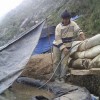
Runaway Gold Prices Spark Major Headaches for Guyana
Fabian George drank and generally used water from jungle rivers near his mountainside home for decades until world market prices for gold began climbing in recent years.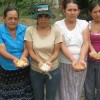
Rural Women in Peru Key to Adaptation of Seeds to Climate Change
For ages, rural women in the Peruvian highlands have been selecting and storing seeds, ensuring their preservation. But the authorities have failed to tap into this storehouse of knowledge and experience, despite the contributions it could make to the design of effective policies for adaptation to climate change, which poses a growing threat to the women’s livelihoods.
Ikea Products Made From 600-Year-Old Trees
The home furnishing giant Ikea, founded in Sweden in 1943, is facing heavy criticism for the logging and clear-cutting of old-growth forests in the north of Russian Karelia by its wholly owned subsidiary Swedwood.
‘Green Economy’ – New Disguise for Old Tricks?
Though the current global economic and financial crises are undoubtedly devastating much of the world, they present the perfect opportunity for remodeling our economic system, according to participants at the ninth annual Terra Futura (Future Earth) exhibition of ‘good practices’ in social, economic and environmental sustainability held here from May 25-27.Ecobreves – CHILE: Pig Slaughterhouse Shut Down
The Chilean government declared a health alert in the town of Freirina, 800 km north of Santiago, in response to the pollution and foul odor emanating from the nearby Agrosuper pork processing plant.Ecobreves – VENEZUELA: Program to Protect Highly Endangered Bird
The Venezuelan Institute for Scientific Research and Bararida Zoo in the city of Barquisimeto are launching a program to protect the red siskin (Carduelis cucullata), a highly endangered bird that lives in the country’s northwest region.Ecobreves – BRAZIL : Mapping the Jaguar Genome
Deciphering the gene map of the jaguar (Panthera onca) is the goal of a new project being jointly undertaken by a number of Brazilian institutions.Ecobreves – HONDURAS: Satellite Monitoring of Natural Resources
A satellite monitoring system donated by the government of Taiwan will enable the creation of a database of natural resources in Honduras and the damages they could suffer as a result of disasters such as hurricanes or earthquakes.
Forests Dying in South Sudan Violence
South Sudan is losing its forests. And with no unified policy to deal with the situation the government is at odds, with one ministry saying that the loss of forests is a necessity for farming and another warning of the dire environmental consequences if this continues unchecked.
Q&A: A Green Economy Without a Pricetag on Nature?
As thousands gear up for the 2012 Earth Summit, Rio+20, scheduled to kick off in Brazil on Jun. 20, questions on the viability and adequacy of a ‘green economy’ abound.
Selling Ethanol Stoves in Mozambique to Generate Carbon Credits
Along a dirt road in Mozambique’s Sofala province, a long line of men on bicycles stretches into the distance, each carrying an impossibly big bag of charcoal strapped to his bike.Global Temperatures Rising on a Devastating Trajectory
Climate-heating carbon emissions set a record high in 2011, in a 3.2 percent increase over the previous year, the International Energy Agency reported this week. The main reason for this dangerous increase is that governments are failing to implement policies to prevent catastrophic increases of global temperatures.
Peru – Megadiverse, and Biodiversity-Aware
One of every two Peruvians knows what "biodiversity" means, and most would stop buying products that are not socially or environmentally responsible, according to an international survey that for the first time included this megadiverse South American country.
Will Rio+20 Spark a Green Revolution?
Think of Rio+20 as the hothouse to grow the green ideas and values humanity needs to thrive in the 21st century.
Renaissance Rice Rises From the Debris
This April, a small rice paddy field in Minami Sanriku, destroyed by the massive earthquake and tsunami last year in Japan, provided one of its most fertile yields yet - bringing hope and joy to the devastated local community.
ANTIGUA: Mysterious Pest Targets Valuable Palm Trees
Something is decimating the coconut and other palm trees here and no one seems to know exactly what it is.
HAITI: Partners in Deforestation and “Slumification”
More than 100 Haitian families now have new housing, thanks to the support of two non-governmental organisations working on reconstruction following the country's devastating 2010 earthquake.
Living in the Heart of Hurricane Alley in Cuba
In Los Palacios, a farming community in the western Cuban province of Pinar del Río, local residents are still working hard to rebuild after the damage caused by two of the three hurricanes that hit this country in 2008. "It was just horrible," people here say when asked about what happened.
Awareness of Climate Change Must Go Mainstream
Addressing a group of journalists during a workshop in Bangkok, Ali Raza Rizvi, Asia head of the International Union for the Conservation of Nature (IUCN)’s regional climate change and resilience programme, noted that many Asian countries have become ‘disaster friendly’.
India’s Economic Growth Leaves Human Development in the Dust
Ahead of the Universal Periodic Review (UPR) of India, a coalition of NGOs denounced the gap between the country’s growth rate and the rate of poverty, malnutrition and lack of health and sanitation.Targeting Right-Wing Extremism, Citizens Challenge Corporate Ties
A coalition of advocacy groups is targeting corporate support for the right-wing Heartland Institute after the organisation took out a controversial billboard in Chicago comparing people who believe in global warming to a serial killer and mass murderer.« Previous Page — Next Page »


Through our global network of local writers, we are continuing our award-winning coverage of global and local environmental challenges, with a focus on the people for whom the ecosphere matters in a direct way: rural dwellers who have little means to protect themselves against adverse conditions; communities that need to switch to sustainable development in order to survive; poor women and children, who are the most vulnerable in natural disasters. Sponsored by the United Nations Environment Program (UNEP), the United Nations Development Program (UNDP) and The World Bank (WB), IPS also maintains the award-winning Tierramérica, a specialised information service on environment and development.

The Week with IPS

Tracking global progress towards a sustainable world


