
Sunday, November 22, 2026



News and Views from the Global South
Environment
Ecobreves – MEXICO: Climate Dialogue Forum Created
Five civil society organizations have established a national indigenous-campesino (peasant farmer) roundtable for dialogue and decision making on climate change, deforestation and soil degradation.
Turning Disaster Management Strategy Into Action – Part 1
Islanders on India’s Great Nicobar Island in the Bay of Bengal, barely 144 kilometres from Sumatra, fled when they felt the first tremors of the 8.6 magnitude earthquake on Apr. 11. They leaped across creeks inhabited by estuarine crocodiles, haunted by memories of the devastating 2004 Asian tsunami that took the lives of thousands of people.
U.N. Aims To Offset its Own Carbon Footprint
As the international community readies for a global mega-conference on sustainable development in Brazil mid-June, the United Nations is determined to practice what it preaches to the outside world: improve resource efficiency and drastically reduce its own greenhouse gas emissions.
Dam Company in Chile Presses Gov’t for Supportive Policies
Colbún, the electricity generating company that co-owns HidroAysén and its multi-dam project in southern Chile, has recommended suspending the environmental impact assessment for power transmission lines that would connect the hydropower complex to the country's central grid, until the right conditions are in place.
For an Ailing Planet, the Cure Already Exists
The planet's climate recently reached a new milestone of 400 parts per million (ppm) of carbon dioxide in the Arctic.Climate Change Drives Exodus to Jakarta
Another month of plying his ‘becak’ (trishaw) in the capital city and Sarjo will be coming back to this West Java district to harvest the rice ripening on his 1,400 sq m paddy.
RIO+20: Canada, Last Holdout, Drops Opposition to Water as Human Right
Canada, in a dramatic political turnaround, has signaled its willingness to recognise water and sanitation as a basic human right.
Rio+20 – a Call to Responsibility, a Call to Action
We are all going through a period of great confusion and uncertainty.
Cultivating Food Security in Their Own Backyards
Misradi, a 58-year-old farmer from the Jelok neighborhood in Pacitan, East Java, some 524 kilometres east of Jakarta, has found a way to reduce his monthly expenses by 30 percent: instead of buying produce from the local market, he and his family now harvest most of their vegetables from their own yard.U.S. Corporations Send Mixed Messages on Climate Science
According to a report released by the Union of Concerned Scientists (UCS) here on Wednesday, at least half of the U.S. corporations under review have actively supported the misrepresentation of the science around climate change.
Q&A: The World Must Learn From Smallholder Farmers
As Africa's Sahel region faces a new food crisis, smallholder famers hold the key to making future development policies sustainable.
Biomass Plantations Can Power India
Valli, 50, and Sarasu, 60, have been working with Energy Plantation Projects India (EPPI) since inception in 2007, the income they earn forming an integral part of their household budgets. "We easily manage household work and a salary-paying job," they tell IPS.Energy Agency Looks to Natural Gas “Golden Age”
If a series of "golden rules" can be followed, a new report from the International Energy Agency (IEA) suggests, global natural gas usage could grow by more than 50 percent by 2035.
Brazilian Indigenous Community Seeks Survival Through Carbon Credits
Less than 45 years ago, the Paiter-Suruí, an indigenous people living deep inside the Amazon rainforest in Brazil, had never been in contact with the outside world. Today they hope to ensure their survival through the complex mechanisms of the carbon market.
Abrupt Shift from Drought to Flooding in Central Cuba
The sudden shift from drought to heavy rainfall that caused severe flooding in central Cuba drove home to the authorities the need to redesign preparedness and prevention plans for climate-related emergencies.
A Future With Food, or No Future At All
The upcoming Rio+20 Conference on Sustainable Development will not succeed if the crises of hunger and malnutrition are not effectively addressed. The issues are so inextricably linked with sustainable development that they have to be part of the agenda, according to a report released Wednesday by the United Nations Food and Agricultural Organisation (FAO) for the upcoming Earth Summit that will take place in Rio de Janeiro from Jun. 20-22.
Climate Change and Family Planning – Twin Issues for LDCs
The reproductive rights agenda, from improving women’s access to education to systematic family planning to reducing birth rates and combating poverty, has become a cornerstone of most industrialised nations’ development policies toward the least developed countries (LDCs), comprised primarily of sub-Saharan African states.
Q&A: North-South Divide Looms Heavily Over Rio+20 Summit
The 1992 Earth Summit in Rio de Janeiro was to a large extent derailed by a North-South divide: a battle between a coalition of rich industrial nations versus the world's developing countries led by the Group of 77.
Rio+20 is Everyone’s Conference
The United Nations Conference on Sustainable Development, otherwise known as Rio+20, is a once-in-a-generation opportunity.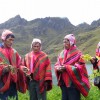
Elders in Peruvian Andes Help Interpret Climate Changes
A unique response to the challenge of global warming is happening in rural areas of Peru, where a network of indigenous elders is working out how to adjust weather forecasts in the light of climate change, while taking measures to safeguard their crops.
Guatemala Halts Widely Praised Maya Biosphere Reserve Initiative
The ambitious Cuatro Balam project for the management and conservation of the Maya Biosphere Reserve in the northern department of Petén has been put on hold after the change of government in Guatemala, say environmental and other civil society organisations.« Previous Page — Next Page »


Through our global network of local writers, we are continuing our award-winning coverage of global and local environmental challenges, with a focus on the people for whom the ecosphere matters in a direct way: rural dwellers who have little means to protect themselves against adverse conditions; communities that need to switch to sustainable development in order to survive; poor women and children, who are the most vulnerable in natural disasters. Sponsored by the United Nations Environment Program (UNEP), the United Nations Development Program (UNDP) and The World Bank (WB), IPS also maintains the award-winning Tierramérica, a specialised information service on environment and development.

The Week with IPS

Tracking global progress towards a sustainable world


