
Sunday, November 22, 2026



News and Views from the Global South
Environment
OP-ED: Mass Extinctions in the Cards Absent Urgent Action
This past Tuesday, May 22, marked World Biodiversity Day, but it came and went without too much public interest.
In Antigua, Fishing Brings Both Income and Ecological Destruction
Eli Fuller is a third-generation Antiguan who, for the past two decades, has been exploring the Antigua and Barbuda coastline. But he laments the fact that he can no longer see the coral that he recalls were somewhat of an underwater jungle when he was a young boy, akin to what you'd see in the Amazon rain forest.
Indonesia Is Wilting
Unless the rapid deforestation in one of the world’s most richly-forested countries is controlled, Indonesians may one day wonder, "where are all the flowers gone." To those lyrics by legendary U.S. singer Joan Baez they might also have to add, and where are all the tigers, elephants, orangutans, birds and ancient forest communities gone.
Big Hydropower Dams Trump Alternative Energy in Chile
Chile has enormous potential for producing non-conventional renewable energies (NCRE) like solar and geothermal, yet they only contribute three percent of the country's energy mix.
Community Drills Part of Cuba’s Top-Notch Disaster Response System
A well-oiled prevention system that involves the entire country, from the highest spheres of government to the most isolated rural community, makes Cuba one of the best-prepared countries in the world when it comes to preventing deaths and mitigating risks in case of disasters.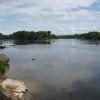
Belo Monte Dam Hit by Friendly Fire
Those who made the final decision on the design of Brazil’s Belo Monte hydroelectric dam will face legal action in the future for the damages caused. This is the kind of warning one would expect from environmentalists, but in this case it comes from a surprising quarter: staunch supporters of hydropower.
Mangroves Lead Battle Against Rising Seas
Sea level rise near Papua New Guinea, a Small Island Developing State (SIDS) in the southwest Pacific, is estimated at seven millimetres per year, double the global annual average of 2.8-3.6 mm.
Nothing to Show for Hard Work but Burnt Fields of Maize
Gertrude Mkoloi earns a living harvesting maize on a small piece of land in rural Zimbabwe. Or at least she used to.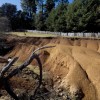
Action Needed Now to Prepare for Severe Drought
Mexico and Central America look like they are covered in dried blood on maps projecting future soil moisture conditions.
Green Groups Urge Obama to Attend Rio+20
With a month to go before the United Nations Conference on Sustainable Development in Rio de Janeiro, nearly two dozen NGOs are calling on President Barack Obama to confirm his attendance at the event, known as Rio+20.
Q&A: Earth Summit Deadlocked Until Eleventh Hour
The 1992 Earth Summit in Rio de Janeiro has been described as one of the largest international conferences in the history of the United Nations, attracting over 20,000 participants, including more than 100 world leaders.
Guatemalan Communities Have No Say in Exploitation of Resources
"People haven’t been coming in for the past month or so because they are afraid again, like during war-time," complained Juan Gaspar, a shopkeeper in the northwestern Guatemalan town of Santa Cruz Barillas, where a fierce battle is raging between locals opposed to a hydropower dam and the security forces.
Q&A: No Single Country Can Forecast Climate Change Alone
Cuban climate change scientists have been sharing their research findings and experience over the past few years with the rest of the Caribbean islands, using PRECIS, a regional climate modelling system, to help design adaptation policies.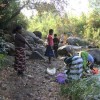
While Men Go Drinking, Women Go Fishing
Climate change may have led to declining water levels in Genda Village in Zambia’s Eastern Province, but Mercy Mwanza and the women here discovered there was a positive side to it and found a new way to earn a living.
Bangladesh Set to Take the Reins at Rio+20
Experts believe that the upcoming United Nations Earth Summit, Rio+ 20, scheduled to take place in Brazil from Jun.20-22, could be a real opportunity for Bangladesh to negotiate a road to sustainable development.
Can ‘Blue Forests’ Mitigate Climate Change?
Fifty-five percent of global atmospheric carbon captured by living organisms happens in the ocean.
Action Needed Now to Prepare for Severe Drought Conditions in the Future
Numerous scientific studies predict severe and permanent drought conditions in large parts of Mexico, the United States and Central America.Ecobreves – LATIN AMERICA: Decline in Renewable Energy
The generation of energy from renewable sources in Latin America dropped from 25 percent of total output in 1990 to 23 percent in 2009, according to the Economic Commission for Latin America and the Caribbean (ECLAC).Ecobreves – BRAZIL: Greenhouse Effect of Amazon Hydro Dams Revealed
The planned construction of 22 hydroelectric power plants in the Amazon region over the next eight years will cause the emission of 153 million tons of carbon dioxide into the atmosphere, a new study reveals.Ecobreves – LATIN AMERICA: Mega Cities in Search of Climate Leadership
Representatives of civil society, political organizations and the private sector from Buenos Aires, Mexico City and São Paulo, the three most populous cities in Latin America, met in the Argentine capital to promote leadership around the climate change issue.
Jakarta Poaches on Farmland Waters
The 18,000 litres of clean water that Jakarta consumes per second are expected to hit 26,000 litres by 2015. The solution? A 54-km stretch of toll road cut through prime paddy land to access the water resources of this salubrious hill district.« Previous Page — Next Page »


Through our global network of local writers, we are continuing our award-winning coverage of global and local environmental challenges, with a focus on the people for whom the ecosphere matters in a direct way: rural dwellers who have little means to protect themselves against adverse conditions; communities that need to switch to sustainable development in order to survive; poor women and children, who are the most vulnerable in natural disasters. Sponsored by the United Nations Environment Program (UNEP), the United Nations Development Program (UNDP) and The World Bank (WB), IPS also maintains the award-winning Tierramérica, a specialised information service on environment and development.

The Week with IPS

Tracking global progress towards a sustainable world


