
Sunday, November 22, 2026



News and Views from the Global South
Environment

Funding Dries Up Even as Rains Worsen Cholera Deaths
As predicted, the beginning of the rainy season in Haiti brought exponential increases in the numbers of people sickened and killed by cholera.Industrialised Countries Under Critical Spotlight at U.N. Meet
The latest session of the United Nations Framework Convention on Climate Change (UNFCCC), taking place May 15-25 in the former German capital Bonn, is the perfect opportunity to reaffirm the enormous and growing body of scientific expertise on policies to tackle global warming.
Brazil Drives Energy Integration in South America
Energy integration in South America will be a reality "in the medium to long term," driven by hydropower and drawing on Brazil’s experience, predicts Altino Ventura Filho, secretary of planning in this country’s Ministry of Mines and Energy.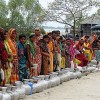
Caught Between Diarrhoea Bugs and Arsenic
Achieving the Millennium Development Goal of providing access to safe drinking water for its 160 million people by 2015 is a tough call for Bangladesh, which is caught between arsenic contaminated groundwater and diarrhoea-causing microbes in its ponds and rivers.
‘Leave Nothing But Footprints’ on Philippine Beaches
Seashells and corals are competing with styrofoam packs, food wrappers, cigarette butts, and plastic bottles for space on some of the Philippines’ most scenic beaches. Graffiti mars tourist spots like lighthouses and caves, proclaiming the names of recent visitors.Rio+20: European Parliament Absent in Sustainability Summit
The decision by the European Parliament (EP) to renounce its participation in the Rio+20 United Nations Conference on Sustainable Development next month on the grounds that hotel costs are exorbitant has provoked sharp criticism from civil society organisations.
Colombian River Basin Passes the Test of El Niño and La Niña
Patricia Gómez, an engineer, is leading a training workshop for a group of 11 men at the fire station in Neiva, the capital of the department of Huila in southwest Colombia.
Adding Rice Farmers to the Rio+20 Agenda
The year 2011 was one of extremes for the small Sri Lankan village of Verugal.
“We Are Living As If We Had One and a Half Planets”
The new WWF Living Planet Report warns of a significant decline in biodiversity, particularly in low-income countries, and a huge increase in the ecological footprint of high-income countries.Public Funds Could Help Provide Water and Electricity, Researchers Say
For several decades, governments around the globe have turned to privatisation as the best option to help relieve the world's destitute by providing them with health care services, water and electricity. By and large, however, this effort has failed.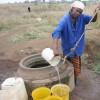
Brazilian Government Sets Guidelines for Success at Rio+20
As the host of Rio+20, the Brazilian government has defined guidelines for achieving success at the upcoming world summit, whose aim is to assess and strengthen what has been done since the 1992 Earth Summit, the first global meeting on sustainable development.
Argentina Faces the Dilemma of Unconventional Oil and Gas
Vast reserves of natural gas and oil trapped underground, whose exploitation would signify major environmental impacts, will be the greatest challenge facing YPF, the Argentine oil company that recently returned to state control.
French Environmentalists Want ‘Green’ Without the ‘n’
As France’s president-elect Francois Hollande prepares to form a new government, many environmentalists are calling for the appointment of an ecology minister with real power who can deliver on promises to reduce the use of nuclear power as well as cut carbon emissions.Private Sector and Conservationists Meet on a Big Date
As schools of whales move to music undersea at image definitions of 6.54 million pixels on the giant ceiling mounted LED screen, 218 X 30 metres in length and width, expectations run high from the International Exposition Yeosu Korea 2012 at harbour town. The expo showcases 104 participating countries’ visions and achievements on the Expo theme: ‘The Living Ocean and Coast: Diversity of Resources and Sustainable Activities’.
Colombian River Basin Passes the Test of El Niño and La Niña
Risk prevention measures with active community participation have reduced the threat of flooding and water shortages in the Colombian city of Neiva.Ecobreves – BRAZIL: Increased Public Concern Over Climate Change
Climate change is considered a “very serious” problem by 65 percent of Brazilians interviewed in a survey conducted by the National Confederation of Industry (CNI) in December and released in the second week of May.Ecobreves – CHILE: Unprecedented Campaign for Reforestation in Patagonia
A campaign jointly organized by public and private agencies aims to plant one million trees in the Chilean region of Patagonia, which has lost more than three million hectares of native forest in the last 100 years through fires and logging.Ecobreves – VENEZUELA: Caracas Residents Affected by Cement Plants
Residents of Chuao, a neighborhood in southeast Caracas, are protesting against a cement plant installed near their homes which releases large amounts of harmful particulates into the air they breathe.
Financial Middlemen Muddle Climate Commitments
The European Union has been using all means necessary to fill the multi- billion-euro fund for climate change, including the controversial mobilisation of public resources through private financial intermediaries.Indonesia Galvanises Youth Ahead of Rio+20
Clutching a plastic bag containing a tree sapling in his right hand and a slim notebook in his left, 11-year-old Rizki Fauzi is the picture of a young climate change expert.Chile’s Native Communities Find Ally in Supreme Court
Indigenous groups in Chile celebrated a recent court ruling that represented the latest victory in the struggle for respect for their right to be previously consulted about major projects which directly affect their communities.« Previous Page — Next Page »


Through our global network of local writers, we are continuing our award-winning coverage of global and local environmental challenges, with a focus on the people for whom the ecosphere matters in a direct way: rural dwellers who have little means to protect themselves against adverse conditions; communities that need to switch to sustainable development in order to survive; poor women and children, who are the most vulnerable in natural disasters. Sponsored by the United Nations Environment Program (UNEP), the United Nations Development Program (UNDP) and The World Bank (WB), IPS also maintains the award-winning Tierramérica, a specialised information service on environment and development.

The Week with IPS

Tracking global progress towards a sustainable world


