
Monday, November 23, 2026



News and Views from the Global South
Environment
The Unsustainable Political Deficiencies of Environmentalism
The environmental movement won the ideological battle with the growth of awareness on climate change. Environmentalists are no longer seen as "loonies" or granola-eating hippies: the people seen as on the fringe" now are the climate sceptics who deny that global warming is caused by human activity.MAURITIUS: Thirsty for Ideas to Address Water Woes
Mauritius plans to privatise its water sector, as rains become rare, and century-old pipes continue to leak almost 50 percent of the water available, added to waste by the population, mismanagement and over-consumption.PERU: No Time Left to Adapt to Melting Glaciers
The water supplied by the glaciers of the Cordillera Blanca, vital to a huge region of northwest Peru, is decreasing 20 years sooner than expected, according to a new study.PERU: Weak Environmental Impact Studies for Mines
The stiff local opposition to the Conga gold mining project in the northern Peruvian highlands region of Cajamarca revived a long-postponed debate in this country, on the weakness of environmental impact studies in the mining industry.SWAZILAND: Processing Plant Threatens Water in Capital
A multi-million dollar iron-ore reprocessing plant in the northern part of Swaziland, owned by Indian mining company Salgaocar, is threatening the water security of local communities and even the country’s capital city, Mbabane.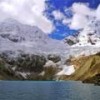
No Time Left to Adapt to Melting Glaciers
Water flows from Peru’s Cordillera Blanca, which has the most glaciers of any tropical mountain range in the world, are in a state of permanent decline 20 years sooner than forecasted.
Local Biogas Initiatives Open Virtuous Circle
Small local initiatives for the production of energy from organic waste could serve as the starting point for a network of green municipalities in Argentina.
Tuna Fisheries Must Make Short-Term Sacrifices
Countries involved in tuna fishing should remember that in exchange for having access to these resources, they also have the responsibility to manage them properly, says Spanish researcher María José Juan Jordá in this interview.Ecobreves – ARGENTINA: Serious Flaws in Forest Mapping Denounced
Environmental organizations in Argentina have raised the alarm over the destruction of the forests of El Espinal in the northeastern province of Corrientes, due to serious flaws in the mapping of the region.Ecobreves – BRAZIL: Overlooked Waste Recycled into Plastic Products
A technique developed by the Lorena School of Engineering at the University of São Paulo takes advantage of plastic wastes that are rarely recycled to produce plastic panels for automobiles, furniture and other uses.Ecobreves – HONDURAS: Joining Forces to Save the Zambuco Lagoon
Idyllic Zambuco Lagoon in the northern Honduran community of Esparta is being restored through a joint wetlands conservation project involving the government, civil society and local residents.Collateral Damage From Fukushima Hits Europe
Several leading European electricity providers and nuclear power plant constructors now count as part of the collateral damage caused by the tsunami that destroyed the Japanese nuclear power plant of Fukushima last March.SRI LANKA: Tsunami Demons Haunt the Coast
Seven years after monster waves crashed into homes, hotels and vehicles on Sri Lanka’s coast, people in this island nation continue to be haunted by demons from the sea.U.S. Limits Mercury Pollution as Big Coal Retreats
Environmental advocates praised a recent new rule limiting pollution of mercury and other air toxins announced by the U.S. Environmental Protection Agency, one of several new air pollution standards set under the Barack Obama administration.EL SALVADOR: Women Demand to Be Included in Climate Solutions
Some 100 rural women in El Salvador demanded that the government halt mining and hydroelectric projects that are harming their communities and establish specific programmes with a gender perspective for combating climate change.SIERRA LEONE: Local Communities Divided Over Mining in Rainforest
Sierra Leone’s Gola Rainforest remains a centre of contention as the local community here plan to take their chief to court next week over a controversial 50-year land lease to a mining company.JAPAN: Mothers Rise Against Nuclear Power
Japan’s nuclear power industry, which once ignored opposition, now finds its existence threatened by women angered by official opaqueness on radiation from the Fukushima Daiichi nuclear plant after it was struck by an earthquake- driven tsunami on Mar. 11.
Green Tech Drives Search for Rare Earths in Argentina
Argentina could meet part of the rising world demand for "rare earth" metals, required for a variety of green technologies, advanced electronic devices and medical diagnostic equipment. The challenge lies in mining them in a sustainable fashion.
Moving Towards a Food-Secure Ghana
In Dundo village in Nyankpala district, Northern Ghana, 10 women are busy weeding a rice field on a piece of land donated to them by the village chief.
HAITI: Open for Business – Part 2
Ever since being elected earlier this year, Haitian President Michel Martelly and his team have been betting Haiti's reconstruction on foreign investors.
AGRICULTURE-BOLIVIA: Adapting to the Floods
Margarita Amabeja holds out her hands full of golden rice grains and rough brown manioc roots - the first results of a strategy to adjust the agricultural cycles to the seasonal floods and droughts in the vast plains of Beni, in northeastern Bolivia.« Previous Page — Next Page »


Through our global network of local writers, we are continuing our award-winning coverage of global and local environmental challenges, with a focus on the people for whom the ecosphere matters in a direct way: rural dwellers who have little means to protect themselves against adverse conditions; communities that need to switch to sustainable development in order to survive; poor women and children, who are the most vulnerable in natural disasters. Sponsored by the United Nations Environment Program (UNEP), the United Nations Development Program (UNDP) and The World Bank (WB), IPS also maintains the award-winning Tierramérica, a specialised information service on environment and development.

The Week with IPS

Tracking global progress towards a sustainable world


