Languages
Thursday, November 12, 2026



News and Views from the Global South
Featured
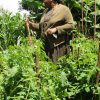
County Climate Risk Profiles Critical and Timely for Kenya’s Struggling Smallholders
Peris Wanjiku, a smallholder farmer in Othaya, Nyeri County, which lies approximately 152 kilometres from Kenya's capital, Nairobi, has watched as her fellow farmers have slowly started to sell off their land in the face of increasingly erratic weather patterns.
– Successful Crop Innovation Is Mitigating Climate Crisis Impact in Africa –
On the occasion of World Environment Day, 5 June 2021, drawing from IPS’s bank of features and opinion editorials published this year, we are re-publishing one article a day, for the next two weeks. The original article was published on February 17 2021

When Battling Covid-19 Becomes a National Policy Disaster
We went to the Kanatte cemetery, Sri Lanka’s largest, where most of us, residents of the capital city, would end up sooner or later. But it was deserted, and so we had time for a leisurely chat with some of the helpful staff there, albeit after admiring some of the grave sites and remaining beautiful trees.
Large Corporations Cash in on COVID-19 Relief Funds
Poverty and income inequality are being deepened as COVID-19 relief funds are handed out to large corporations instead of social protection programmes in developing countries, groups involved in a new study of COVID-19 bailouts have said.
– Jamaica Failing to Cope with Plastic Waste –
On the occasion of World Environment Day, 5 June 2021, drawing from IPS’s bank of features and opinion editorials published this year, we are re-publishing one article a day, for the next two weeks. The original article was published on January 20 2021
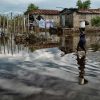
Climate Crisis: Elephants in the Room are Getting Nastier
The year 2020 will forever be notorious for the COVID-19 pandemic but it might also be known by historians for a precipitous rise in second order climate change consequences -- a new elephant in the room.
Women Leading Somalia’s Health System
Somalia is one of the most complex regions of the world, with threats and political instability, extreme weather conditions, movement of internally displaced people (IDPs), decades of conflict, poverty-related deprivation, poor health and communicable diseases that are killing people. There is a constant risk of gender violence making women, children and members of minority groups particularly vulnerable, and more so during displacement or while seeking work. Three decades of civil war and instability have weakened Somalia’s health system and contributed to it having some of the lowest health indicators in the world. The COVID-19 pandemic has added yet another strain on its tremendously fragile infrastructure presenting unexpected challenges and dilemmas.
– Mining giant Rio Tinto Face Environmental, Human Rights Complaint in Papua New Guinea –
On the occasion of World Environment Day, 5 June 2021, drawing from IPS’s bank of features and opinion editorials published this year, we are re-publishing one article a day, for the next two weeks. The original article was published on January 4 2021

COVID-19 Vaccination: The Barriers to Achieving Global Herd Immunity
The global community is conducting a rapid vaccination program against the SARS.Cov-2 virus, using several vaccines, authorised for emergency use. To date, the percentages of adults vaccinated vary between less than 2% to over 90% in different countries.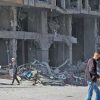
The Devastating Gun Battle in Gaza is Being Fought in an Uneven Killing Field
In most civil wars and military conflicts across the politically-volatile Middle East, including in Syria, Yemen and Palestine, the ongoing battles are being fought not on a level playing field but on an uneven killing field.
Where are the Women? How Pandemic Decisions are Ingraining Global Gender Bias
There are teams of experts around the world right now tackling the coronavirus pandemic, providing pathways to put an end to this deadly global scourge and charting the course for recovery.
US Casts 45 Vetoes – and Counting—While Protecting a Client State
The UN Security Council (UNSC), the most powerful political body at the United Nations, has largely remained silent or ineffective in resolving one of the longstanding military conflicts in the Middle East involving Israelis and Palestinians.
Latin America & the Caribbean Assess Climate Ambition and Action Ahead of COP26
The Dominican Republic opened the 2021 virtual Latin America and the Caribbean Climate Week with a pledge to increase the country’s climate ambition by reducing its greenhouse gas emissions by 27 percent and maintaining progress towards climate neutrality according to the goals of the Paris Agreement.
Russia’s Sputnik Diplomacy
While Western countries were busy with their own vaccination campaigns, Russia has filled the leadership vacuum in developing countries. Amid the West’s scramble for vaccines, a trickle of news flies under the radar. Argentina becomes the first country in South America to produce Russia’s Sputnik V vaccine. The first shipment of Sputnik V is promised to Peru by May.
COVID-19 Brings Fresh Challenges to Nigeria’s Leprosy-affected
 People affected by leprosy, also known as Hansen’s disease, are often stigmatised. In countries like Nigeria, many of them end up as beggars due to the psycho- and socio-economic problems they face. The COVID-19 pandemic has brought fresh challenges for them and life is getting increasingly difficult. Sam Olukoya in Lagos takes a look at how people affected by leprosy in Nigeria are faring in the face of the COVID-19 pandemic.
The UN’s Guterres, an Incumbent With Strong Backing by Europe, Is Bound to Win Another Term
It was all over in one crucial week. Barring an unforeseen hitch, António Guterres is the clear winner of a second, five-year term as secretary-general of the United Nations, beginning on Jan.1, 2022. This was not a surprise: he had no major competition and the process moved faster than expected.
India Under Siege From Covid-19: The Worst Yet to Come
The Coronavirus infections and deaths in India recorded a daily high on Monday, 10 May, with 366,161 new infections and 3,754 deaths as reported by the Indian health ministry, taking India's total tally to 22.66 million with 246,116 deaths. Experts have raised a flag stating India's actual figures could be far higher than what is currently being reported.
Biogas in Argentina: Turning an Environmental Problem into a Solution
"Until five years ago, we didn't know about the circular economy, but today our waste generates environmentally neutral products that also offer a return,” says José Luis Barrinat, manager of a cooperative that brings together some 550 small farmers in Monje, Argentina.
Kenya’s Dryland Farmers Embrace Regenerative Farming to Brave Tough Climate
It is an uncommon occurrence to see farms with flourishing healthy crops in Kenya’s semi-arid Makueni County. But in Kithiani village, Justus Kimeu’s two-acre piece of land stands out from the rest. After embracing the regenerative agriculture (RA) technique, the 52-year-old farmer is looking forward to a bumper harvest of maize as all his neighbours count their losses following this year’s failed season.
Equipped by US & Israeli Firms, Police in Botswana Search Phones for Sources
Oratile Dikologang was naked when police officers pulled black plastic over his head during his detention in April 2020. It was difficult to breathe, but the interrogation continued, he told CPJ in a recent phone interview.
How to Assess the Willingness of US to Suspend Patent Protection on Vaccines?
The news of the Biden Administration's willingness to lift intellectual property rights protections in the case of the Covid-19 pandemic has sent the world into turmoil, even though in recent days this willingness had become increasingly airy.« Previous Page — Next Page »





The Week with IPS

NEXT STOP - SDGs
Tracking global progress towards a sustainable world
Tracking global progress towards a sustainable world
