Languages
Tuesday, November 17, 2026



News and Views from the Global South
Featured

Why Are So Many Nepali Workers in Korea Committing Suicide?
For many Nepalis, it is dream to find work in Korea where they expect to earn many times more than in Nepal. Yet, there is a dark side to the Korean Dream: between 2009 to 2018, there were 143 deaths of Nepali workers in South Korean soil, and of them 43 were suicides.
How the Oceans and the Cryosphere are Under Threat and What it Means for Africa- IPCC Author Explains
 “Special reports come to address issues that need deeper understanding and deeper research,” Dr James Kairo, one of the lead authors of the ‘Special Report on the Ocean and Cryosphere in a Changing Climate,’ a special report by the Intergovernmental Panel on Climate Change (IPCC), told IPS.
Free Trade is Dead
In recent years, global trade and trade policy have become central socio-political issues. The planned EU-US trade agreement TTIP triggered an unprecedented storm of indignation and resistance.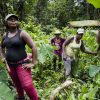
Rural Poverty Is Still a Scar on the Soul of Colombia, but a New Program Supporting Agri-Entrepreneurship Can Help Heal the Wounds
Rural poverty and inequality continue inflicting large swaths of population in Colombia, especially in rural areas. This situation, endemic since at least the beginning of the twentieth century, was at the root of the 50-year long conflict that shattered the country, leaving 220,000 deaths and 5.7 million displaced persons, and devastating a significant part of the rural areas, where government services and infrastructure vanished.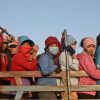
The #MeToo Movement’s Powerful New Tool
If one dreamed up an ambitious global #metoo success story, it might involve governments around the world enthusiastically supporting legal norms and action on sexual harassment with active support and cooperation from businesses and workers.
Making a Whale of a Difference to Marine Conservation
The thrill of watching a whale up close or schools of dolphins frolicking in an ocean are much sought after experiences today, boosting the demand for tours that provide people the opportunity to see these marine animals in their natural habitats. But becoming a major tourist drawcard has also exposed cetaceans (whales, dolphins and porpoises) and their environs to risks and challenges.
Huge moment for Ethiopia as Abiy Ahmed wins Nobel Peace prize
Ethiopia found itself in the global spotlight for all the right reasons after Abiy Ahmed, its young, dynamic prime minister was awarded the Nobel Peace Prize.
Obama’s Portraitist Challenges Napoleon’s Painter
Fresh from unveiling a huge statue of a black man on horseback in New York’s Times Square, renowned African American artist Kehinde Wiley flew to France this week to “meet” 18th-century French painter Jacques-Louis David.
Justin Trudeau´s Blackface
Politics is a dodgy game, maybe even more so if you represent political views based on a moral approach. When the charismatic Justin Trudeau, son of a cosmopolitan liberal who served as Canada´s Prime Minister for 16 years, in 2015 was elected Prime Minister it was within a global political climate different from what it is today. Barack Obama was in the White House, Angela Merkel served her third period as German Chancellor, and the UK Government had not yet announced its country's withdrawal from the EU. Nevertheless, Russia had three months before Trudeau´s election annexed Crimea, while Viktor Orbán´s Hungarian government the month before initiated the construction of a 4 metres high barrier along its nation´s eastern and southern borders to keep immigrants out.
For Some in Kashmir Marriage Equates to Sexual Slavery
Haseena Akhtar was only 13 when an agent told her parents that they could earn a good amount of money by letting her marry a Kashmiri man. The man was, however, three times older than Akhtar, the agent said.
Wanted: Bold Leadership by António Guterres: On Sustainable Funding of United Nations
The United Nations is faced with a financial crisis once again. Leaders of as many as 64 countries who paraded and pontificated at the UN General Assembly and its multiple Summit meetings in September 2019 were deadbeats, who had not paid their dues in full to the UN for this year.
Austerity, the “New Normal”
While this week Ministers of Finance and economists meet in Washington to confront global economic challenges at the IMF and World Bank Annual Meetings, the majority of the world population lives with austerity cuts and see their living standards deteriorating. World leaders must reverse this trend.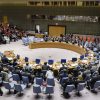
Aid Groups Warn of Humanitarian Crisis from Turkey’s Assault on Syria
Aid groups operating in northeastern Syria have been raising the alarm about civilian casualties and an impending humanitarian crisis this week, as Turkey began a military assault on the turbulent region’s Kurdish militants.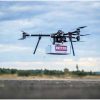
The Role of Emerging Technologies in Military Conflicts
Throughout history, technology has transformed armed conflict. The carnage of First World War battlefields is a stark example of what happens when advances in weaponry outpace the normative frameworks around its use.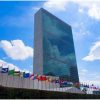
UN’s Cash Crisis Can Have Serious Consequences, Staff Unions Warn
The UN’s smoldering cash crisis, which has threatened staff salaries and payments to vendors, has triggered strong reactions and rattled the over 6,400 staffers who work in the 39-storeyed Secretariat building in New York.
Abortion Remains an Unresolved Issue: ICPD25 Meeting next Month
Currently, the topic of abortion as human rights leaves the world bustling. When the state of Alabama1 in the United States enacted a very strict ban on abortion, it shocked the world. This prompted so-called conservative movements, led by female business owners, to make a full-scale advertisement in the New York Times claiming abortion is a human right2 ; hence the global debate between pro-life and pro-choice.
“Window of Opportunity to Avoid Catastrophic Climate Change is Fast Shrinking”
“The window of opportunity to avoid catastrophic climate change is fast shrinking,” executive director of the Green Climate Fund (GCF), Yannick Glemarec, tells IPS. 
UN Faces its Worst Cash Crisis in Nearly a Decade
The Secretary-General wrote to Member States about the worst cash crisis facing the United Nations in nearly a decade. The Organization runs the risk of depleting its liquidity reserves by the end of the month and defaulting on payments to staff and vendors.
UN Women Ambassadors Rise to New Heights But Fall Short of Gender Parity
New York’s diplomatic community has continued to be enriched by a record number of women Permanent Representatives (PRUNs)—50 in all, as of October 2 – compared with about 15 to 20 back in the 1980s and early 1990s.
Global Climate Change Investment Heavily Tilted Towards Mitigation and Low on Adaptation
Good news: the graph depicting climate investments has been steadily increasing. Climbing from the 2012 figure of $360 billion in climate investments across the world to close to $600 billion currently.
Hollywood and Business Luminaries Spotlight World’s ‘Stateless’ Woes
Movie star Cate Blanchett and businessman Richard Branson spoke up this week for the millions of people around the world who cannot get passports and other papers because they lack an official nationality.« Previous Page — Next Page »


The Week with IPS

NEXT STOP - SDGs
Tracking global progress towards a sustainable world
Tracking global progress towards a sustainable world
