Languages
Friday, November 27, 2026



News and Views from the Global South
Featured

IUCN Puts the Accent on Business
The outcome of the June Rio+20 UN conference on sustainable development was the undisputed inability of governments to come to an agreement on moving ahead to protect the planet. Three months later, the International Union for Conservation of Nature (IUCN) is proposing what can be done as a collective.
Palestinians Now Face Killing Prices
Thousands of Palestinians took to the streets across the West Bank over the past week in protest against increasingly high living costs, and demanding major changes from the Palestinian Authority (PA) leadership.
Polygamy Throttles Women in Senegal
Fatou (40), Awa (32) and Aissatou Gaye (24) sit in a meditative mood on the tiled floor outside their matrimonial home in Keur Massar, a township in the Senegalese capital Dakar.Malian Farmers Want Their Land Back
A group of smallholder farmers in Mali have turned to the courts to try to recover land they say they have lost to big private investors. The legal action comes as foreign investors are losing interest in Mali due to political instability and an armed rebellion in the north.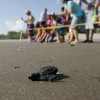
Salvadoran Bay Breeds Hope for Sea Turtles
El Salvador’s Jiquilisco Bay, a tiny hidden corner of the Pacific Ocean, is becoming a haven for endangered sea turtles.
OP-ED: Women and Girls at Heart of the Blue Revolution
World Water Week recently concluded in Stockholm with a special emphasis on the linkages between water and food security.
China Puts Up a Green Shield Against Sandstorms
The setting sun is still streaming in through the poplars along the shelter belts, but Horquin Lianjun is done with farm work for the day. The desert wind has turned bone chilling.
Kenya’s Water Wars Kill Scores
Water scarcity is fuelling deadly inter-ethnic wars that continue to claim lives in Kenya, according to government officials. And if nothing is done to educate communities on how to conserve the valuable resource, the situation will escalate, governance experts and environmentalists warn.
Small Dams – from Heroes to Villains in Brazil
A recent Brazilian court decision to suspend construction of small hydroelectric dams along the Paraguay River has highlighted the doubts raised about a growing alternative source of energy that until recently was considered one of the most environmentally-friendly sources.
U.S. Public Satisfied With Less Militarised Global Role
Disillusioned by wars in Iraq and Afghanistan, the U.S. public is becoming increasingly comfortable with a more modest and less militarised global role for the nation, according to the latest in a biennial series of major surveys.
Exchanging Peace, One Postcard at a Time
When Ross Holzman packs for a work trip, he brings three bags with him: One with blank postcards, one with crayons, and one with thousands of artworks created by children around the world.Agricultural Activity to Slow Clandestine Emigration from Senegal
"It was Ibrahima Sarr, a friend and fellow fisherman, who got me involved with smuggling people across the seas." Senegalese fisherman Doudou Ndoye speaks with the bittersweet conviction of a man redeemed.Belarus Heads for Election, not Democracy
Belarusians will vote for a new, but still regime-controlled parliament on Sep. 23. At least those who do not respond to calls for boycotting the poll.
Syrian Kurds Find the Language of Freedom
"I want to learn how to read and write in my own language," says Manal, a young Kurd from Syria. Neither she nor any of Manal’s 30 classmates have ever been so close to achieving their goal.Microfinance Brings Hope to Myanmar’s Farmers
After decades of grinding poverty under successive military dictatorships, Myanmar’s rice farmers have a chance at a better future through rural reforms ushered in by the country’s quasi-civilian government. Microfinance is at the root of it.
Losing Land, and Finding a Roof
Asmahan Ramadan and her family have taken thousands of photos on the rooftop of their home. Not of themselves, or of the overcrowded Dheisheh refugee camp they see every day.Kyoto Protocol May End With the Year
As government negotiators from the world’s poorest countries ended a round of United Nations climate change talks in the Thai capital, they sounded a grave note about what appears imminent when they assemble in November in Doha – the reading of the last rites of the Kyoto Protocol.
Culture of Peace Should Replace Culture of Violence
When U.N. Secretary-General Ban Ki-moon addresses the High-Level Forum on Culture of Peace later this week, he will transmit a message that underlines his political philosophy: all disputes need to be resolved by peaceful means, not through military might.
Gaza Economy Tailored to Fail
"Gaza's economy is expected to grow modestly and people will likely still be worse off in 2015 compared to the mid-1990s," reads a press release announcing the United Nations' August 2012 report, ‘Gaza in 2020 – A Liveable Place?’Getting Into the Business of Environment
Regulations that stand in the way of conservation programmes lower their likely success, experts warned at the World Conservation Congress of the International Union of Conservation of Nature (IUCN) in Jeju, South Korea.
U.S.: Advantage Obama As Election Begins in Earnest
With their respective party nomination conventions behind them, both President Barack Obama and his Republican challenger, former Massachusetts governor Mitt Romney travelled to the tiny northeastern state of New Hampshire Friday, one of at most a dozen “swing” states whose voters are likely to decide the winner in the Nov. 6 election.« Previous Page — Next Page »


The Week with IPS

NEXT STOP - SDGs
Tracking global progress towards a sustainable world
