Languages
Wednesday, November 25, 2026



News and Views from the Global South
Food and Agriculture

Climate Justice: Trial by Public Opinion for World’s Polluters
The United Nations, which is tasked with the protection of the global environment, has asserted that climate change affects people everywhere - with no exceptions.
From Residents to Rangers: Local Communities Take Lead on Mangrove Conservation in Sri Lanka
 Weekends and public holidays are deadly for one of Sri Lanka’s most delicate ecosystems – that is when the island’s 8,815 hectares of mangroves come under threat.

Adaptation Funding a Key Issue for Caribbean at Climate Talks
With less than six months to go before the next full United Nations Conference of the Parties also known as COP 21 – widely regarded as a make-or-break moment for an agreement on global action on climate change – Caribbean nations are still hammering out the best approach to the talks.
Opinion: GM Cotton a False Promise for Africa
Genetically modified (GM) cotton has been produced globally for almost two decades, yet to date only three African countries have grown GM cotton on a commercial basis – South Africa, Burkina Faso and Sudan.
Peru a Shining Example for South America’s Climate Action Plans
This week, Peru became the first South American nation to publicly announce its Climate Action Plan, or INDC. In doing so, it may have set the scene for a new wave of highly transparent and ambitious INDC submissions from the continent.
Opinion: Journey Towards an African Taxation Renaissance
Africa is known as the ‘paradox of plenty’. How can a continent so rich in natural resources be so poor?
Organic Cacao Farmers Help Reforest Brazil’s Amazon Jungle
“Now we realise what a paradise we live in,” said Darcirio Wronski, a leader of the organic cacao producers in the region where the Trans-Amazonian highway cuts across the Xingú river basin in northern Brazil.
Opinion: G7 Makes Commitment on Climate … to Climate Chaos
One of the promises made by the leaders of the world's seven richest nations when they met at Schloss Elmau in Germany earlier this week was an energy transition over the next decades, aiming to gradually phase out fossil fuel emissions this century to avoid the worst of climate change.
India Confronts Water Woes as it Transitions from MDGs to SDGs
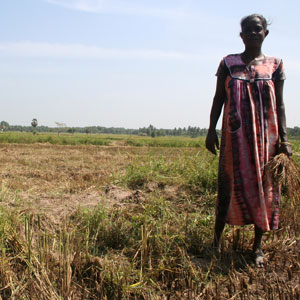
 As the United Nations closes its chapter on the Millennium Development Goals (MDGs) and charts a new plan of action under the framework of 17 Sustainable Development Goals (SDGs), India – a country of 1.2 billion people – is confronting its resource challenges.
A Regional Foodbasket Plans for the Worst
Despite its highly variable climate, Guyana is the only Caribbean Community (CARICOM) country that enjoys food security. But rapid climate change could pose a challenge not only for Guyana, but for its Caribbean neigbours who depend on the South American country for much of their produce.
U.N. Chief Backs New Int’l Decade for Water for Sustainable Development
As the United Nations continues its negotiations to both define and refine a new set of Sustainable Development Goals (SDGs) before a summit meeting of world leaders in September, Secretary-General Ban Ki-moon has expressed support for a new “International Decade for Water for Sustainable Development.”Opinion: Minsk Agreements, the Only Path to Peace in Ukraine
The “U.N. Report on the human rights situation in Ukraine”, which was referred to in an Inter Press Service (IPS) article of Jun. 2, does not, in my view, reflect many salient points.
Fishing and Farming in Gaza is a Deadly Business
Three Palestinian fishermen were injured last week after Israeli naval forces opened fire on fishing boats off the coast of al-Sudaniyya in the northern Gaza Strip, bringing to 15 the number of farmers and fishermen shot and injured by Israeli security forces recently as they attempted to earn a living.
Exodus in the Bay of Bengal
For a while it went unnoticed: a boatload of migrants here, a vessel full of refugees there. But since 2012, the complex and unregulated movement of human beings through South and Southeast Asia– and the fate of those who put their lives in the hands of smugglers and at the mercy of the high seas – is becoming bleaker with each passing day.
8.2 Million Iraqis In Need of Emergency Humanitarian Assistance
As fighting drags on between Iraqi armed forces and the Islamic State in Iraq and the Levant (ISIL), millions of refugees caught between the warring groups are in dire need of humanitarian assistance.
Zimbabwean Women Weave Their Own Beautiful Future
Seventy-seven-year-old Grace Ngwenya has an eye for detail. You will never catch her squinting as she effortlessly weaves ilala palm fronds into beautiful baskets.
Zimbabwean Women Weave Their Own, Beautiful Future
Seventy-seven-year-old Grace Ngwenya has an eye for detail. You will never catch her squinting as she effortlessly weaves ilala palm fronds into beautiful baskets.

Prolonged Drought Leaves Caribbean Farmers Broke and Worried
St. Lucian farmer Anthony Herman was hoping that next year he’d manage to recoup some of the losses he sustained after 70 per cent of his cashew crop withered and died in the heat of the scorching southern Caribbean sun.
Latin America’s Relative Success in Fighting Hunger
The Latin American and Caribbean region is the first in the world to reach the two global targets for reducing hunger. Nevertheless, more than 34 million people still go hungry.
Bahamas Builds Resilience Against a Surging Sea
Small Island Developing States (SIDS) have championed the phrase “1.5 to stay alive” in demanding that global temperature increases be kept as far below 1.5 degrees C as possible to limit the anticipated devastating effects of climate change on the world’s most vulnerable countries.
Relief Organisation Urges Mandatory Funding for Humanitarian Appeals
The United Nations is not only overwhelmed by a spreading humanitarian crisis, largely in Africa and the Middle East, but also remains hamstrung by a severe shortfall in funds, mostly from Western donors.« Previous Page — Next Page »


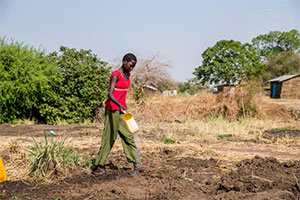 Farming on the Outskirts of Juba. Credit: UN Photo/JC McIlwaine
Promoting human and planetary health is a central focus of the United Nations, as laid out in the 2030 Sustainable Development Goals (SDGs). World hunger and unsustainable farming practices continue to be pressing concerns for the world. According to the 2025 State of Food Security and Nutrition in the World report by the Food and Agriculture Organization (FAO), 673 million people faced hunger in 2024. There are stark regional disparities, with the FAO projecting that 60% of the world population facing hunger will reside in Africa by 2030. Globally, the prevalence of food insecurity has remained consistently higher for women than men.
Sustainable and efficient national food systems are essential in preserving health, education, environmental well-being, peace, economy, and security. However, creating sustainable food systems can be a challenging endeavor, as food production takes a heavy toll on the environment. The agricultural sector accounts for a significant portion of greenhouse gases. Finding safe, sustainable, and ethical strategies to feed the world is crucial in ensuring planetary longevity. A recent initiative from 2023, the EU Regulation on Deforestation-free Products (EUDR), seeks to advocate for sustainable food systems. The main driver of deforestation is the expansion of agricultural land used to produce commodities like cattle, wood, cocoa, coffee, etc. The EUDR is part of the 2020 European Green New Deal and the EU Biodiversity Strategy for 2030 and aims to limit Europe’s consumption of products linked with deforestation by requiring that companies prove that their products are deforestation-free. Despite aiming to achieve major strides in sustainability, policies such as EUDR also raise socioeconomic concerns for targeted countries. Many emerging Latin American economies are impacted by the policy, and have raised the question of how developing countries can grapple with the tensions between economic development and advancing sustainability.
IPS has been at the forefront of providing compelling and insightful stories on communities facing hunger as well as the cost of food production. IPS uses statistics from FAO, the World Food Programme (WFP) and the International Fund for Agricultural Development (IFAD) to bring relevant and hard-hitting facts to readers. This gathering of information and data from such organizations helps bring the best stories from IPS journalists working in the different regions in consultation with experts on the ground.

The Week with IPS

NEXT STOP - SDGs
Tracking global progress towards a sustainable world