Languages
Friday, November 20, 2026



News and Views from the Global South
Gender
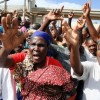
Women Still Trapped Below Glass Ceiling of Party Politics
The right of women to participate in political life is guaranteed by several international conventions, but transforming an abstract right into a reality requires hard work on the ground, says a new study released here.Index Offers Improved Method to Gauge Women’s Progress
If an organisation wants to monitor how its projects in the developing world are affecting women in specific areas of female empowerment, it probably can't, as it lacks the proper tools. But a new system, the "Women's Empowerment in Agriculture Index", is working to change that.
ZAMBIA: No Longer “Waiting for the Mangoes to Ripen”
Eight years ago when Mary Sitali’s husband divorced her, by sending a traditional letter to her parents saying that he no longer wanted her and they could "marry her to any man of your choice - be he a tall or a short man, the choice being entirely yours," she returned to her village in rural Zambia with their two children and no way of supporting them.
Rural Women Are Leading the Way – Will the World Follow – Part 2
The United Nations’ 56th session of the Commission on the Status of Women (CSW) opened Monday in New York, with the empowerment of rural women high on a list of priorities for this year.Women Journalists in Cuba Revive Transgressive Group
More than 15 years after the "deactivation" in Cuba of the Association of Women Communicators (MAGIN), its members remain united in an informal network that transcends any specific political situation and has become a reference for the new generations.
Q&A: Climate Funding Needs Gender Equity
Gender considerations remain largely disregarded in existing climate funds, even though women are some of the hardest hit by the impacts of climate change on livelihoods and agriculture.Index Offers Improved Method to Gauge Women’s Progress
If an organisation wants to monitor how its projects in the developing world are affecting women in specific areas of female empowerment, it probably can't, as it lacks the proper tools. But a new system, the "Women's Empowerment in Agriculture Index", is working to change that.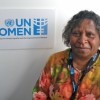
Q&A: Where Abusing Women Is “An Accepted Norm”
Violence, torture and other forms of cruel treatment are on the rise for women in the highlands of Papua New Guinea.
ZAMBIA: No Longer “Waiting for the Mangoes to Ripen”
Eight years ago when Mary Sitali’s husband divorced her, by sending a traditional letter to her parents saying that he no longer wanted her and they could "marry her to any man of your choice - be he a tall or a short man, the choice being entirely yours," she returned to her village in rural Zambia with their two children and no way of supporting them.Women Journalists in Cuba Revive Transgressive Group
More than 15 years after the "deactivation" in Cuba of the Association of Women Communicators (MAGIN), its members remain united in an informal network that transcends any specific political situation and has become a reference for the new generations.Argentina Losing Regional Leadership Position in Health
In Latin America, Argentina spends the most on healthcare. It has a vast infrastructure, highly qualified health professionals and the necessary material resources. But other countries in the region are achieving better and faster health outcomes with fewer resources.
Q&A: Where Abusing Women Is “An Accepted Norm”
Violence, torture and other forms of cruel treatment are on the rise for women in the highlands of Papua New Guinea.
GHANA: Father’s Fight to Save Daughter from Genital Mutilation
When Jack Sabadgou left Ghana for Switzerland 10 years ago, he left his infant daughter behind to be raised by her mother. Now he wants his child back, and he is running out of time in a bid to save her from the banned traditional practice of female genital mutilation.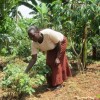
Rural Women Are Leading the Way – Will the World Follow? – Part 2
The United Nations’ 56th session of the Commission on the Status of Women (CSW) begins today in New York, with the empowerment of rural women high on a list of priorities for this year.
Rural Women Are Leading the Way – Will the World Follow? – Part 1
Agriculture currently provides a livelihood for roughly 1.3 billion smallholder farmers and landless workers, of which nearly half – close to 560 million – are women.
Rural Women in Latin America Face Myriad Hurdles
"Sometimes I think of giving it all up,” Aura Canache, a small farmer in Venezuela, told IPS. “My neighbours get loans and aid, but I never have. The farm assistance plans are for men, although there are many women living off the countryside too.”
Women, Victims of War, Have No Seat at Negotiating Table
When the U.N. Commission on the Status of Women (CSW) held its inaugural meeting in London back in 1946, the U.S. delegate, Eleanor Roosevelt, read an open letter to "the women of the world" calling on governments to encourage women everywhere to participate in national and international affairs.
SENEGAL: Two Women Among 14 Candidates for President
There are two women among the 14 candidates contesting the first round of Senegalese presidential elections that will be held on Feb. 26. But according to several analysts, this overwhelmingly Muslim West African country is not ready to be governed by a woman.
FM Radio Spells Change, Success for Mideast Women
Nisreen Awwad moves closer to the microphone as she signs off to her listeners, the words "Nisaa FM: music, change, success" displayed prominently over her left shoulder.
Q&A: How to Reverse the “Feminisation of Poverty”
The phrase "financing for gender equality" may sound dry, but it lies at the heart of some of the most intractable problems faced by women around the world today – and whether the political will exists to allocate real resources to solving them or simply pay lip service.Jordanian NGOs Lead the Fight for Migrant Workers’ Rights
As the number of domestic workers flooding into Jordan from Indonesia, Philippines and Sri Lanka reaches 140,000 annually, non-governmental organisations on the ground are working hard to protect migrant labourers’ rights and expose the terrible working conditions in the rich households that employ them.« Previous Page — Next Page »


Women make up half the world's population, but don't nearly share half of the world's wealth, well-being and opportunity. Two-thirds of the world poor are women, disproportionally exposing women to precarious living conditions, disease and unmitigated natural disasters. The media, meanwhile, remains a male-dominated sector in much of the world, contributing to women's voices lacking a crucial amplifier to put their concerns on political agendas and unleash the development potential of their ingenuity. Rather than then stereotypical victims of local and global forces, women are also organizer, innovators, conservators and community builders. These are some of their stories.

The Week with IPS

NEXT STOP - SDGs
Tracking global progress towards a sustainable world
Tracking global progress towards a sustainable world
