Languages
Monday, November 16, 2026



News and Views from the Global South
Global Geopolitics

Slate for U.N. Rights Body Packed with Ringers
When the former Human Rights Commission was partially dominated by countries accused of political repression, a U.S. congressman ridiculed the U.N. body where, he said, "inmates were taking over the asylum."
Missing Themes in the U.S. Election
The media did their best to make the U.S. presidential election look important, the altar on which democracy is built. But there has been a problem ever since the Supreme Court legalised unlimited campaign spending (six billion dollars this year), thereby authorising one more freedom of expression, called "commercial speech" even though much of this speech is libellous, often neither true nor relevant.Obama’s Historic Cuban-American Vote Opens Window for Change
While political and media attention remains focused on the unprecedented support President Barack Obama received in Tuesday’s election from Latinos, one particular subset of those voters - one with potential foreign policy clout - is drawing intense interest.OP-ED: Unfinished Business Awaits Obama’s Second Term
Several critical issues of unfinished business in the Middle East face President Barack Obama as he begins his second term. Washington must become more engaged come January because these issues will directly impact regional stability and security and U.S. interests and personnel in the region.NDN Not the Cash Cow Local Central Asian Leaders Expected
U.S. officials are happy with a programme that helps steer Pentagon contracts to local businesses in Central Asia. But Central Asian governments are grousing that they aren’t making enough of a profit off of the Afghan war.
Bolder Obama on Middle East, Climate in Second Term?
With President Barack Obama winning re-election, foreign policy analysts here are pondering whether his victory will translate into major changes from the rather cautious approach he followed overseas in his first term.
Netanyahu’s 2010 Order Was Not a Move to War on Iran
A new twist was added to the longrunning media theme of a threat by Israeli Prime Minister Benjamin Netanyahu to go to war with Iran when news stories seemed to suggest Monday that Netanyahu had ordered the Israeli military to prepare for an imminent attack on Iranian nuclear sites in 2010.
U.N. Warns Syria Heading Towards Destruction
Following its failed efforts to contain the 19-month-old insurrection in battle-torn Syria, the United Nations has issued a new warning: the besieged country is heading towards "destruction".
Pan-American Rights Commission “Under Threat”
Representatives of nearly 40 civil society organisations from throughout the Americas gathered here on Wednesday to express concerns with proposed changes to the Inter-American Commission on Human Rights (IACHR).
Algeria Skips the Revolutionary Spring
As the Arab Spring continues to rage across the Middle East and North Africa, the gaze of the international media has largely passed over a country that was once known for its restive population, its long and bloody decolonisation struggle and revolutionary zeal.
Pentagon Nixed 1998 U.S. Nuclear Scientists’ Probe of Iranian Programme
In 1998, the Defence Department vetoed a delegation of prominent U.S. nuclear specialists to go to Iran to investigate its nuclear programme at the invitation of the government of newly-elected Iranian President Mohammad Khatami, according to the nuclear scientist who was organising the mission.Khartoum Fire Blamed on Israeli Bombing
Sudan has accused Israel of bombing a military arms factory, threatening retaliation after a resulting fire killed two people and injured a third.
U.S.: Greater Middle East Dominates the Last Debate
U.S. strategy in the Greater Middle East, which has dominated foreign policy-making since the 9/11 attacks more than 11 years ago, similarly dominated the third and last debate between President Barack Obama and Governor Mitt Romney Monday night.Jewish, Christian Groups Clash Over U.S. Aid to Israel
Jewish groups have reacted furiously to a letter to Congress by 15 leaders of Christian denominations asking for a review of whether some of the three billion dollars in annual United States aid to Israel is being used in violation of U.S. law and policies.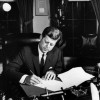
U.S.: 50th Anniversary of Cuban Missile Crisis Offers Lessons for Iran
It was exactly 50 years ago when then-President John F. Kennedy took to the airwaves to inform the world that the Soviet Union was introducing nuclear-armed missiles into Cuba and that he had ordered a blockade of the island - and would consider stronger action - to force their removal.U.S.: On Eve of Foreign Policy Debate, Voters Sour on Arab Spring
On the eve of Monday’s foreign policy debate between President Barack Obama and Republican challenger Mitt Romney, the electorate appears increasingly disillusioned with the so-called Arab Spring, according to a new survey released by the Pew Research Center here.
Brazil Frustrated with European “Backtracking” on IMF Reforms
In the aftermath of last week’s elections to the International Monetary Fund (IMF)’s executive board, Brazil and others are expressing frustration that a reforms process aimed at increasing the representation of developing countries is being stymied by European countries.Saudi Insider Likely Key to Aramco Cyber-Attack
Last weekend’s disclosure that Iranian cyber warriors had disabled some 30,000 computers owned by the Saudi oil giant Aramco is attracting considerable attention here, particularly in light of a warning last week by Pentagon chief Leon Panetta that Washington could face a “cyber-Pearl Harbor".
Shadow Over Aichi Biodiversity Targets
With negotiations to mobilise resources for preservation of biodiversity at a major United Nations conference going nowhere, the Group of 77 and China have hinted at possible suspension of the ‘Aichi targets’ under the Nagoya Protocol.
Politics of War Crimes Trials Under Spotlight
Ten years after the International Criminal Court (ICC) opened its doors in The Hague, the United Nations Security Council held its first open discussion on the role of the court, with some nations reiterating complaints that its docket is highly politicised and has unfairly singled out African nations for censure.U.N. Envoy Warns of Syria Crisis Spillover
Syria's 19-month conflict can set the entire region ablaze, international peace envoy Lakhdar Brahimi has told reporters in Lebanon.« Previous Page — Next Page »


Is the world dominated by three great empires -- the U.S.A, China and the European Union? How much power do the great behemoths of the south -- India, Brazil, and South Africa -- wield? And where does Russia fit in that equation? Are we in the middle of a new Cold War? What are the implications of the armed conflict with Georgia? What about the new axis: Venezuela-Russia? And what role does Turkey play? What about issues like Climate Change and other global forces like the food crisis and the high energy prices? How is all this reshaping the world's forces? IPS looks for some answers.

The Week with IPS

NEXT STOP - SDGs
Tracking global progress towards a sustainable world
Tracking global progress towards a sustainable world
