Languages
Sunday, November 22, 2026



News and Views from the Global South
Global

Global Citizenship Key to World Peace
Nobel Laureate Betty Williams started her speech to a peace forum at the U.N. headquarters Thursday with perhaps the last thing the audience would expect her to say.
Door Closing on Universal Justice in Spain
The pursuit of universal jurisdiction in Spain is drawing to a close because of a bill that will entail the dismissal of over a dozen criminal investigations in the country’s courts and will make it very difficult to open new cases of crimes against humanity.
South-South Cooperation Takes Off in Arab World
As the concept of South-South cooperation (SSC) continues to strengthen worldwide, some of the richest countries in the Arab world have been reaching out to the poor and the needy in the developing world.
In Bali, a Pivotal Moment for Climate Postponed
Facing a crucial meeting this week in Bali, the board of the U.N.’s Green Climate Fund (GCF) once again postponed drawing out the bulk of policy that will guide the fund as it prepares to open later in 2014.
Website Gives Real-Time Snapshot of Deforestation
A new website launched Thursday will allow governments, businesses, civil society and private citizens to monitor near real-time loss and gain in forest cover in every country around the world.
Chagos Islanders ‘Will Not Give Up’ Fight to Return Home
“The Marine Protected Area (MPA) created around the Chagos archipelago is a new obstacle that the British government has placed in our path to prevent us from going back to our homeland,” claims Olivier Bancoult, leader of the Chagos Refugees Group (CRG).

U.N. Focuses on Faltering Goals: Water, Sanitation, Energy
When the U.N.'s Millennium Development Goals (MDGs) reach their deadline in 2015, there will still be a critical setback: millions of people in the developing world without full access to safe drinking water, proper sanitation and electricity in their homes.
Abolitionists Want to Set a Deadline for Nuclear Ban
Countries in favour of nuclear disarmament have reached the point where they are ready to set a date for the start of formal negotiations to eliminate nuclear weapons, a decision that could be taken in Austria at the end of this year.
Growing Inequality Mars 20 Years of Women’s Progress
As the world moves closer to the 2015 end mark of the Millennium Development Goals (MDGs), a new U.N. report illuminates how far global society has come, but also how far it still must travel to achieve its objectives.
Nuclear Weapons Leave Unspeakable Legacy
For decades, Yasuaki Yamashita kept secret his experiences as a survivor of the nuclear attack launched by the United States on the Japanese city of Nagasaki on Aug. 9, 1945.
Obama’s Arms Sales Policy: Promotion or Restraint?
The United States is the world’s leading arms trafficking nation, with $60 billion in arms transfer agreements last year alone. In 2011, U.S. companies and the U.S. government controlled over three-quarters of the international weapons trade.OECD in “Game-Changing” Move to Halt Tax Evasion
A major grouping of rich countries has unveiled a new model for the automatic exchange of certain individual financial information between countries, aimed at significantly cutting down on offshore tax evasion.
OP-ED: We Need Everyone to Build a More Sustainable World
Last week, I had the privilege of attending the Delhi Sustainable Development Summit, an annual event that deals with a subject that is very close to my heart. The summit gathered together amazing people: Nobel Prize winners, thought leaders, heads of state, corporate innovators, and academicians to deal with the paramount challenges of the 21st Century all focused on three pressing dimensions of sustainability: food, water and energy.
Nuke Summit Agenda Circumvents Armed Powers
When over 50 world leaders meet in the Netherlands next month for a Nuclear Security Summit (NSS), the primary focus will be on a politically-loaded question: how do we prevent non-state actors and terrorists from getting their hands on nuclear weapons or nuclear materials?
Website Welcomes Wildlife Trafficking Whistleblowers
A group of international organisations fighting illicit wildlife trafficking has unveiled a new website aimed at assisting whistleblowers who want to aid in the fight against wildlife crimes.
Fossil Fuel Subsidies Dampen Shift Towards Renewables
Despite evolving public awareness and alarm over climate change, subsidies for the production and consumption of fossil fuels remain a stubborn impediment to shifting the world’s energy matrix towards renewable sources.
After Slowdown, Global Fight for Land Rights at Tipping Point
Global trends towards a strengthening of legal rights over land for local and indigenous communities appear to have slowed significantly in recent years, leading some analysts to warn that the fight for local control over forests has reached an inflection point with a new danger of backtracking on previous progress.
U.S. Urged to Conclude Longstanding Review on Landmines
The U.S. government is being urged to conclude a review of national policy on landmines that has dragged on for more than four years, a lag that some say has indirectly led to the injury or death of more than 16,000 people.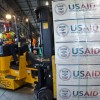
U.S. Reforming “Outdated” Overseas Food Aid
U.S. lawmakers are in the final stages of approving reforms to a half-century-old system of providing overseas food assistance that critics say is outdated, inefficient and sometimes harmful to local economies in developing countries.
CAR’s Sectarian Strife Worsens Despite French, AU Troops
Reports of horrific revenge killing continued to emerge from the Central African Republic Wednesday, less than 24 hours after the Security Council voted to increase the international troop presence there and levy sanctions against those it suspects of war crimes.
Rouhani Reaches Out at Davos
Last week at the World Economic Forum in Davos, Switzerland, President Hassan Rouhani tried to persuade world business leaders to invest in Iran, especially in its hydrocarbon and automobile sectors.« Previous Page — Next Page »


The Week with IPS

NEXT STOP - SDGs
Tracking global progress towards a sustainable world
Tracking global progress towards a sustainable world
