Languages
Sunday, November 22, 2026



News and Views from the Global South
Global

Thawing Permafrost May Be “Huge Factor” in Global Warming
Thawing permafrost is emitting more climate-heating carbon faster than previously realised. Scientists have now learned that when the ancient carbon locked in the ice thaws and is exposed to sunlight, it turns into carbon dioxide 40 percent faster.
Investing in Kids Isn’t Rocket Science
The Millennium Development Goals challenged the world to cut extreme poverty in half, dramatically reduce child mortality, and make primary education universal, but Jody Heymann and Kristen McNeill say the world can do more.
Advocates Lay Groundwork for New Arms Trade Talks
With a new round of negotiations for an international treaty regulating the international trade of small-scale weapons slated for next month, advocates here have stepped up a campaign to clarify what exactly the treaty is trying to accomplish – and to eliminate some opposition to the treaty from within the U.S. Congress that, they say, is based on misinformation.
Q&A: Community Radio Reflects Levels of Democracy
In 1983, producers of popular radio, alternative radio and educational radio convened in Montreal to define a new genre of radio: community radio. Those dialogues led to the formation of the World Association of Community Radio Broadcasters (AMARC).
U.N.’s Water Agenda at Risk of Being Hijacked by Big Business
Amidst growing new threats of potential conflicts over fast-dwindling water resources in the world's arid regions, the United Nations will commemorate 2013 as the International Year of Water Cooperation (IYWC).IFC Under Fire on Environment, Social Safeguards
Campaigners are seizing on a new internal audit of financial-market lending by the International Finance Corporation (IFC), the World Bank arm that engages in private sector investment, pointing to unusually stark criticism of the institution’s commitment to due diligence.
New Era of Food Scarcity Echoes Collapsed Civilisations
The world is in transition from an era of food abundance to one of scarcity. Over the last decade, world grain reserves have fallen by one third. World food prices have more than doubled, triggering a worldwide land rush and ushering in a new geopolitics of food.

Q&A: FGM Is About Culture, Not Religion
The fight against female genital mutilation and cutting (FGM/C) continues to gain traction around the world.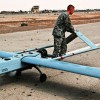
“Drone” a Dirty Word in the U.N. Lexicon
The "drone", one of the eminently controversial lethal weapons deployed by the United States in its war against terrorism, is obviously a dirty word in the U.N. lexicon.
Draft Arctic Oil Spill Agreement “Inadequate”
Environmentalists are warning that a meeting of environment ministers that took place Monday in Sweden has agreed on a weak and inadequate response plan in case of an oil spill in the Arctic Ocean.
World Bank Unmoved on Auditor’s Criticism of Forest Policy
Officials at the World Bank are forcefully rejecting a new internal evaluation that is highly critical of the institution’s decade-long forest policy, expressing their “strong disagreement” with some assertions in the report.‘Tsunami’ of Diseases Waiting to Hit
A tsunami is looming on the horizon and the world is unprepared for it. This one won’t be a massive wall of water but a tidal wave of disease – and experts say the international community needs to act fast to keep it from crashing.Davos Puts Protests Behind
Barbed wire and safety fences are dismantled, the police and army are withdrawn and freedom of movement is restored. The 43rd annual meeting of the World Economic Forum (WEF) ended last month with negligible protests against the 'global leaders'.
World Social Forum Faces Criticism, Tragedy and the Arab Spring
The tragedy at the Kiss nightclub cast a dark shadow on proceedings at the Thematic Social Forum held in Porto Alegre, the southern Brazilian city renowned for hosting the first World Social Forum in 2001.Missing Reform Deadline, IMF Nears “Credibility Cliff”
The International Monetary Fund (IMF) has announced that it will miss an internal deadline to agree on a new formula by which to apportion voting rights in the 188-member institution.
The Open and Rocky Road Post-2015
What values does a Yemeni journalist who fuelled the Arab Spring hold in common with a former principal of the U.S. National Security Council? And how in turn will they see eye to eye with a Jordanian queen, or the president of Indonesia?A Fifth of Global Investing Considered “Sustainable”, Industry Reports
Nearly 22 percent of professionally managed assets around the world can be considered sustainable or responsible, according to a finance industry assessment, the first comprehensive look at the subject.
OP-ED: Weird, and Getting Weirder
Weird is the only way to describe January temperatures whipsawing between record warm and arctic cold over a span of a few days. Experts say that is what climate change looks like: weird, record-shattering weather.
Who’s Watching Those Unblinking Eyes in the Sky?
On the long meadows of Prospect Park in Brooklyn, New York, a man pilots an Unmanned Aerial Vehicle (UAV) – more commonly referred to as drones – in figure eights to the amusement of his Labrador.
Q&A: New Binding Treaty on Mercury Emissions is “Ambitious”
The international community has adopted a binding treaty for reducing emissions of mercury, a poisonous heavy metal that harms human health and the ecosystems on which life depends.
Q&A: “There is Nothing Worse Than Holding a Dying Woman in Your Arms”
Despite staggering advances in medical science and technology over the years, women around the world continue to suffer gravely as a result of inadequate access to basic reproductive health services.« Previous Page — Next Page »


The Week with IPS

NEXT STOP - SDGs
Tracking global progress towards a sustainable world
Tracking global progress towards a sustainable world
