Languages
Sunday, November 22, 2026



News and Views from the Global South
Headlines

Less Overseas Coal Is Good, But Developing Countries Still Need More Electricity
President Xi announced last month that China is stopping its financing for new coal-fired power plants overseas. With this announcement from Beijing, the governments of the world’s largest economies have now achieved a consensus to halt their overseas funding of coal plants in developing countries, thereby advancing global efforts to reduce future carbon dioxide (CO2) emissions.
Afghan Women – The Emerging Narrative and Why it is Wrong
The USA and its allies have repeatedly stated that promoting women’s rights was one of the key reasons they were in Afghanistan. The US military top brass, in a letter to marines stated that they were in Afghanistan “for the liberty of young Afghan girls, women, boys, and men who want the same individual freedoms we enjoy as Americans”.
Education Cannot Wait Annual Results Reveals the Devastating Impact of COVID-19 on Learning for Children in Emergencies and Protracted Crises
The COVID-19 pandemic has changed the face of education globally, but for children in emergencies and protracted crises, its blow has been particularly devastating.
Multilateral Financial Institutions Can Catalyze Public Development Banks (PDB) to Deliver SDGs
There is broad consensus that realizing the Sustainable Development Goals (SDGs) and the Paris Agreement on climate change require a transformative agenda for agriculture and food systems. In this context, the importance of mobilizing more investments and aligning them to sustainable development and inclusive rural transformation objectives, is widely acknowledged.
Making Online Health News Reliable, Accessible
Telemedicine and health-related information have experienced a massive uptake since the COVID-19 pandemic began last year. While online health services are seen as a panacea for many ills, disinformation and fake news reports have tarnished their credibility.
UN Warned of Two Dangers Ahead: Health of the Human Race & Survival of the Planet
Addressing the UN General Assembly last month President Gotabaya Rajapaksa of Sri Lanka raised several concerns, two that had to do with health. One concerned the health of the human race; the other the health of Planet Earth on which man struggles increasingly to survive.
Stop New Washington Putsch
As finance ministers and central bank governors gather next week for the IMF-World Bank annual meetings in the US capital, the first shots of a new putsch against multilateralism have been fired. The target: Kristalina Georgieva, Fund Managing Director (MD) since 2019.
IUCN World Conservation Congress Warns Humanity at ‘Tipping Point’
The world’s most influential conservation congress, meeting for the first time since the onset of the COVID-19 pandemic, has issued its starkest warning to date over the planet’s escalating climate and biodiversity emergencies.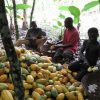
Ivorian Cocoa Farmers Are Beating a System To Reduce Child Labour: Here’s How
The evidence of child labour on cocoa farms in West Africa became public knowledge in the late 1990s. This followed press reports documenting the existence of hazardous child labour on cocoa farms. Pressure on the cocoa industry to end child labour has been growing ever since, particularly from civil society and more recently from both US and European regulators.
‘Trauma and struggle’: Being Black in America – Podcast
 Today we’re talking about the aftermath of the horrendous murder of George Floyd in 2020 and the protests that ensued. But first, this is the fourth episode of the show, and we’d really like to hear what you think of it. So could you please take a minute to rate and review us on Apple Podcasts. Thank you!

UN’s Ambitious Blue Print for the Future– & a Call for Action
There is no doubt that Secretary General Antonio Guterres is going big and bold with the recent release of an ambitious blueprint that could pave the way for a more inclusive, effective and networked international system centered on youth’s aspirations and needs.
Digital Equity for All Ages
The growing number and share of older persons in Asia and the Pacific represent success stories of declining fertility and increasing longevity; the result of advances in social and economic development. This demographic transition is taking place against the backdrop of the accelerating Fourth Industrial Revolution. But COVID-19, with its epicentre now in Asia and the Pacific, has exacerbated the suffering of older persons in vulnerable situations and demonstrated the fragility of this progress.
Biden’s Nuclear Posture Review Must Reduce the Role of Nuclear Weapons
Most successful U.S. presidents have actively led efforts to advance arms control agreements and reduce the risk of nuclear war. Although much has been achieved over the years, there are still 14,000 nuclear weapons and nine nuclear-armed states; progress on disarmament has stalled; and tensions between the United States and its main nuclear adversaries—Russia and China—are rising.
Zero Hunger Campaign in Vietnam Targets Remote Areas and Cities
Amidst the verdant hills and remote corners of Vietnam’s rural regions, the growth that has transformed the economy in this part of Southeast Asia in recent decades can be hard to see. Undernourishment among children still results in stunting – even in cities too where overweight/obesity is also on the rise.
The Plight of Haiti
I assume channel surfing and internet browsing contribute to a decrease in people’s attention span. I am not familiar with any scientific proof, though while working as a teacher I found that some students may be exhausted when five minutes of a lesson has passed and begin fingering on their smartphones. They might also complain if a text is longer than half a page, while finding it almost impossible to read a book.
Rwanda’s Rainforest Conservation Wins Praise from Indigenous Community
Laurent Hategekimana, a villager from Nyabihu, a district from Western Rwanda, recalls the terrible condition of the Gishwati natural forest a few years ago when it was overrun by illegal loggers and invading farmers.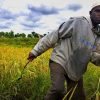
Transforming Global Food Systems Equitably & Sustainably Requires the Private Sector
In the days following the UN Food Systems Summit I have read a number or articles questioning whether there is a role for the private sector in transforming global food systems into something healthier, more sustainable and more equitable. Frankly, I don’t see how food systems transformation is possible without meaningful participation of the private sector.
Leprosy has a Cure, so has Prejudice, says Miss Universe Brazil
A new dawn has come, and it was through the work of Yohei Sasakawa, the WHO Goodwill Ambassador for Leprosy Elimination, that those affected by leprosy now had a voice to speak for themselves.
Delivering On the Promise of Health For All Must Include Gender Equality and SRHR
Gender-responsive universal health coverage (UHC) has the proven potential to transform the health and lives of billions of people, particularly girls and women, in all their intersecting identities. At tomorrow’s kick-off to the 2023 UN High-Level Meeting (HLM) on UHC, Member States and stakeholders will review progress made on the 2019 HLM’s commitments and set a roadmap to achieve UHC by 2030. We, as the co-convening organizations of the Alliance for Gender Equality and UHC, call on Member States to safeguard gender equality and sexual and reproductive health and rights (SRHR) as part of UHC implementation, especially in light of the gendered impacts of the COVID-19 pandemic.
The End of World Bank’s “Doing Business Report”: A Landmark Victory for People & Planet
The September 16, 2021 announcement from the World Bank that it had discontinued publication of the Doing Business Report (DBR) marked a major victory for people and planet.
Chakravarthi Raghavan: A Relentless Advocate of the Global South Passes Away
Chakravarthi Raghavan, who passed away early this week, was a prolific writer and a distinguished journalist who covered the United Nations both in New York and Geneva for several decades. A proponent of development journalism, Raghavan’s voluminous reporting and writings were sharply focused on the global South. A longstanding reporter for Inter Press Service (IPS) news agency in Geneva, he was Editor of Third World Economics and representative of the Third World Network (TWN) in Geneva.« Previous Page — Next Page »


