Languages
Thursday, November 19, 2026



News and Views from the Global South
Health

Out of Africa: Understanding Economic Refugees
Not a single month has passed without dreadful disasters triggering desperate migrants to seek refuge in Europe. According to the International Organization for Migration (IOM), at least 2,247 people have died or are missing after trying to enter Europe via Spain, Italy or Greece in the first half of this year. Last year, 5,096 deaths were recorded.
Rohingya: A Trail of Misfortune
Forsaken and driven out by their home country Myanmar, tens of thousands of Rohingyas are struggling to survive in Bangladesh’s border districts amid scarcities of food, clean water and medical care, mostly for children and elderly people.
Civilians ‘Direct Targets’ as Conflict Spreads in Central African Republic
Rape, torture, pillage, murder and forced displacement by the Union for Peace in Central Africa (UPC) rebel forces are the new horrifying realities faced by communities in Basse-Kotto, Central African Republic, according to the prominent London-based human rights group Amnesty International.
Floods, Hurricanes, Droughts… When Climate Sets the Agenda
When officials and experts from all over the world started the first-ever environmental summit hosted by China, they were already aware that climate and weather-related disasters were already seriously beginning to set the international agenda – unprecedented floods in South Asia, strongest ever hurricanes Harvey and Irma, and catastrophic droughts striking the Horn of Africa, among the most impacting recent events.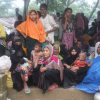
Refugee Camps “bursting at the seams” in Bangladesh
A dramatic increase in the number of refugees fleeing Myanmar is placing a huge strain on already very limited resources in Bangladesh, the UN refugee agency (UNHCR) said.
Deadly Asbestos Still Widely Used Around the World
The worldwide impact cancer has is well known. It is the second leading cause of death globally, and according to the World Health Organization, was responsible for 8.8 million deaths in 2015. Globally, nearly 1 in 6 deaths are due to cancer and of those deaths approximately 70 percent occur in low and middle-income countries.
How Aid in Cash, Not Goods, Averted a Famine in Somalia
In February, when the government of Somalia sounded an alarm to the UN about risks of a famine in the country, the UN’s Office of Coordination of Humanitarian Affairs (OCHA), besides quickly shuffling a response team, was acting from a steep sense of history. The Office, instead of sending out massive aid packages, distributed cash vouchers to families who could spend it to buy goods according to their needs.
Cholera in North-Eastern Nigeria: An Endemic Outbreak
A recent cholera outbreak in North-Eastern Nigeria has resulted in at least 186 suspected cases and 14 deaths as of Sep. 1, according to Borno State’s Ministry of Health.
What Charities and Relief organizations do to alleviate poverty in the Arab region
Extreme poverty remains one of the world’s biggest challenges. According to the United Nations, 767 million people live in extreme poverty around the world. Although world society has managed to lift nearly 1 billion people out of extreme poverty – in 1999 it was estimated that 1.7 billion were affected by extreme poverty – the unprecedented rise of conflict and of violence in the Arab region has worsened the socioeconomic situation of vulnerable population segments in many countries. On 22 February 2017, the Under-Secretary-General for Humanitarian Affairs and Emergency Relief Coordinator of the United Nations –Stephen O’Brien – stated to the United Nations Security Council that 67% of the population in Syria is living under conditions considered as extreme poverty. In another Arab country affected by war and conflict – Yemen – the World Bank estimates that poverty affects 62% of the population, whereas the World Bank’s estimates this number to be at approximately 22% for Iraq or even as high as 40% in territories controlled by DAESH. Inevitably, conflict and violence have worsened the situation in the Arab region.
Small Entrepreneurs Emerge as Backbone of Bangladesh’s Rural Economy
She was born in the early 1950’s to an ultra-poor family in Kundihar, a remote village of Banaripara of Barisal division in Bangladesh. She was a beautiful baby and her father named her ‘Shahndah Rani’ which means ‘Queen of Evenings’. But in reality her life was far from that of a queen.
Towards a Resource Efficient and Pollution Free Asia-Pacific
Senior government officials from across Asia and the Pacific will meet in Bangkok this week for the first-ever Asia-Pacific Ministerial Summit on the Environment. The high-level meeting is co-convened by the United Nations Economic and Social Commission for Asia and the Pacific (UN ESCAP) and UN Environment and is a unique opportunity for the region’s environment leaders to discuss how they can work together towards a resource efficient and pollution-free Asia-Pacific.
Once Decimated by AIDS, Zimbabwe’s Khoisan Tribe Embraces Treatment
Sixty-seven-year-old Hloniphani Sidingo gives a broad smile while popping out through the gate of a clinic in her village, as she heads home clutching containers of anti-retroviral pills.
2017 World Water Week: ‘Water and Waste: Reduce and Reuse’
 With a growing global population, a rise in energy and industrial production, the demand for water is reaching new levels.

Minamata Convention, Curbing Mercury Use, is Now Legally Binding
The Minamata Convention -- a legally-binding landmark treaty, described as the first new environmental agreement in over a decade – entered into force August 16.
Why Breastfeeding Is One of the “Smartest Investments” for All Countries
The United Nations Children’s Fund (UNICEF) has released new findings on the economic gains—besides the obvious health benefits—of breastfeeding.
World Still Lagging on Indigenous Rights 10 Years After Historic Declaration, UN Experts Warn
The world’s indigenous peoples still face huge challenges a decade after the adoption of an historic declaration on their rights, a group of United Nations experts and specialist bodies has warned. Speaking ahead of the International Day of the World’s Indigenous Peoples on 9 August, the group says States must put words into action to end discrimination, exclusion and lack of protection illustrated by the worsening murder rate of human rights defenders.
Zaatari Camp Marks Fifth Year With 80,000 Refugees
Jordan’s Zaatari camp, which opened in 2012 as a makeshift camp to house Syrian refugees fleeing the war, marked its fifth year on June 28.
Has Disability Risen among the Elderly?
The Rights of Persons with Disabilities Act 2016 (or RPD Act) is laudable in its intent and procedural detail, but mostly silent on disabilities among the elderly. Indeed, for this reason alone, it is arguable that its overarching goal—“The appropriate Government shall ensure that the persons with disabilities enjoy the right to equality, life with dignity and respect for his or her integrity equally with others” —is mere rhetoric, if not a pipe dream.
Last Mile Connectivity to Bangladesh’s Impoverished North
Life for Bangladesh’s rural people, particularly in its remote north, is still miserable. Seasonal flooding, river erosion, and the low quality of rural infrastructure and lack of connectivity have made things harder for poor northerners.
US Lags Far Behind in Banning Dental Health Hazard
The United States is lagging far behind its Western allies – and perhaps most of the key developing countries – in refusing to act decisively to end a longstanding health and environmental hazard: the use of mercury in dentistry.
“The Time is Now” to Invest in Youth, Girls
The demographic dividend: though not a new concept, it is one of the major buzzwords at the UN this year. But what does it really mean? There are 1.8 billion young people between the ages of 10 and 24 around the world, the most in the history of humankind.« Previous Page — Next Page »


 Bangladesh: Sarid, born one month early, receives specialized newborn care and grows stronger every day. Credit: UNICEF/UNI944397/Mojumder
Since the onset of the 2000s, global life expectancy has seen an overall rise, attributed to significant technological and scientific innovations in healthcare. Due to an increased understanding of different conditions as well as a rise in cooperation among healthcare experts around the world, there have been major strides made in ensuring that as few people die from chronic illnesses as possible. Despite the belief that healthcare is a fundamental human right, people from low- or middle-class backgrounds, marginalized groups, and underdeveloped countries have far more limited access to basic healthcare services.
The COVID-19 pandemic showed how marginalized communities are disproportionately affected by health crises, proving that we have much work to do in ensuring that no one dies of terminal conditions. While the global response to the coronavirus saw significant strides in immunization and vaccine development, the global outbreak of mpox in 2022 and its upsurge in parts of Africa in 2024 must remind us to remain vigilant.
Other major disease outbreaks in recent years have been linked to the destruction of infrastructure during warfare. Notably, in 2024, the Gaza Strip witnessed a return of the poliovirus since its eradication in the region 25 years ago. Israel’s blockade on Gaza has resulted in the collapse of the region’s sewage plants and desalination plants, and also destroyed healthcare capacities. The UN stated that this lack of clean water and sanitation would lead to an outbreak of cholera and other deadly infectious diseases. The 2026 OCHA Humanitarian Situation Report confirmed that the over two years of conflict in Gaza has produced a catastrophic health emergency, with millions remaining dependent on relief aid amid tight restrictions and no functioning public health system.
IPS is committed to providing full and comprehensive coverage on healthcare challenges around the world. IPS seeks to address the multifaceted causes of such challenges, including unprecedented pandemics, conflict-driven disease outbreaks, as well as socioeconomic barriers to equal healthcare access. IPS is also dedicated to reporting on innovations in the healthcare industry.

The Week with IPS

NEXT STOP - SDGs
Tracking global progress towards a sustainable world
Tracking global progress towards a sustainable world
