Languages
Thursday, November 19, 2026



News and Views from the Global South
Health

No Water, No Life – Don’t Waste It!
During the final exams of Spanish official high school of journalists, a student was asked by the panel of professors-examiners: If scientists discover that there is water in Planet Mars, how would you announce this news, what would be your title? The student did not hesitate a second: “There is life in Mars!” The student was graduated with the highest score.
Three Times as Many Mobile Phones as Toilets in Africa
Though key to good health and economic wellbeing, water and sanitation remain less of a development priority in Africa, where high costs and poor policy implementation constrain getting clean water and flush toilets to millions.
Smiling Towards Development
Previous indications of national prosperity have focused on income, poverty, health and, above all, Gross Domestic Product, but on March 20th, World Happiness Day commemorates what is perhaps becoming the new way to measure welfare: happiness.
A Structural Theory of Aging
Wikipedia has much to offer under "aging". Highly recommended are the 10 points by the world's oldest living man, 114, Walter Breuning.
Khat in the Horn of Africa: A Scourge or Blessing?
Throughout a Sunday afternoon in the Ethiopian capital, Yemeni émigré men in their fifties and sixties arrive at a traditional Yemeni-styled mafraj room clutching bundles of green, leafy stalks: khat.
370 Million Children Eat Healthy Food at School, Every Day
Every day some 370 million children around the world are fed at school, while learning about healthy food and nutrition through school meals programmes that also help boost attendance, the United Nations reports.
Women and Girls, One Third of World’s Drug Users
Women and girls comprise one-third of global drug users yet are only one-fifth of those receiving treatment, a UN-Backed independent expert body warned.
Unhealthy Environment Causes 1 in 4 Child Deaths: WHO
Unhealthy environments - both inside and outside the home - cause the deaths of more than 1.7 million child under the age of five every year, according to two new reports released by the World Health Organization (WHO) Monday.
Seven Scary Facts About Widening Gender Gap
Women across the globe are facing new threats, which risk dismantling decades of hard-won rights and derailing the effort to end extreme poverty, an international confederation of civil society organisations has revealed ahead of International Women’s Day on March 8.
From El Nino Drought to Floods, Zimbabwe’s Double Trouble
Dairai Churu, 53, sits with his chin cupped in his palms next to mounds of rubble from his destroyed makeshift home in the Caledonia informal settlement approximately 30 kilometers east of Harare, thanks to the floods that have inundated Zimbabwe since the end of last year.
New Antibiotics Urgently Needed to Combat Resistant Bacteria
The United Nations health organisation has just published its first ever list of antibiotic-resistant "priority pathogens" – a catalogue of 12 families of bacteria that pose the greatest threat to human health.
A Day to Remember That Every Child Deserves a Chance
The day I met Julija she was playing cheerfully with her baby sister on the floor inside their room in Kragujevac, a small town in southern Serbia. When she saw me – a stranger -- on the doorstep, she smiled widely and stretched out her hands, offering a hug. As I held her, I could hear how difficult it was for her to breathe. I looked at her, she smiled and touched my face with her hands and only then did I see that Julija’s fingers were webbed.
These Women Cannot Celebrate Their Day
This is a story that one would wish to never have to write—the story of hundreds of millions of life-givers whose production and productivity have systematically been ‘quantified’ in much detailed statistics, but whose abnegation, human suffering and denial of rights are subject to just words.
Avoid Patent Clauses in Trade Treaties that can Kill Millions
Recently a very interesting article on why there are inequalities in access to health care and how medicine prices are beyond the reach of many people was published in The Lancet, one of the most prestigious medical journals in the world.
Huge Health Needs for World’s One Billion Migrants
With an estimated 1 billion migrants today --or one in every seven people-- their health needs are huge. Nevertheless, health systems are struggling to adapt and consequently access to health services among migrant populations varies widely and is often inadequate.
Aging, Depression and Disease in South Africa
Old age is often characterised by poor health due to isolation, morbidities and disabilities in carrying out activities of daily living (DADLs) leading to depression.
Improved Cookstoves Boost Health and Forest Cover in the Himalayas
Mountain communities in the Himalayan region are almost entirely dependent on forests for firewood even though this practice has been identified as one of the most significant causes of forest decline and a major source of indoor air pollution.
Indigenous Peoples Lands Guard 80 Per Cent of World’s Biodiversity
They are more than 370 million self-identified peoples in some 70 countries around the world. In Latin America alone there are over 400 groups, each with a distinct language and culture, though the biggest concentration is in Asia and the Pacific– with an estimated 70 per cent. And their traditional lands guard over 80 per cent of the planet’s biodiversity.
US, EU Food Standards Major Hurdle for Caribbean Exporters
As Caricom countries struggle to move away from their traditional reliance on a single industry or major crop in the face of growing economic uncertainty worldwide, they are finding it increasingly difficult to enter markets in the EU and North America with new types of food products.
Want to Prevent Stroke, Diabetes, Cancer? Get Moving… Now!
Tired, lazy, bored, laying down long hours watching TV or seated checking your email? Wrong. And dangerous: not enough exercise contributes to cancer, diabetes, depression and other non-communicable diseases.
How a Spring Revival Scheme in India’s Sikkim Is Defeating Droughts
Bina Sharma, a member of the Melli Dhara Gram Panchayat Unit in the southern part of India’s northeastern Himalayan state of Sikkim, is a relieved woman.« Previous Page — Next Page »


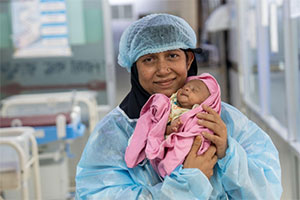 Bangladesh: Sarid, born one month early, receives specialized newborn care and grows stronger every day. Credit: UNICEF/UNI944397/Mojumder
Since the onset of the 2000s, global life expectancy has seen an overall rise, attributed to significant technological and scientific innovations in healthcare. Due to an increased understanding of different conditions as well as a rise in cooperation among healthcare experts around the world, there have been major strides made in ensuring that as few people die from chronic illnesses as possible. Despite the belief that healthcare is a fundamental human right, people from low- or middle-class backgrounds, marginalized groups, and underdeveloped countries have far more limited access to basic healthcare services.
The COVID-19 pandemic showed how marginalized communities are disproportionately affected by health crises, proving that we have much work to do in ensuring that no one dies of terminal conditions. While the global response to the coronavirus saw significant strides in immunization and vaccine development, the global outbreak of mpox in 2022 and its upsurge in parts of Africa in 2024 must remind us to remain vigilant.
Other major disease outbreaks in recent years have been linked to the destruction of infrastructure during warfare. Notably, in 2024, the Gaza Strip witnessed a return of the poliovirus since its eradication in the region 25 years ago. Israel’s blockade on Gaza has resulted in the collapse of the region’s sewage plants and desalination plants, and also destroyed healthcare capacities. The UN stated that this lack of clean water and sanitation would lead to an outbreak of cholera and other deadly infectious diseases. The 2026 OCHA Humanitarian Situation Report confirmed that the over two years of conflict in Gaza has produced a catastrophic health emergency, with millions remaining dependent on relief aid amid tight restrictions and no functioning public health system.
IPS is committed to providing full and comprehensive coverage on healthcare challenges around the world. IPS seeks to address the multifaceted causes of such challenges, including unprecedented pandemics, conflict-driven disease outbreaks, as well as socioeconomic barriers to equal healthcare access. IPS is also dedicated to reporting on innovations in the healthcare industry.

The Week with IPS

NEXT STOP - SDGs
Tracking global progress towards a sustainable world
Tracking global progress towards a sustainable world
