Languages
Saturday, November 21, 2026



News and Views from the Global South
Health
EUROPE: Striking at the Heart of Healthcare
Almost half of all doctors working in Slovakia’s hospitals have handed in their notice in a mass protest over working conditions and wages which they warn could cause the Eastern European country’s healthcare system to collapse.
CAMEROON: Protect Your Daughters, Iron Their Breasts
"Please God, make my breasts disappear." Joyce Forghab used to pray the same line every night during the month she was suffering from breast ironing. The shocking practice, carried out by a quarter of mothers in Cameroon, is meant to reverse female sexual development.
U.S.: Battle Escalates Against Genetically Modified Crops
Home to a fast-growing network of farmers' markets, cooperatives and organic farms, but also the breeding ground for mammoth for-profit corporations that now hold patents to over 50 percent of the world's seeds, the United States is weathering a battle between Big Agro and a ripening movement for food justice and security.Concerns Loom over Implications of Enhancement Technology
Imagine a class of 24 children, three of whom take performance enhancing medicines that increase their chances of scoring high on standardized tests. Now quadruple that number, with one half of the pupils popping pills and the other pushing their pencils med free.Bahrain Medical Staff Sentenced for Treating Protesters
Thirteen doctors and nurses who treated anti-government protesters during demonstrations in Bahrain earlier this year have been jailed for 15 years for crimes against the state.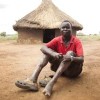
South Sudan’s Most Vulnerable
At first sight, the village of Rokwe on the outskirts of Juba looks like any other village in South Sudan. The sun shines bright on the grass roofs of the mud huts and sounds from a church choir practising can be heard in the distance. Only the scenery at the local health centre gives away that this is no ordinary place.JAPAN: New Radiation Limits Demanded for Children
The threat of radioactive contamination faced particularly by children after the Mar. 11 nuclear disaster in Japan has touched the heart of the Japanese public, and become a major political and social issue.JAMAICA: Wanted: Light-Skinned Only, Please
Revelations that proprietors are requesting light-skinned workers from a government training institution is putting a new spin on Jamaica's so-called obsession with skin bleaching.DR CONGO: Hard to Save All Women Suffering from Fistula
"Every quarter, more than a hundred women with fistulas - including many younger than 20 years old - are admitted for surgery in Maniema province," says nurse Julie Mawazo. "The number of affected women who don't have the means or awareness to come in must be far greater."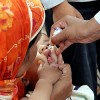
Polio Spreading Out From Pakistan
Despite two decades of mass oral polio vaccination (OPV) drives, Pakistan has failed to control the crippling paediatric disease. Health authorities now fear that it is exporting the virus and setting back global eradication plans.Give Women the Seeds and They Can Feed the World
If women farmers were given more tools and resources, the number of hungry people in the world could be slashed by 100 to 150 million.HEALTH: China Scrambles Against Mutant Bird Flu
Veterinary experts in China and Vietnam are scrambling to produce a vaccine capable of beating a new strain of the deadly avian influenza (AI) virus, reports an official of the Food and Agricultural Organisation (FAO).U.N. Meetings Push for Nuclear Safeguards and Test Bans
History is strewn with proof of the destructive capabilities of nuclear weapons and power, yet science is also replete with evidence that nuclear power has many advantages.
PAKISTAN: Fighting a Taliban-Polio Alliance
With Pakistan’s Khyber Pakhtunkhwa province turning into the ‘polio capital of the world’, authorities are warning parents that heeding Taliban propaganda against oral polio vaccination (OPV) could earn them a prison sentence.SOUTH AMERICA: “Drug Addicts Are Sick, Not Criminals”
Drug dealers in the favelas of this Brazilian city are doing the same brisk business as before the installation of the "Police Pacification Units" (UPPs) in those poor neighbourhoods, authorities and experts admit, while they acknowledge the difficulties in combating the problem.Uneven Results in Bid to Halt Needless Mother and Child Deaths
Political, private sector and civil society leaders from around the world gathered here on Tuesday to recommit to a year-old initiative, Every Woman Every Child, which aims to prevent 16 million maternal and child deaths by 2015.Corporate Profits Trumping Public Health
"There is a well-documented and shameful history of certain players in industry who... put public health at risk to protect their own profits," U.N. Secretary-General Ban Ki-moon told world leaders Monday as they met to address the issue of non-communicable diseases at the 66th U.N. General Assembly.
DADAAB: A Daily Prayer for Complication-Free Births
Dr. Beldina Gikundi's daily prayer is that the handful of malnourished pregnant Somali women who go into labour that day at the Dadaab refugee complex do not have complications, which might require a caesarean section. Because Gikundi knows that Somali cultural beliefs mean that she and her staff at Hagadera Hospital will most likely not be able to immediately operate on the women and save their lives and those of their unborn children.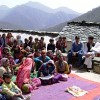
INDIA: ‘Missing Girls is About Femicide’
India has been ranked the fourth most dangerous country in the world for women, but the widespread practice of selectively aborting female foetuses may make it the most hostile to the female gender.SOUTH AMERICA: Uneven Progress in Child Health
Argentina, Bolivia, Brazil, Chile, Paraguay and Uruguay have all made progress in the area of child health. But some are celebrating significant achievements while others are plodding slowly towards the goals adopted by the U.N. member countries in 2000.
Global Gold Rush Brings Heightened Scrutiny
Bolstered by gold prices hovering above 1,800 dollars an ounce and a global economy slowly recovering, exploration activity for the precious metal in 2010 once again rebounded. Yet, with this surge comes the attendant scrutiny by activists, investors, and the media into the industry's human rights and environmental records abroad.« Previous Page — Next Page »


 Bangladesh: Sarid, born one month early, receives specialized newborn care and grows stronger every day. Credit: UNICEF/UNI944397/Mojumder
Since the onset of the 2000s, global life expectancy has seen an overall rise, attributed to significant technological and scientific innovations in healthcare. Due to an increased understanding of different conditions as well as a rise in cooperation among healthcare experts around the world, there have been major strides made in ensuring that as few people die from chronic illnesses as possible. Despite the belief that healthcare is a fundamental human right, people from low- or middle-class backgrounds, marginalized groups, and underdeveloped countries have far more limited access to basic healthcare services.
The COVID-19 pandemic showed how marginalized communities are disproportionately affected by health crises, proving that we have much work to do in ensuring that no one dies of terminal conditions. While the global response to the coronavirus saw significant strides in immunization and vaccine development, the global outbreak of mpox in 2022 and its upsurge in parts of Africa in 2024 must remind us to remain vigilant.
Other major disease outbreaks in recent years have been linked to the destruction of infrastructure during warfare. Notably, in 2024, the Gaza Strip witnessed a return of the poliovirus since its eradication in the region 25 years ago. Israel’s blockade on Gaza has resulted in the collapse of the region’s sewage plants and desalination plants, and also destroyed healthcare capacities. The UN stated that this lack of clean water and sanitation would lead to an outbreak of cholera and other deadly infectious diseases. The 2026 OCHA Humanitarian Situation Report confirmed that the over two years of conflict in Gaza has produced a catastrophic health emergency, with millions remaining dependent on relief aid amid tight restrictions and no functioning public health system.
IPS is committed to providing full and comprehensive coverage on healthcare challenges around the world. IPS seeks to address the multifaceted causes of such challenges, including unprecedented pandemics, conflict-driven disease outbreaks, as well as socioeconomic barriers to equal healthcare access. IPS is also dedicated to reporting on innovations in the healthcare industry.

The Week with IPS

NEXT STOP - SDGs
Tracking global progress towards a sustainable world
Tracking global progress towards a sustainable world
