Languages
Thursday, August 13, 2026



News and Views from the Global South
Health
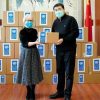
Omicron-led Surge Tests China’s Zero Covid Policy
When the Covid- 19 pandemic first broke out in Wuhan in 2020, no one imagined that it would wreak havoc on such a large scale. With over 6.2 million lives lost, countless infected and new variants emerging, the pandemic is still raging all around the world.
Bringing Seeds of Hope to Farmers
Amidst a backdrop of rising food insecurity worldwide and a global food supply chain crisis, many countries are attempting to increase the level of food self-production. One improved input for farming which is receiving renewed attention is improved seed. The two most populous countries in the world, China and India, have recently made ground-breaking moves to improve their competitive position by developing new seeds which will improve their food production and increase resilience to climate change. So far, in 2022, new regulations on using biotechnology (genetic modification and gene editing) have been put in place by both countries to ultimately allow smallholder farmers to benefit from these new seeds.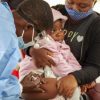
Commitment to African Medicines Agency Needs More Than Words
Across Africa, local manufacturing and pharmaceutical companies are responding to the urgent need for locally produced medical products and technologies despite the existing regulatory challenges. We can support manufacturing capacity by expediting the establishment and operationalisation of the African Medicines Agency (AMA).
INDIA: Healthcare Inequities Exposed by COVID-19 Pandemic
Public health specialists say that an ongoing wrangle between the Indian government and the World Health Organization (WHO) over the COVID-19 death toll in this country is symptomatic of a long-ailing public health delivery system.
UN Aims at People-Centered Governance in a Post-Pandemic World
The recently disseminated Zero Draft Ministerial Declaration of the High-Level Political Forum on Sustainable Development (HLPF)-- the main UN event to track the member states’ progress to achieve the Agenda 2030 slated to be held in the first half of July-- is a disappointment.
World Press Freedom Faces a Perfect Storm
Empowered by a global pandemic and the drum beats of war, the strongest despots are growing more despotic, and criminal cartels even more brazen in their violence. Extremists of various hues are also stepping out of the shadows. Just when the world most needs press freedom to thrive, the liberties that societies only really treasure when they are emasculated are coming under more pressure from different directions, old and new.
With Violence on the Rise, Asian Americans Establish Support Groups for Help
Dr Boyung Lee, a widow and the Senior Vice President for Academic Affairs and Dean of the Faculty at Iliff School of Theology, would use a short break in her working day to walk around her neighborhood. The fresh air helped her deal with her grief and work-related stress.
Boosting Food Security and Education in Schools in Brazil
"I like lettuce, but not tomatoes and cucumbers," said nine-year-old Paulo Henrique da Silva de Jesus, a third grader at the João Baptista Caffaro Municipal School in the southeastern Brazilian city of Itaboraí.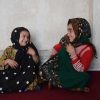
Afghan Moms Receive a Fresh Start in the United States
It was a long, harrowing road for Freshta and Shabaneh, two mothers (their names are pseudonyms) who fled Kabul, Afghanistan, late last summer before eventually settling in the southern New Jersey township of Hamilton.
Transgender Ukrainian Refugees Impacted as War with Russia Continues
Soon after Russia invaded her country, Anastasiia Yeva Domani found herself forced to abandon the regime of vital medicines she was taking. The transgender activist could no longer get hold of the hormone medicines she needed to regularly take in Ukraine as supply chains were disrupted and the vast majority of pharmacies were closed.
Chronicle of a Tragedy Unfolded
The Karnataka court’s verdict to uphold the hijab ban has intensified the protest in the state. The row has been typically perceived by many as manufactured by the politicians pointing to the culture of politics in the state. While the jury is still out there on this, evidence on how state’s local culture constructs and deconstructs religious identity allows drawing conclusions with some definitiveness. The culture of state’s politics is one side of the coin. Considering its flip side – politics of culture, particularly of the religious cultural identity, is just as relevant.
From Rags to Riches: Power and progress in Abu Dhabi
I recently visited Abu Dhabi and my impressions became intermingled with worries about the war in Ukraine. I also happened to read Livy’s The Early History of Rome, written around the beginning of CE, coming across these lines:
Addressing Gender-Related Barriers to COVID-19 Vaccinations to Ensure Vaccinations for All
As a global pandemic, COVID-19 and its continued impacts are unprecedented. Yet many of the challenges that emerged in public health responses to COVID-19 not only had precedence, but were predictable.
The Myth of Development by Privatisation
Oxfam’s report ‘Inequality Kills 2022’ and its India supplement (hereafter referred to as the report) revealed some shocking facts about the growing gap between the rich and poor. India, which has the third highest number of billionaires in the world, endured one of the longest-lasting COVID-induced lockdowns in 2020. Yet, the same year, the top 10 percent of India held close to 45 percent of the country’s total national wealth.
Migrants and Health Workers Play Complex ‘Game’ on Europe’s Fringes
Responding to several shouts Viraj emerges from the ruins of his shelter in northwest Bosnia. He is originally from India but is now squatting near Bihać in what remains of a house abandoned since the 1990s Balkans war.
Sri Lankan Economic Crisis Inflicted by Self-Serving Elite
Once deemed a basic human needs success story, Sri Lanka (SL) is now in its worst economic crisis since independence in 1948. Nonetheless, SL’s ‘moment of truth’ now offers lessons for other developing countries.
Malawi Counts Success of Polio Vaccination Drive after Detecting First Case in 30 Years
One polio case is one too many, global health experts say. And when Malawi announced in February this year that it had detected a polio case in the country’s capital Lilongwe, the alarm was significant, and the response from both the government and global health partners was swift, if not frantic.
Drugged Water: A New Global Pandemic Hiding in Plain Sight?
People around the world are unknowingly being exposed to water laced with antibiotics, which could spark the rise of drug-resistant pathogens and potentially fuel another global pandemic, warns a new report.
Africa Commits to Green Recovery from COVID-19 Amid Daunting Challenges
Climate change activist Mithika Mwenda, the Executive Director of the Pan African Climate Justice Alliance (PACJA), is not reluctant to engage African governments to do what’s necessary to commit to post-COVID-19 green growth strategies.
Tackling the Pandemic of Inequality in Asia and the Pacific
After two years of human devastation, the world is learning to live with COVID-19 while trying to balance the protection of public health and livelihoods. For countries in Asia and the Pacific, this is challenging not only because national coffers are heavily strained by record public spending to mitigate pandemic suffering, but also due to deeper structural economic issues.
ECW Interviews Norway’s Minister of International Development Anne Beathe Tvinnereim
ECW: The International Disability Alliance (IDA), Government of Norway and Government of Ghana hosted the second Global Disability Summit in February. At the summit you called on partners to commit to ensuring children with disabilities can access their inherent human rights, including the right to education. How can we transform the delivery of education in emergencies to ensure no child is left behind?
« Previous Page — Next Page »


