Languages
Wednesday, November 11, 2026



News and Views from the Global South
Health

News Fatigue, Anti-Vax and Wars
During the beginning of the pandemic, people wanted to learn more about COVID-19. Enclosed in their homes they watched with fear and fascination how the pandemic swept over the world, while comparing numbers of affected people and the death-toll in different countries. Watching COVID’s rampage became a kind of horror show. However, already after a few months with death-tolls rising and isolation not being over anytime soon, psychological fatigue set in. Judging from media coverage it now appears as if the pandemic finally is over, which is far from being the case.
What Future for a World of 8 Billion?
What does a young girl from Juba, in South Sudan, an 8-year-old boy living in the slums of Mumbai, in India, a young mother from the south of Lima, in Peru, and an 83-year-old man enjoying retirement in the suburbs of Stockholm, in Sweden, have in common?
India & China Continue to Lead –as World Population Projected to Reach 8.0 Billion
India and China, two Asian nuclear powers who are also longstanding rivals embroiled in the geo-politics of the Indian Ocean region, have remained two of the world’s most populous nations accounting for over a billion people each. But as the world’s population reaches the 8.0 billion mark, come November, India is projected to surpass China.
A World of 8 Billion, Yes, But (II): The Unseen, Untold Story of the 50%
While women and girls have been so far enjoying some of their due rights in Western high-income countries, the overwhelming majority of teenagers and adult women in the impoverished regions of the current world’s population of 8 billions continue to suffer all kinds of inequalities.
Differently-Abled Farmers Integrate Digital Technology, Aim To Set Example For Others
Hidden in Pathumthaini province just outside of Bangkok, 0.24 hectares of land adjacent to Seangsan temple has been turned into an urban vegetable farm managed by members of the Association of the Physically handicapped of Pathumthani.
Rights Groups Question ‘Pregnancy Register’ for Polish Women
Women’s rights groups fear a new legal provision in Poland requiring doctors to collect records on all pregnancies could create what they have described as a ‘pregnancy register’ to monitor whether women are having abortions.
Animals are Core to Pandemic Prevention – We Must Strengthen Their Defences
The ongoing discussions at the World Health Organization (WHO) around a new, landmark ‘pandemic prevention treaty’ shows that the world is starting to act on the lessons it learned from the COVID-19 pandemic.
Androids in Human Populations
It is time for countries, especially those with slow growing and ageing human populations, to welcome androids, i.e., humanoid robots with human-like appearance and behavior, including speech, sight, hearing, mobility, and artificial intelligence.
Reimagining Ageing: Older Persons as Agents of Development
Older persons are highly visible across Asia and the Pacific: they work in agricultural fields producing our food supplies, peddle their wares as street vendors, drive tuk-tuks and buses, exercise in our parks, lead some of the region’s most successful companies and form an integral part of our families.
Roe Overturned: What You Need to Know about the US Supreme Court Abortion Decision
After half a century, Americans’ constitutional right to get an abortion has been overturned by the Supreme Court. The ruling in Dobbs v. Jackson Women’s Health Organization – handed down on June 24, 2022 – has far-reaching consequences. The Conversation asked Nicole Huberfeld and Linda C. McClain, health law and constitutional law experts at Boston University, to explain what just happened, and what happens next.
Urgent Need to Enact Proposed Law to Secure Sexual and Reproductive Health in East Africa Countries
The Ministry of Health in Kenya recently reported that about 700 teenage girls got pregnant daily over a two-month period, in this year alone. What is more is that during this period, 98 adolescent girls between the ages of 10 and 19 contracted HIV every week in this time period
‘When it Comes to Gender Equality, Our Best is Not Good Enough’: says Dr Phumzile Mlambo-Ngcuka
 The Covid-19 pandemic has impacted lives all over the world. According to this report, gender is emerging as a significant factor in the social, economic and health effects of Covid-19. Women have been hit much harder socially and economically than men. The greatest and most persistent gender gap was seen in employment and uncompensated labour, with 26% of women reporting loss of work compared with 20% of men globally in September 2021.
Stronger Healthcare Systems Critical for Africa’s Socioeconomic Transformation
Since the outbreak of the COVID-19 pandemic, healthcare systems globally have battled to deal with the repercussions unleashed by the disease. From the outset, Africa was considered particularly vulnerable due to several factors: limited healthcare provision in some areas, high prevalence of HIV and TB in a number of countries, and limited fiscal room to respond to the pandemic’s financial impacts.
The Sustainable Use of Wild Species is Important for Everyone
You probably use wild species far more often than you realise. For many people, especially in more developed economies, the use of wild species sounds like something quite removed from their everyday lives – something perhaps more relevant to other people, in other countries.
Polio Eradication Will Take Funds and Awareness
For forty days, Kunle Adeyanju – a Nigerian, Rotarian, polio eradication advocate and biker - rode for more than 12,500km from London to Lagos to raise funds for polio eradication.
Tobacco Consumption Slows in the West, Grows in Africa, say Researchers
Cigarette smuggling has emerged as one of the most lucrative enterprises between Zimbabwe and South Africa, with border authorities seizing contraband worth millions of dollars in recent years.
The Battle for Covid-19 Vaccines: the Rich Prevail Over the Poor
The 164-member World Trade Organization (WTO) has implicitly rubber-stamped a widely-condemned policy of “vaccine apartheid” which has discriminated the world’s poorer nations, mostly in Africa and Asia, depriving them of any wide-ranging intellectual property rights. As Max Lawson, Co-Chair of the People’s Vaccine Alliance and Head of Inequality Policy at Oxfam, said at the conclusion of the WTO’s ministerial meeting last week: “The conduct of rich countries at the WTO has been utterly shameful”.
Small-Scale Fishers in Central America Demand Social Security Policies
At the pier, Salvadoran fisherman Nicolás Ayala checked the pocket of his pants to make sure he was carrying the hypertension pills he must take when he is at sea on a 24-hour shift. He smiled because he hadn’t forgotten them.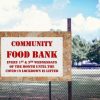
Ending Hunger in America: Here’s What the White House Conference on Hunger, Nutrition and Health Should Do to Be Inclusive
This September, the White House will convene a conference on Hunger, Nutrition, and Health. Leading up to the conference, the White House is organizing several virtual listening sessions across America to hear firsthand from people impacted by food insecurity and to collect ideas about how to end hunger and hunger-related diseases and disparities.
Elder Abuse: Human Rights Have an Expiration Date
1 in 6 people over 60 years of age –nearly 141 million people globally– suffers from abuse, according to World Health Organization (WHO) estimates.
How to Stop the ‘Hunger Pandemic’ During COVID-19
Johnny, living in the United States (US), goes to his school and gets free breakfast and lunch there. There may not be enough food for dinner at home. But he knows that he can get fed at school. Sadly, however, after the pandemic, schools were closed, which meant no breakfast and no lunch for him.« Previous Page — Next Page »





 Bangladesh: Sarid, born one month early, receives specialized newborn care and grows stronger every day. Credit: UNICEF/UNI944397/Mojumder
Since the onset of the 2000s, global life expectancy has seen an overall rise, attributed to significant technological and scientific innovations in healthcare. Due to an increased understanding of different conditions as well as a rise in cooperation among healthcare experts around the world, there have been major strides made in ensuring that as few people die from chronic illnesses as possible. Despite the belief that healthcare is a fundamental human right, people from low- or middle-class backgrounds, marginalized groups, and underdeveloped countries have far more limited access to basic healthcare services.
The COVID-19 pandemic showed how marginalized communities are disproportionately affected by health crises, proving that we have much work to do in ensuring that no one dies of terminal conditions. While the global response to the coronavirus saw significant strides in immunization and vaccine development, the global outbreak of mpox in 2022 and its upsurge in parts of Africa in 2024 must remind us to remain vigilant.
Other major disease outbreaks in recent years have been linked to the destruction of infrastructure during warfare. Notably, in 2024, the Gaza Strip witnessed a return of the poliovirus since its eradication in the region 25 years ago. Israel’s blockade on Gaza has resulted in the collapse of the region’s sewage plants and desalination plants, and also destroyed healthcare capacities. The UN stated that this lack of clean water and sanitation would lead to an outbreak of cholera and other deadly infectious diseases. The 2026 OCHA Humanitarian Situation Report confirmed that the over two years of conflict in Gaza has produced a catastrophic health emergency, with millions remaining dependent on relief aid amid tight restrictions and no functioning public health system.
IPS is committed to providing full and comprehensive coverage on healthcare challenges around the world. IPS seeks to address the multifaceted causes of such challenges, including unprecedented pandemics, conflict-driven disease outbreaks, as well as socioeconomic barriers to equal healthcare access. IPS is also dedicated to reporting on innovations in the healthcare industry.

The Week with IPS

NEXT STOP - SDGs
Tracking global progress towards a sustainable world
Tracking global progress towards a sustainable world
